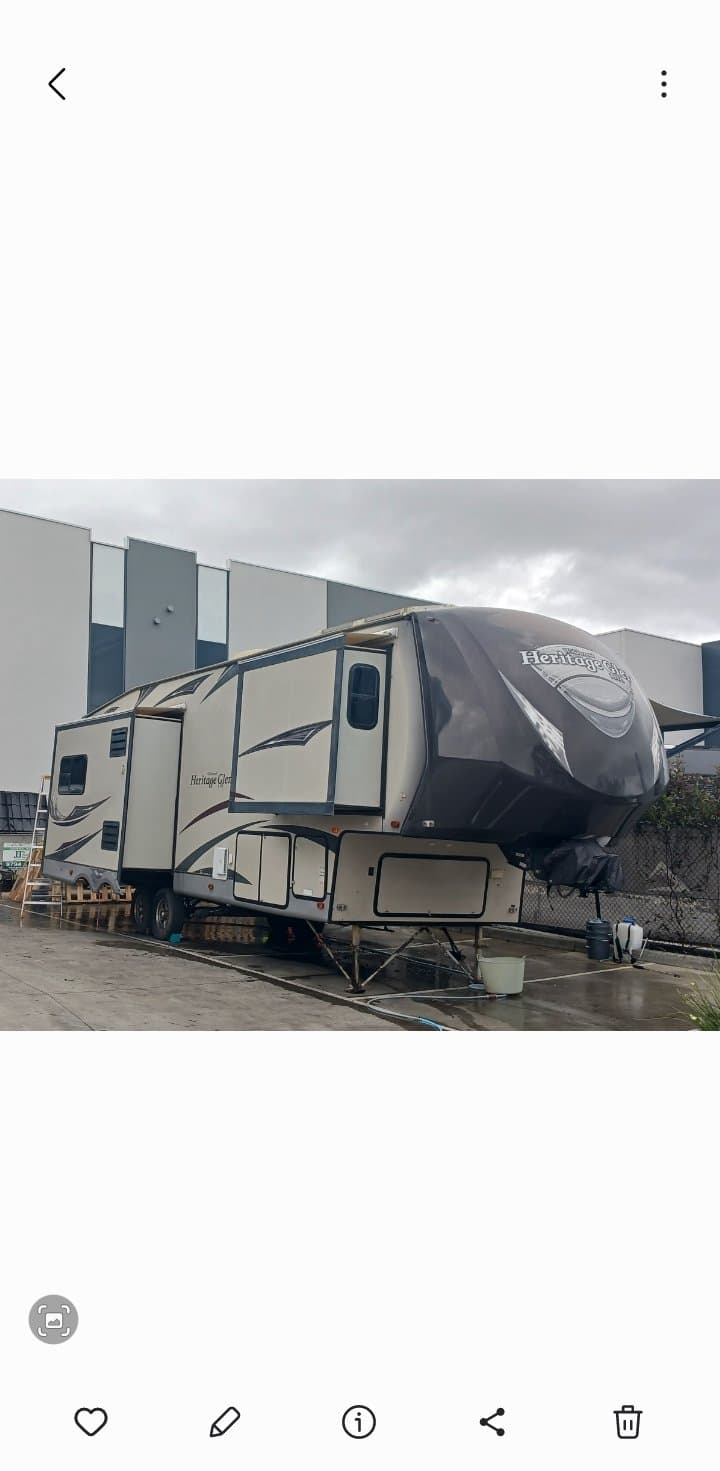
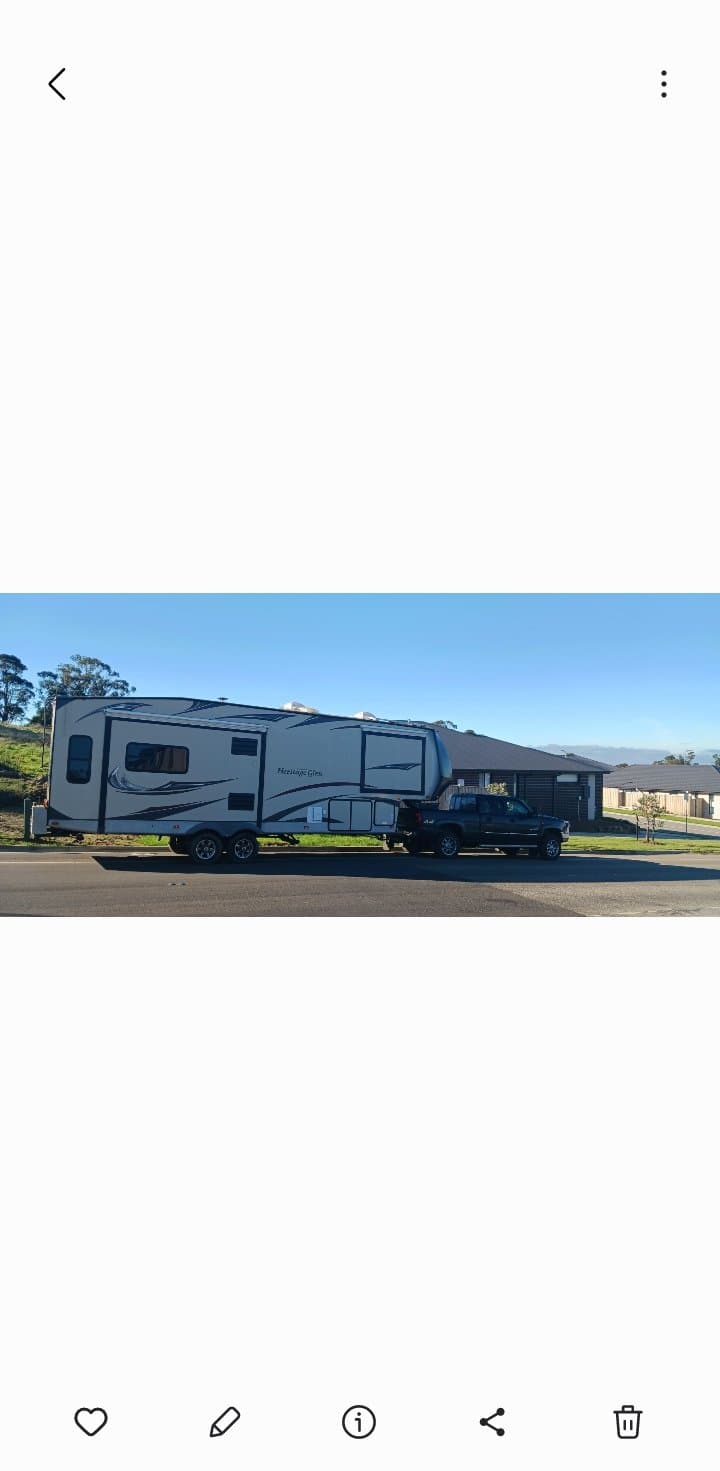
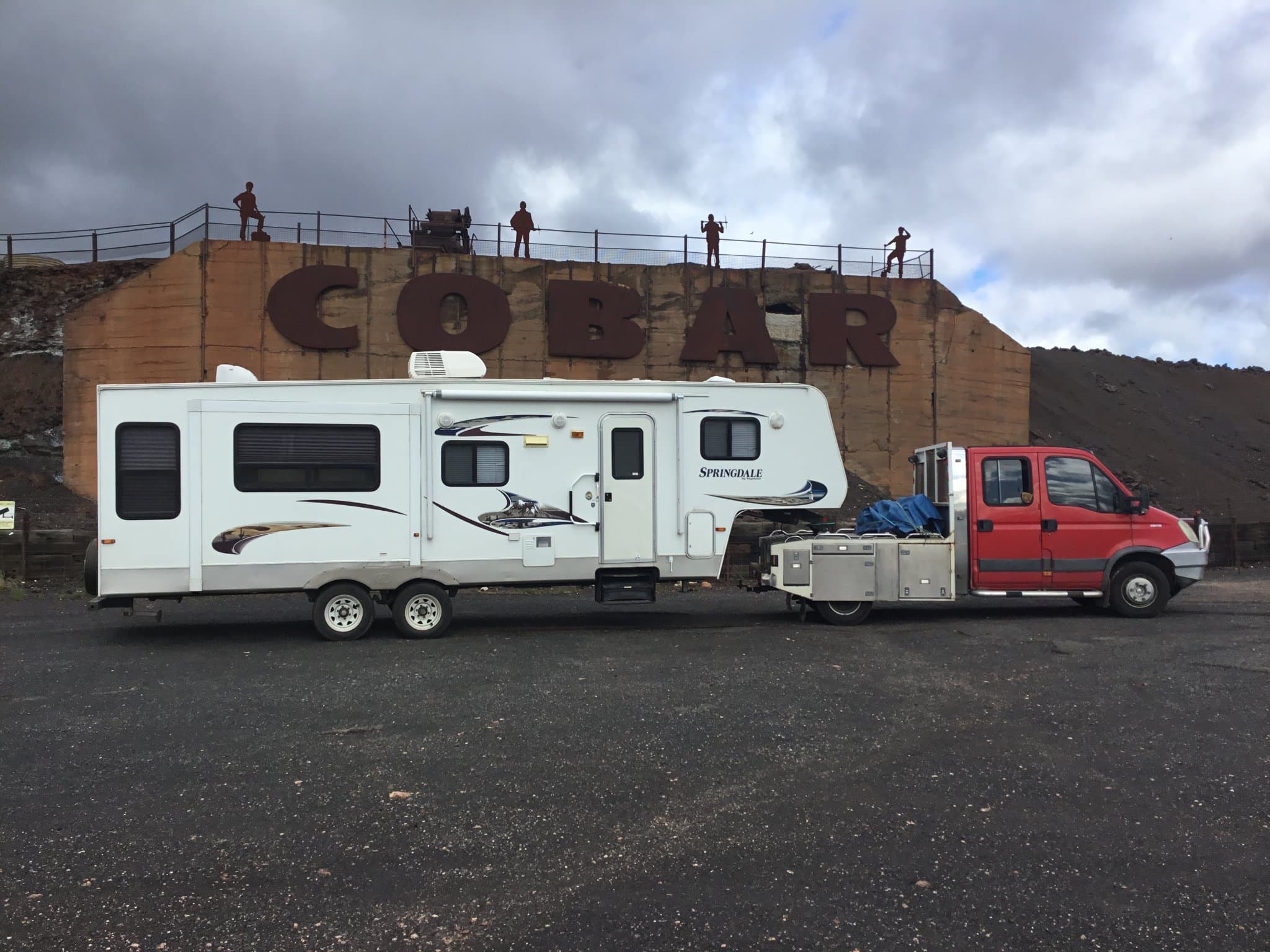
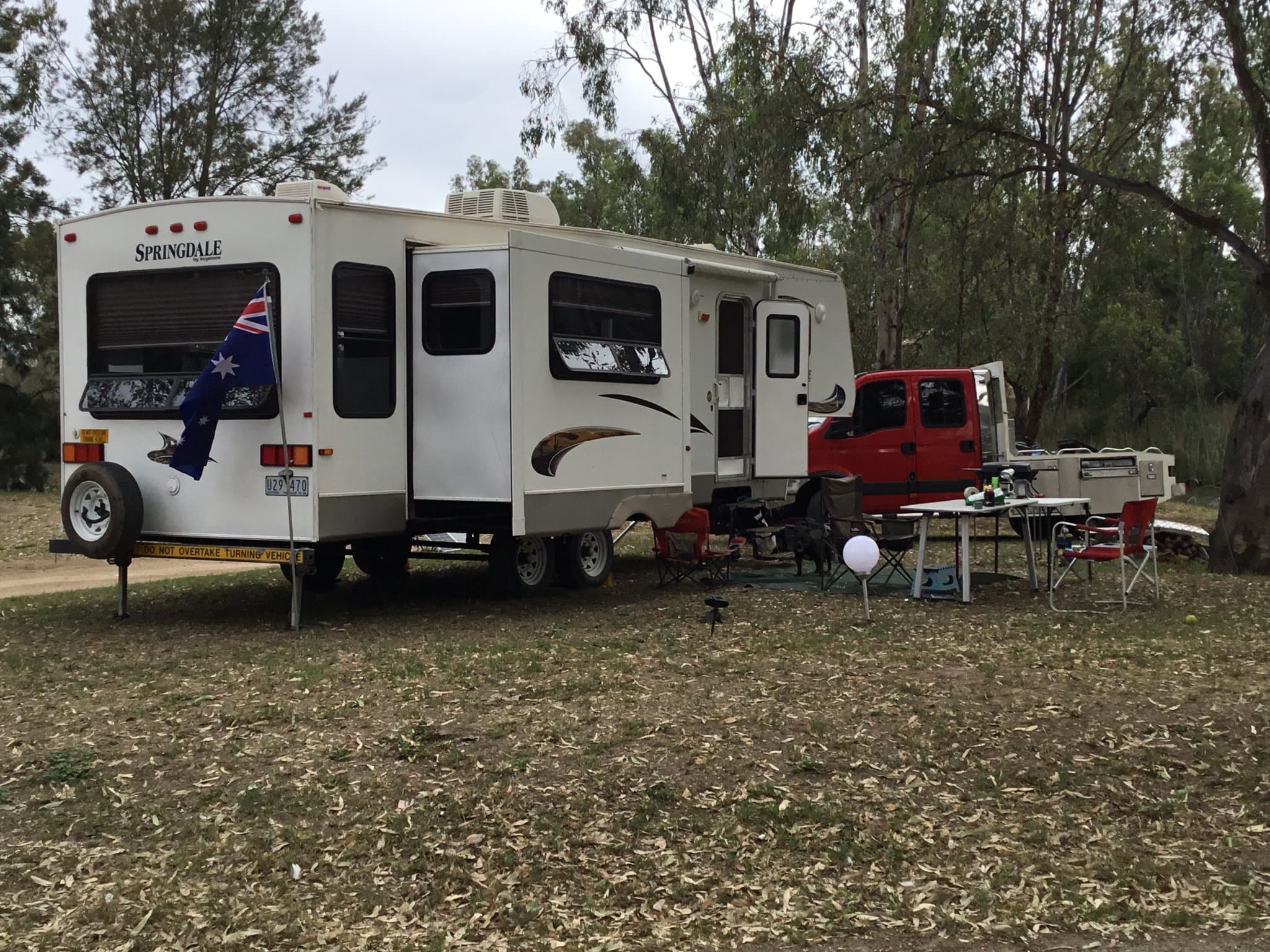
5 listings for sale·$55,000 – $100,000·9 brands · 23 models
Compare every fifth wheel model on VANTURE — 9 brands and 23 models — and set a free alert for new listings. Fifth wheels are a distinct category within the caravan market: they mount on a tow vehicle's tray (rather than towing as a standalone unit), which gives them a lower centre of gravity, improved stability on corrugations, and often better ride quality than conventional caravans of the same length. They're popular with buyers who want to combine serious off-grid capability with the flexibility of unhitching at camp.
Read more about fifth wheels →↑ Show less
Fifth wheels in the VANTURE database span a range of configurations and tow requirements. Models in this segment typically carry an ATM between 3490kg and 4500kg, with sleep capacities ranging from 2 to 6, depending on layout and whether the model includes bunk rooms for families. Roughly half the segment includes off-road-specific reinforcements — independent suspension, raised clearance, and skid protection — making them suited to remote Australian touring; others prioritise comfort and on-road performance for conventional camping.
Because fifth wheels are a specialist segment, you'll find fewer active listings on any given day than conventional caravans or motorhomes. This is where setting an alert makes sense: you can specify your preferred ATM range, sleep count, and off-road requirements, then be notified as soon as matching stock appears. Our model explorer lets you compare full specifications across all 9 manufacturers, so you can shortlist your candidates before contacting dealers.
Start by browsing the 23 fifth wheel models in our database, then filter the active listings by your tow vehicle's capacity, sleeping arrangements, and off-grid needs. Australia's dedicated fifth wheel marketplace.
Fifth wheels sit on your tow vehicle's tray, so the first critical decision is ATM: models in this segment range from 3490kg to 4500kg, and you must match the upper figure to your vehicle's tare weight plus payload capacity. Beyond ATM, consider sleep count (2-seater couples units up to 6-sleeper family configurations with bunks), length and internal layout (galley position, bathroom placement, whether the bedroom separates from the living space), and construction materials (aluminium or composite walls, fibreglass vs canvas roofs). If you plan remote touring, check for independent suspension, ground clearance, reinforced chassis, dual batteries, large freshwater tanks, and solar capacity — roughly half the current segment includes these off-road features. Unhitching ability is a fifth wheel advantage: you can set up camp and drive away, something conventional caravans can't offer.
Fifth wheel pricing in Australia
VANTURE currently has no fifth wheel listings live, but our database tracks 23 models across 9 manufacturers, ranging from compact 2-sleeper units through to larger family-oriented configurations. When fifth wheels do appear, price variation depends on age (newer models command premiums), condition, on-road spec versus off-road reinforcement, water and battery capacity, and whether the unit includes solar, bunk rooms, or premium kitchen and bathroom fittings. Set an alert on VANTURE: you'll be notified the moment new fifth wheels match your budget and specifications, letting you track market activity in this less-frequent-turnover segment.
Tow vehicle compatibility for fifth wheels
Fifth wheels mount on your ute or truck's tray using a fifth wheel hitch — a large coupling that requires a properly rated tray and a vehicle designed for fifth wheel towing. Because the fifth wheel's weight sits directly over the rear axle (rather than being towed), tow vehicle setup differs from conventional caravans. Your vehicle must have sufficient tare weight and payload capacity to handle the fifth wheel's ATM: for example, a 4500kg ATM unit needs a vehicle with at least 5000kg combined tare-plus-payload. Check your vehicle's specification plate for tare, aggregate towing capacity, and payload — then match fifth wheel models in that range. Dual rear wheels, airbag suspension, and weight-distribution hitches improve stability, especially over rough terrain.
Off-road capability in fifth wheels
Half the models in the VANTURE database include off-road-specific reinforcements: independent suspension systems rated for corrugations, increased ground clearance (typically 280mm or above), reinforced chassis and frame, skid plates protecting water tanks and underbody, and higher freshwater and grey water capacity for remote camps. Off-road fifth wheels suit buyers planning extended touring in the Outback, Cape York, or coastal tracks where facilities are sparse. Standard on-road models prioritise comfort, lower ride height for easier loading, and lighter weight, making them better for traditional caravan parks and sealed highways. When browsing, filter by off-road status to see models matching your terrain plans.
Build construction and what to inspect
Fifth wheels use either aluminium-framed or composite-panel construction, each with different maintenance implications. Aluminium-framed units are durable and typically older stock; inspect seams for oxidation or gaps, check window and door seals for perishing (Australian sun is harsh), and look for cracks in the coupling area and tray-mounted hitch bolts. Composite-panel models (more common in newer stock) are lighter and don't oxidize, but composite can delaminate or degrade under UV exposure — check walls for soft spots, lift external trim to inspect the join line, and inspect the roof membrane for cracks or separation. Roof type varies: canvas tops require more maintenance but are repairable; fibreglass roofs are sealed but can crack under stress. Check all plumbing (tanks, water lines, gas fittings), battery condition (age and cycle count), and whether solar panels are original or have been retrofitted.
Family versus couples configurations
The fifth wheel segment spans from intimate 2-sleeper couples units (compact layouts, lighter ATM, minimal facilities) through to 6-sleeper family models with bunk rooms, larger kitchens, and separate bathrooms. Couples units often feature convertible dining or sleeping areas to maximize space; family bunks are fixed, trading flexibility for dedicated sleeping areas that suit multiple children. Larger units naturally command higher ATM, require more robust tow vehicles, and may be harder to manoeuvre into tight caravan parks. Smaller units offer agility and lower towing costs but sacrifice headroom, amenities, and the comfort of separate sleeping zones. Browse the 23 models in our database and filter by sleep count to compare layouts side by side.
Fifth wheels for remote touring and off-grid duration
Extended off-grid touring demands attention to water, power, and fuel autonomy. Look for models with freshwater capacity of 100 litres or more, dual batteries (typically 200Ah lithium or 400Ah AGM), solar arrays of 200W-plus, and grey water tanks to maximize camp duration between facility visits. Fifth wheels occupy a unique position: once unhitched, you can leave the rig at a remote camp and use your tow vehicle for day trips, conserving fuel and amenities. Models in this segment with off-road features typically include these specifications as standard; compare across the 9 brands to find the power, water, and payload balance that suits your planned itinerary.
Frequently asked questions about fifth wheels
How much does a fifth wheel cost in Australia?
VANTURE currently has no fifth wheel listings active, so live pricing isn't available right now. However, our database tracks 23 fifth wheel models across 9 brands, ranging from compact 2-sleeper units through to larger 6-sleeper family configurations. Fifth wheel pricing varies with age, condition, layout complexity, whether the model includes off-road reinforcements, water and battery capacity, and the inclusion of premium fixtures like dual batteries, solar, or bunk rooms. Set a free alert on VANTURE specifying your preferred ATM, sleep count, and price range; you'll be notified as new fifth wheels matching your criteria become available.
How much does a fifth wheel weigh?
ATM (Aggregate Trailer Mass) for fifth wheels in the VANTURE database ranges from 3490kg to 4500kg. The tare weight (dry weight without fuel, water, or payload) is typically 200-400kg lighter than ATM. When selecting a fifth wheel, you must match its ATM to your tow vehicle's combined tare and payload capacity — not just the towing capacity. For example, if your ute has a 3800kg tare and 700kg payload, it can safely tow a fifth wheel with ATM up to 4500kg, but you must account for fuel, water, passengers, and cargo adding to the dry weight. Check your vehicle's compliance plate and fifth wheel specification sheet, then consult a dealer if you're uncertain about the arithmetic.
How long does a fifth wheel last?
Well-maintained fifth wheels typically remain roadworthy and watertight for 20-30 years of casual Australian touring. The key factors are UV protection (roof membrane and sealants degrade in the Australian sun), water management (fix leaks immediately to prevent rot), battery and gas appliance servicing, and regular inspection of the coupling, frame, and tray-mounting bolts on your tow vehicle. Older stock may require cosmetic updates (upholstery, flooring, window frames) but the core structure — provided it's stayed dry and the chassis hasn't been damaged — can be reliable for decades. Used fifth wheels in good condition often represent strong value, especially if the previous owner has maintained service records and completed any major repairs.
What should I check when buying a used fifth wheel?
Inspect the roof and seams for cracks, gaps, or soft spots indicating water ingress or delamination. Check all window and door seals for perishing; test them by feeling for air leaks and water stains inside. Look at the coupling area and tray-mounting bolts for corrosion, cracking, or loose fasteners — these are safety-critical. Inside, check walls and cabinetry for water stains, soft spots, or mould (sign of a slow leak). Test all appliances: gas stove and fridge, hot water, toilets, and pumps. Check battery condition and age; if over 4-5 years old, budget for replacement. Inspect plumbing for leaks, corrosion, or disconnected pipes under sinks and tanks. If the unit has solar and batteries, ask for service records showing age and cycle count. Take photos of any damage, and if you're not confident, hire a fifth wheel inspector for a pre-purchase report.
Can I tow a fifth wheel with a standard ute?
Yes, if your ute has sufficient tare weight and payload capacity to match the fifth wheel's ATM. Most modern dual-cab utes (HiLux, Ranger, D-Max) with airbag or coil suspension can tow fifth wheels in the 3500-4000kg ATM range, but you must verify your vehicle's specification plate. Single-cab utes or light-duty vehicles (under 2500kg tare) are too light for most fifth wheels. A fifth wheel hitch requires a properly rated tray, so check with a hitch installer whether your vehicle frame and tray can safely mount the coupling. Once matched correctly, fifth wheels offer superior stability compared to conventional caravans because the weight sits over the rear axle rather than trailing behind.
Are fifth wheels still being made in Australia?
Several fifth wheel manufacturers operate in Australia, producing models locally or assembling imported components. The segment is smaller than the conventional caravan market, so turnover is lower and new models appear less frequently. Some builders focus on off-road-specific designs with reinforced suspension and skid protection; others manufacture on-road touring models. VANTURE's database includes 23 models across 9 brands, ranging from locally-built units to imported stock. Set an alert to track new listings as they appear — fifth wheel stock can be sparse in active listings, so early notification gives you the best choice.
How long can I be off-grid in a fifth wheel?
Off-grid duration depends on freshwater tank size, grey water capacity, battery storage, solar generation, and your daily consumption. A typical off-road fifth wheel might carry 100-150 litres of freshwater (3-5 days for a couple using 30 litres daily) and 100-150 litres of grey water. With dual batteries (200-400Ah) and 200-400W of solar, you can run 12V lighting, a small fridge, and water pump indefinitely in good sunlight; propane heaters and stove extend autonomy without drawing battery. Fifth wheels offer an advantage: once unhitched, you can drive to town for water and fuel while leaving the rig at camp, effectively multiplying your off-grid duration. Models in the VANTURE database vary in tank and battery specs — compare water and battery capacity across the 23 models to match your planned itinerary.
What's the cheapest fifth wheel available on VANTURE right now?
VANTURE currently has no active fifth wheel listings. Set a free alert specifying your preferred ATM range, sleep configuration, and maximum budget. You'll be notified the moment new fifth wheels matching your criteria are listed, giving you the first opportunity to contact the seller. Browse the 23 fifth wheel models in our database to identify your preferred brands and layouts, then the alert will show you which ones become available.
What's the difference between a fifth wheel and a conventional caravan?
A fifth wheel mounts on your tow vehicle's tray using a hitch coupling, placing its weight directly over the rear axle; a conventional caravan has an independent chassis and tows from a single drawbar hitch located at the vehicle's bumper. Fifth wheels offer better stability (especially over corrugations and at high speed) because the weight distribution is more balanced, and they can be unhitched and left at camp while you drive away. Conventional caravans are more manoeuvrable in caravan parks and suitable for lighter vehicles, but their trailing weight can cause sway if not properly balanced. Fifth wheels typically start at higher ATM (3490kg and above) and suit buyers with robust tow vehicles who prioritise stability and the flexibility of unhitching. Choose based on your vehicle's capacity, towing experience, and preferred camping style.
Selling your fifth wheel?
List it on VANTURE for free. Australia's dedicated caravan and motorhome marketplace.
Compare competitive rates from 30+ lenders. Pre-approval in minutes with no impact on your credit score. Tailored for caravans, campervans and motorhomes.