
VANTURE

Evernew Caravans Models, Specs & Prices

No Evernew Caravans listings right now

Set an alert and we'll email you the moment a Evernew Caravans matching your criteria appears on VANTURE — often before they're indexed by Google.

Popular Evernew Caravans models

Why Evernew Caravans?

Compare all Evernew caravan models with full specs, weights and pricing — set alerts for new Evernew listings on VANTURE. Evernew is a specialist off-road caravan builder with 40 models across the PT, RT, RTX 28, RTX 30 and RTX 60 ranges, all sleeping 2–4 occupants. Single-axle models start at 13 feet; tandem-axle options extend to 23 feet. Set an alert on VANTURE — Australia's dedicated caravan marketplace — and we'll email when a new Evernew matches your criteria.

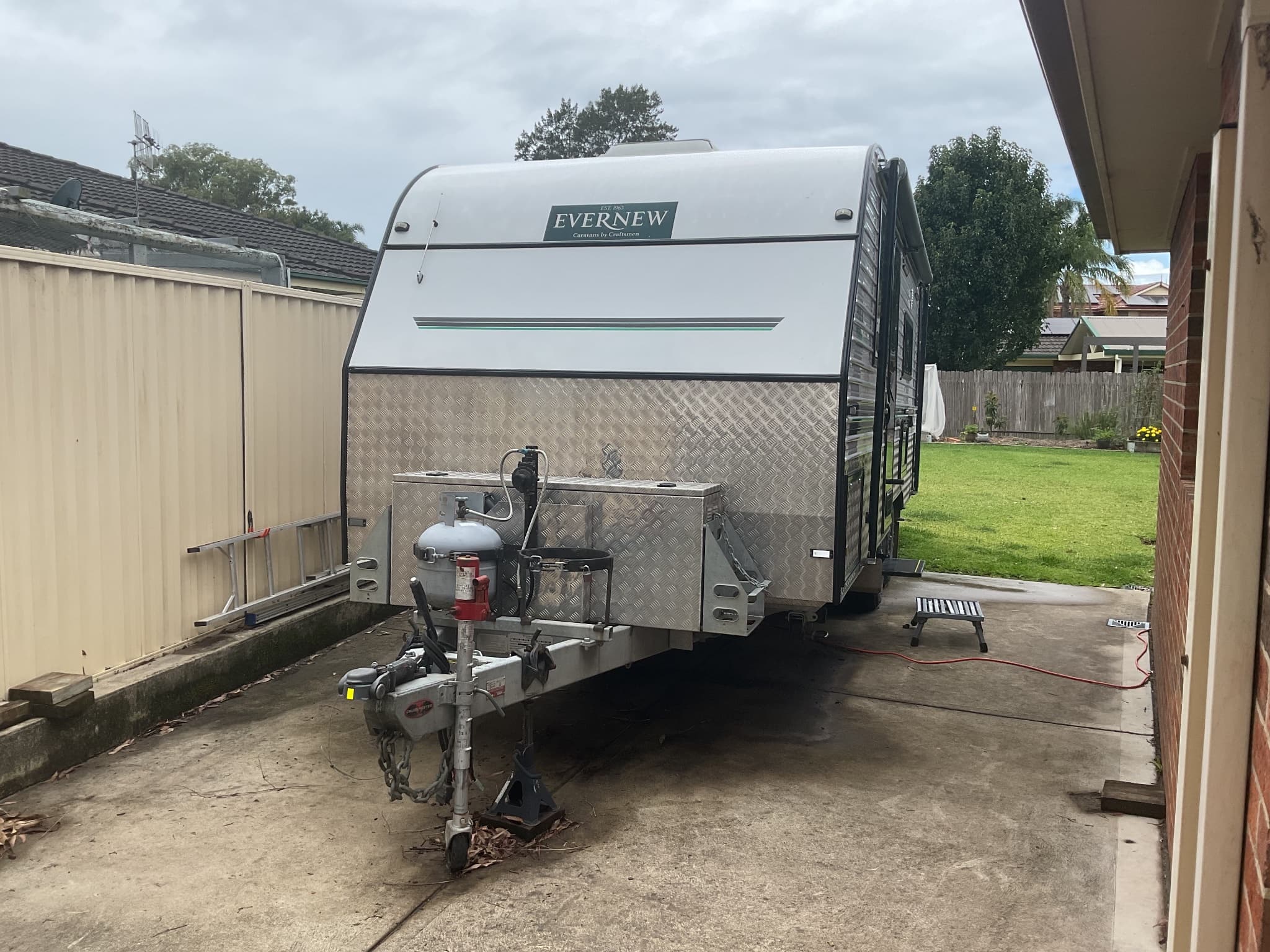
Evernew Caravans specialises in off-road capable caravans designed for remote touring and harsh Australian terrain. The brand's lineup spans five core ranges — PT, RT, RTX 28, RTX 30 and RTX 60 — each built to handle corrugated tracks, river crossings and extended off-grid travel. All models sleep 2 to 4 people and are available in single-axle (13 to 17 feet) and tandem-axle (18 to 23 feet) configurations, giving buyers flexibility to match caravan size to tow capacity and trip duration. The RTX Edge and RTX 60 ranges are positioned as premium off-road builds, whilst the PT and RT ranges offer entry-level and mid-tier off-road capability. Every model carries the off-road specification badge, meaning buyers can expect reinforced chassis, higher ground clearance, and construction suited to unsealed roads and remote camping.

Evernew Caravans buyer's guide

Who buys an Evernew caravan?

Evernew caravans suit couples and small groups (up to 4 occupants) who plan extended off-road touring in remote Australia — Outback tracks, Fraser Island, Cape York, the Top End. If you're towing a capable 4WD and want a proven off-road caravan without the space overhead of a family bunk van, Evernew's all-off-road lineup means every model is engineered for rough terrain. Single-axle models (13–17 feet) suit lighter 4WDs and first-time buyers keen to explore unsealed roads without extreme weight penalties. Tandem-axle models (18–23 feet) appeal to full-time grey nomads and serious remote explorers with heavier tow vehicles, offering more living space and water/fuel capacity for extended bush camps. The RTX Edge and RTX 60 premium ranges appeal to buyers who want added luxury — full insulation, composite panelling, higher-spec fittings — whilst still maintaining rugged off-road credentials.

What to inspect

When viewing a used Evernew, focus on wear items specific to off-road use. Check the chassis frame welds — particularly around the drawbar and coupling points — for hairline cracks or rust breakthrough. Look at the jockey wheel mount and A-frame joints for stress fractures or movement; off-road bounce and corrugations accelerate wear here. Inspect the suspension — independent arms, bushes and shock absorbers — for play, corrosion or oil seepage. Examine the underside and wheel wells for mud-trap damage; Evernew's off-road routing means water and dirt penetration is common, so check for soft spots in the floor and water staining near the rear corners. Review the exterior composite panels and window seals for impact damage from branches or corrugated-track debris. Finally, check service history and any off-road repair logs — a well-maintained Evernew with documented shock replacement and chassis work is a good sign.

Value and resale

Evernew has no sold history on VANTURE yet, so used-market data is too thin to draw firm resale conclusions. However, off-road caravans generally hold value well because their build cost is high and demand from remote tourers remains steady. A 3–5-year-old Evernew in good condition — with clean service records and no major accident or water damage history — should retain 60–70% of its original purchase price, though specific pricing depends heavily on the range (PT entry-level vs RTX 60 premium), axle configuration and kilometres travelled on unsealed roads. When buying used, favour models with documented maintenance and minimal track-touring wear; heavily used off-road units may require suspension or chassis rework that offsets the asking price. If you find an Evernew available, check VANTURE regularly and set price-drop alerts — limited Australian stock means genuine bargains can move quickly.

Frequently asked questions about Evernew Caravans

Where are Evernew caravans made?

Evernew caravans are manufactured in Australia. The brand designs and builds all models domestically, meaning every van is engineered and constructed to suit Australian conditions, terrain and buyer preferences. This domestic build approach gives Evernew direct control over chassis welding, panel assembly and off-road specification tuning — a advantage for warranty and after-sales support.

What's the price range for an Evernew caravan?

VANTURE has no current active listings or historical sold data for Evernew yet, so pricing information is limited. Entry-level PT and RT single-axle models (13–17 feet) are typically less expensive than tandem-axle models, and the RTX 28, RTX 30 and RTX 60 premium ranges command higher prices due to upgraded insulation and fittings. To find current Evernew pricing, set an alert on VANTURE — when dealers list stock, you'll see live pricing and can compare across the range.

What Evernew models are best for off-road touring?

All 40 Evernew models carry off-road specification, so any one is equipped for track work. For couples seeking lighter tow loads and entry-level off-road exploration, the PT and RT single-axle models (13–17 feet, sleeping 2) offer a sweet spot of manoeuvrability and capability. For more serious remote touring and extended stays, the RT Tandem and RTX 28/30 single and tandem models provide extra room and water/fuel capacity. The RTX 60 Tandem range is the premium choice for full-timers and grey nomads who want upmarket fittings alongside rugged off-road credentials. The RTX Edge models (RTX 28 and RTX 30) bridge entry and premium, offering enhanced comfort without the full RTX 60 price.

How does Evernew hold its value on the second-hand market?

Sold data for Evernew is limited — no units have sold on VANTURE yet — so we can't draw a firm resale conclusion from our marketplace history. Off-road caravans as a category tend to hold value well because build costs are high and demand from remote tourers is steady, but specific depreciation depends on range, axle type, age and usage. A well-maintained older Evernew with clean service history should retain strong value compared to mainstream caravans, but track-worn units may need suspension or chassis investment that reduces resale appeal. If you spot an Evernew for sale, check the condition carefully and compare asking prices across the range on VANTURE.

What should I check when buying a used Evernew?

Focus on these four areas. First, examine the chassis frame welds at the drawbar, coupling and A-frame — look for hairline cracks, rust breakthrough and frame flex under the front overhang. Second, inspect the suspension bushes, independent arms and shock absorbers for play, corrosion and oil seepage; off-road bouncing accelerates wear here. Third, check the underside and wheel wells for soft-spot damage and water staining, especially near the rear corners where mud traps develop after corrugated-road use. Fourth, review service history and look for documented shock, spring or chassis repairs — a maintained Evernew with repair logs is better value than one with no maintenance record. Always view in person and test the windows, seals and exterior panels for impact damage from branch strikes common on track work.

How off-road capable is an Evernew caravan?

All 40 Evernew models are built off-road from the ground up — there's no 'road-only' variant in the range. Every model carries reinforced chassis welding, higher ground clearance, and suspension tuning for unsealed roads. The PT and RT ranges deliver proven off-road performance at lower cost, whilst the RTX 28, RTX 30 and RTX 60 ranges add full insulation, composite panelling and premium fittings without sacrificing capability. Single-axle models (13–17 feet) suit lighter 4WDs on moderate tracks; tandem-axle models extend reach to heavier terrain and longer expeditions. If you're towing a capable 4WD and planning remote Australia travel — Outback loops, Cape York, Fraser Island — any Evernew model is engineered for it. The RTX Edge and RTX 60 ranges offer upmarket comfort for grey nomads who spend months in the bush, whilst PT and RT models suit weekenders and couples testing off-road travel.

Is an Evernew caravan worth buying?

If you're serious about off-road touring and have a capable 4WD, yes — Evernew's all-off-road lineup and Australian manufacture mean you're buying proven, domestic expertise without paying for road-only features you won't use. Evernew's 40-model span (single and tandem axles, entry to premium ranges) gives flexibility to match budget and tow capacity. The brand has no current VANTURE history, so market data is thin, but off-road caravans hold value well and Evernew's domestic build and specialisation suggest strong after-sales support. The key trade-off: you're choosing a specialist brand over mainstream competitors — dealer networks may be smaller, but that's offset by direct Australian manufacturing, easier warranty claims and a community of remote tourers who understand Evernew's design intent. If blacktop comfort and holiday parks are your focus, a mainstream caravan might suit you better; if your trips aim for corrugated tracks and bush camps, Evernew's specialisation makes it a strong fit.

Be the first to list a Evernew Caravans on VANTURE

No Evernew Caravanss listed right now — that means zero competition for buyer attention. List yours from $69.

List your Evernew Caravans
Finance partnerFastr Finance

Found the one? Get pre-approved in minutes.

Compare competitive rates from 30+ lenders. Pre-approval in minutes with no impact on your credit score. Tailored for caravans, campervans and motorhomes.

Get pre-approvedNo obligation. Takes 2 minutes.