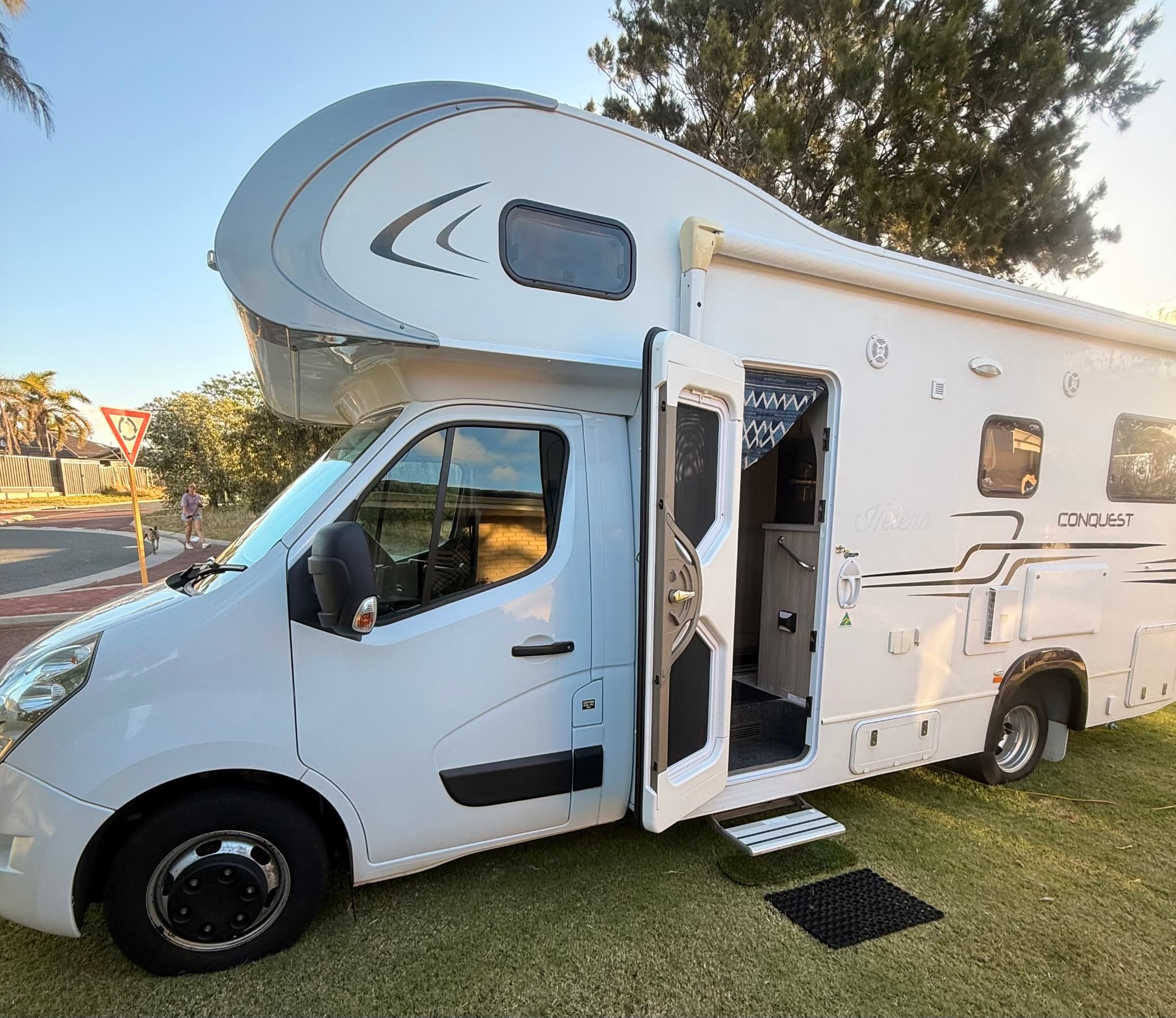
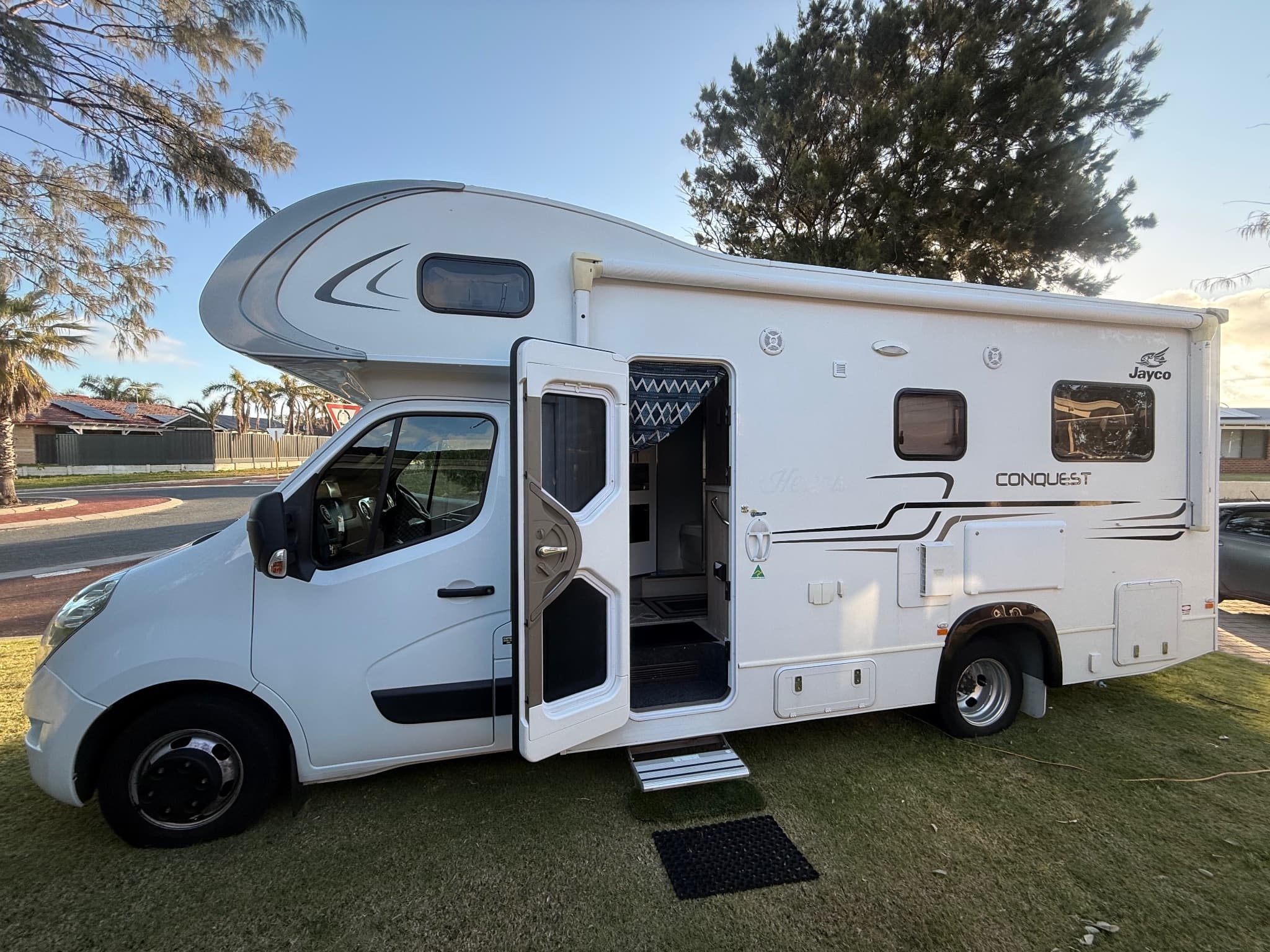
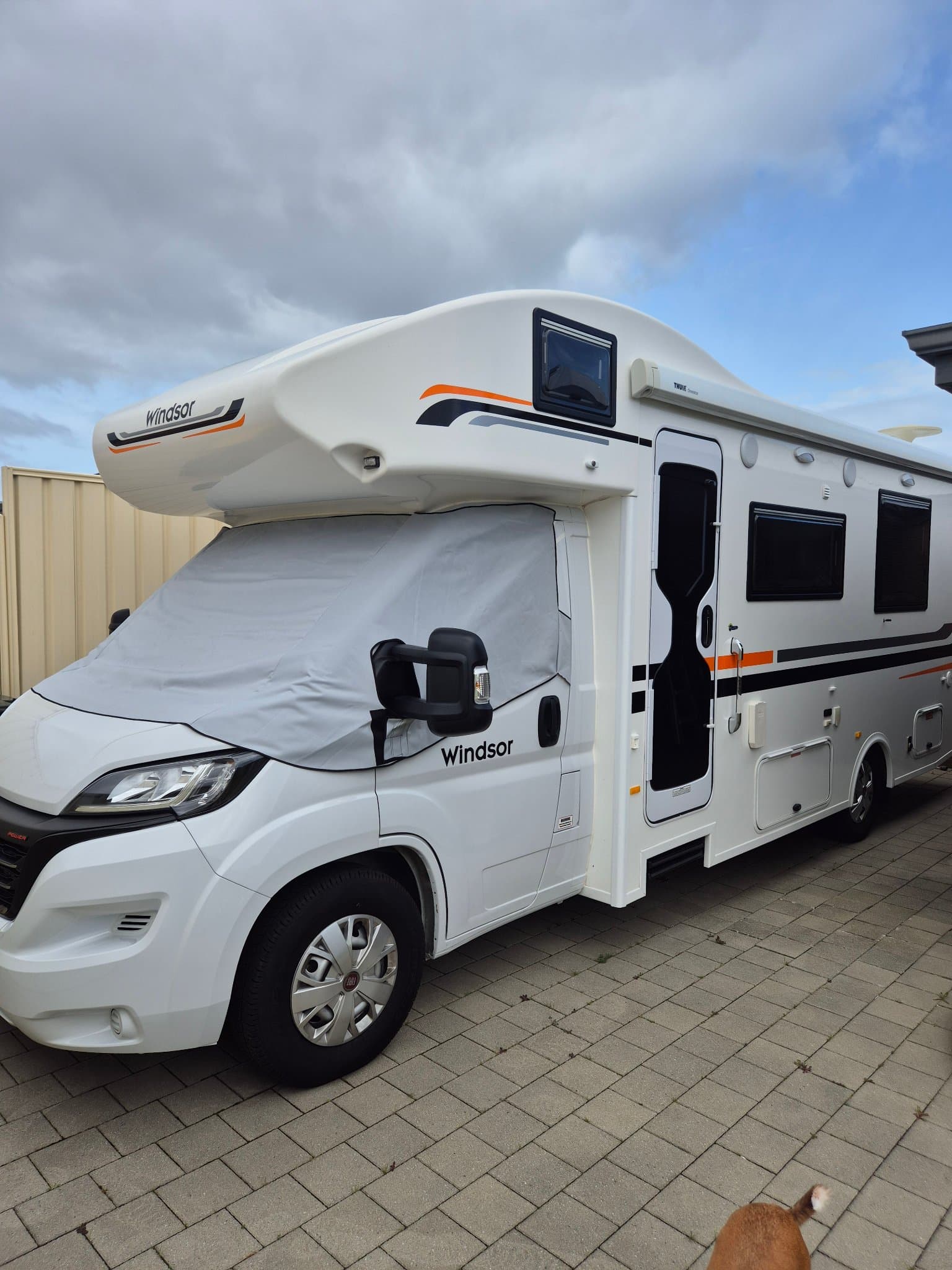
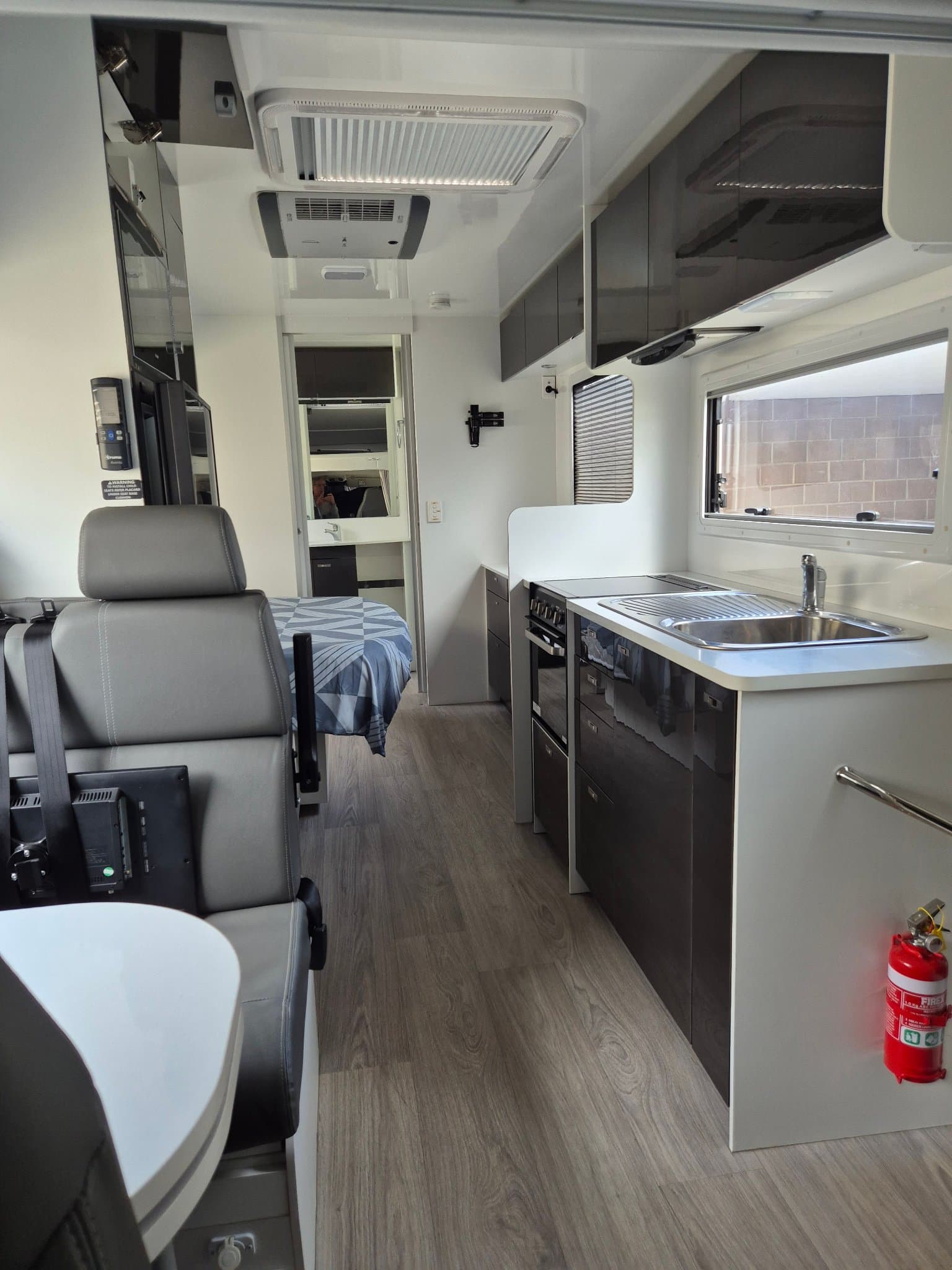
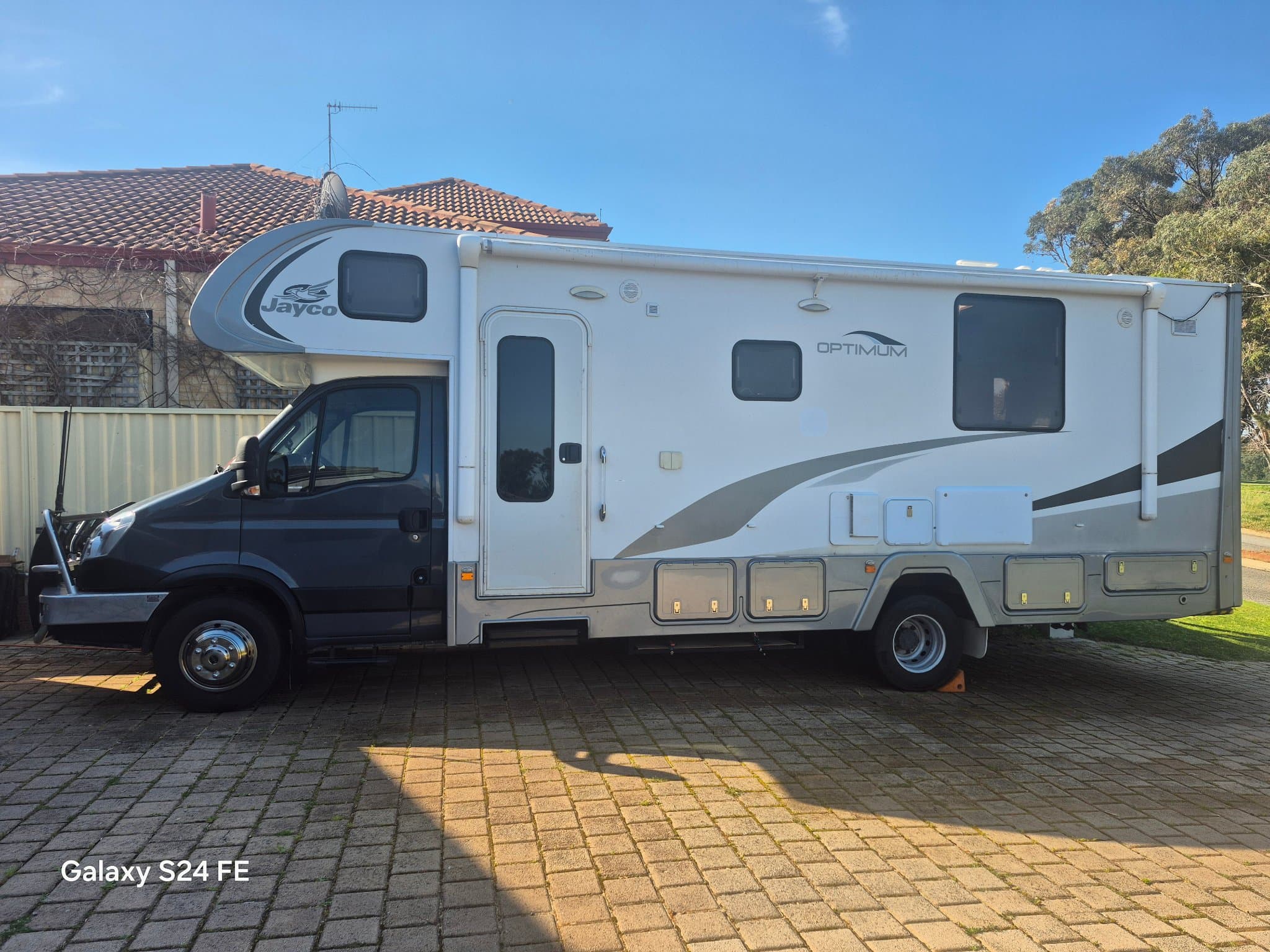
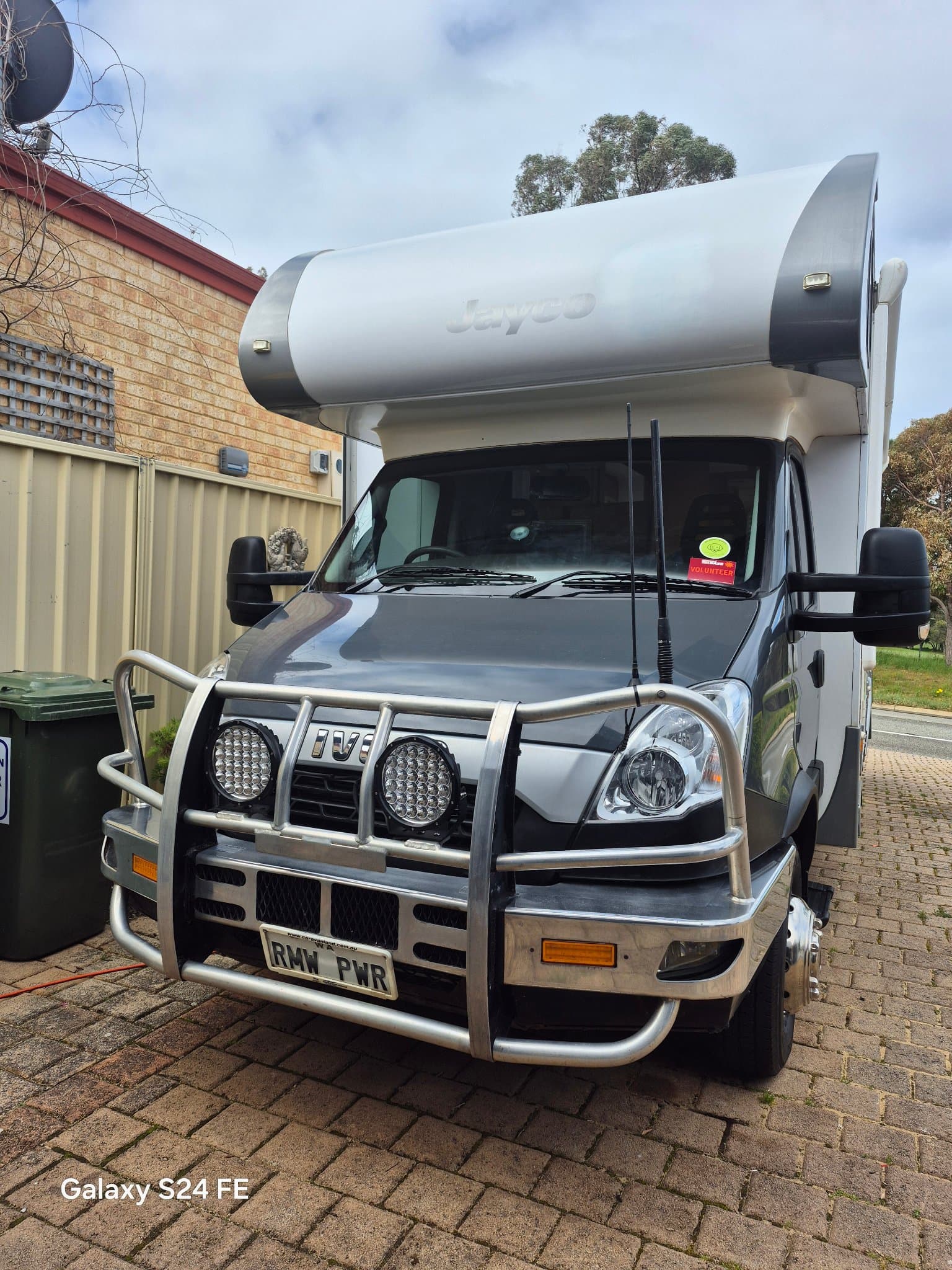
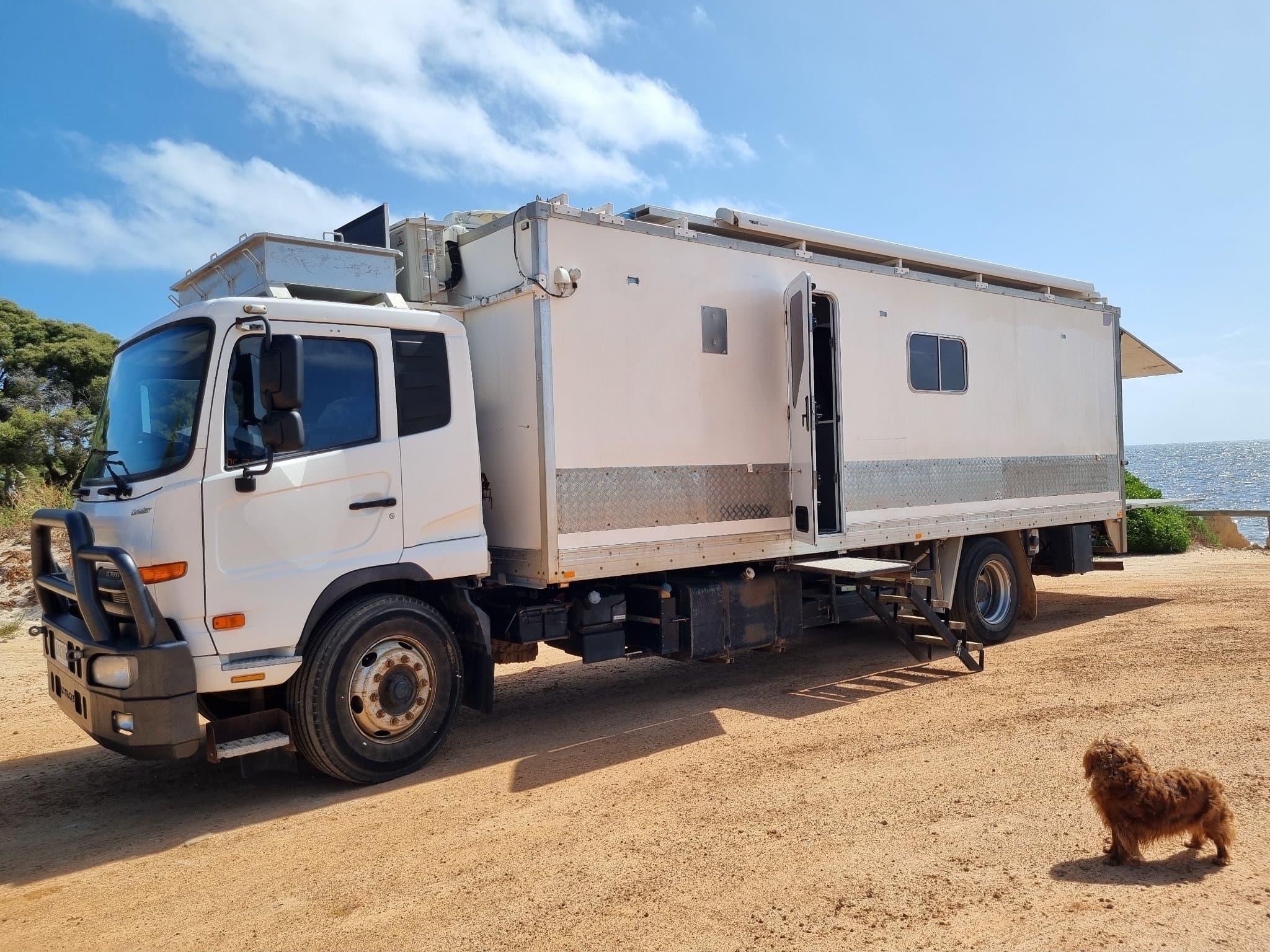
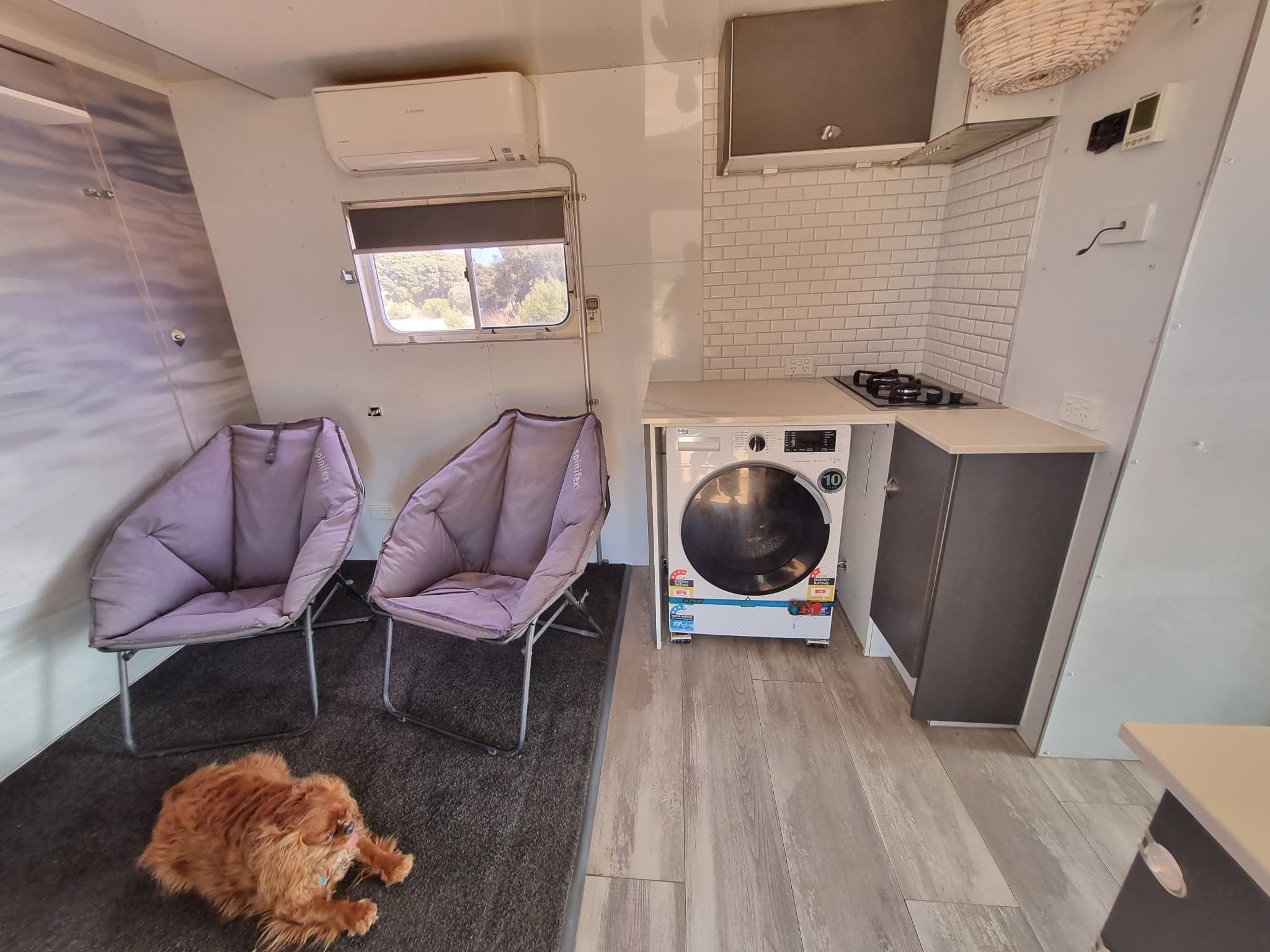
Browse every motorhome model on VANTURE — 49 brands and 213 models tracked. We've found 9 motorhomes for sale across WA. Or check 5 motorhome-service specialists in the Albany area. Set a free alert and we'll email when one is listed locally.
Be the first to know when a motorhome is listed
We'll email you the moment a matching motorhome goes live on VANTURE. Free, no account needed, unsubscribe any time.
Choosing the right motorhome for your touring style
Look for a motorhome aligned with your planned duration and terrain. For short holidays and caravan parks, focus on sleep comfort, kitchen quality, and mains hookup readiness. For remote off-grid touring, prioritise models with large freshwater tanks (100+ litres), dual or lithium batteries (200Ah+), and solar panels (200W+). ATM capacity typically sits around 3000kg; verify this against your driving licence class and match it to the motorhome's loaded weight — many modern units are right at the limit. Sleep capacity ranges from 2-berth couples' units to 6-berth family rigs; consider not just number but layout and mattress comfort for the age group. Ground clearance, suspension type, and underbody protection matter if you'll leave sealed roads; standard motorhomes suit bitumen and well-formed tracks, while off-road-capable variants handle rougher terrain.
What you'll pay for a motorhome in Australia
Price driven primarily by age (newer units command premiums), condition (service history, accident damage, interior wear), and spec level (lithium vs lead-acid, solar wattage, kitchen appointments, build quality). A 10-15 year old motorhome in good condition typically costs less than a newer equivalent, but fuel economy and warranty coverage are trade-offs. Modern factory units with premium fittings sit at the higher end; older entry-level models from established builders cluster toward the lower range. Set an alert to track price movement and catch new listings within your budget.
Driving licence and legal considerations in Australia
In Australia, a motorhome's GVM (gross vehicle mass rating) determines your licence requirement. Most motorhomes sit on 4x4 or medium-duty commercial chassis with a GVM between 4500kg and 6300kg, requiring an LR (Large Rigid) or MR (Medium Rigid) licence, not ordinary car licence (C class). Check the motorhome's compliance plate and your licence — many buyers underestimate this. If you hold only a C-class licence and want to drive a motorhome, verify the unit's actual loaded weight will remain under your tow + drive limit (typically 3500kg combined). Some smaller motorhomes on light commercial chassis fall within C-class limits; ask a dealer to confirm before purchase. Full licence conversions are straightforward in most states.
Used motorhomes: value, age, and durability in Australian conditions
The Australian motorhome market is relatively young and steady; resale value holds reasonably well because touring demand remains strong. A well-maintained 10-year-old motorhome with documented service history can still deliver reliable touring — modern van builds are durable — but expect higher fuel costs and potential component replacement (fridge, water heater, slide-out mechanisms). Older units (15+ years) require thorough mechanical and interior inspection; engine reliability, transmission, hydraulic levelling systems, and roof seal condition are critical. Coastal exposure causes accelerated corrosion; units garaged inland typically show less deterioration. Check for previous water ingress damage (soft timber, mould, discoloured ceilings) and verify the motorhome's service history with the builder or previous owners. A motorhome with full records, regular servicing, and no water damage typically represents better long-term value than a cheap, neglected unit.
Construction, materials, and what to inspect when viewing
Most motorhomes use either traditional timber-frame aluminium cladding (lightweight, proven, easier to repair) or modern composite sandwich panels (better insulation, more expensive, harder to repair). Check: roof seal integrity (no soft spots, cracks, or water stains), exterior cladding for delamination or impact damage, window frames for rot or seal failure, and flooring for flex or softness (sign of water ingress). Interior cabinetry should be solidly jointed; check drawers and cupboards open smoothly and latches hold under movement. Run all systems — fridge, heater, cooker, water pump, toilet, lighting — and verify they function in both 12V and mains modes. Inspect the engine bay for leaks, hose condition, and battery terminals. Ask for service records and any previous repairs, especially roof work, transmission services, or suspension replacements.
Off-grid capability: water, power, and fuel autonomy
Off-grid touring duration depends on three variables: freshwater tank size (40–200 litres), battery capacity and solar recharge (100–300Ah + 100–400W solar panels), and fuel tank (60–100 litres for engines typically consuming 8–12 L/100km). A motorhome with 100L freshwater, 200Ah battery, 200W solar, and efficient gas heating can sustain 5–10 days off-grid in temperate seasons, provided you're conservative with showers and hot water. Winter or remote travel requires larger reserves. Verify the motorhome's battery type (lead-acid, lithium hybrid, or full lithium) — lithium units recharge faster from solar but cost more upfront. Check solar panel wattage and orientation (roof-mounted panels vary wildly in output). Ask the seller or dealer for consumption data (amp-hours per day in realistic use) to estimate autonomy. Many modern motorhomes with 200W+ solar and 200Ah+ lithium can sustain indefinite off-grid touring if you move regularly and manage water conservation.
Families and multi-occupancy: layout, sleeping, and living space
Motorhomes with 6-bed or convertible dinette configurations suit families with children or multi-generational groups. Look for models with bunk bedding (upper and lower berths offer comfort and privacy), convertible dinette sleepers (sofa that folds into a bed), and separate shower and toilet (critical for four or more people). Kitchen size and appliance choice matter — a 3-burner cooktop and proper-sized fridge simplify meal prep. Ensure the motorhome has adequate storage for family gear; many compact units sacrifice cupboard space. Test the heating system in winter conditions; a malfunctioning heater makes family touring miserable. Sleeping capacity of 4–6 ranges widely; a 6-berth unit may have tight bunks unsuitable for teenagers, so view in person and assess comfort. Models with lounge areas that convert or split seating arrangements offer flexibility for on-site relaxation. Climate control (air conditioning or roof vents) is essential for Australian summer camping.
Frequently asked questions about motorhomes
How much does a motorhome cost in Australia?
Price depends on age, build quality, spec level, and touring configuration. Newer units (0–5 years) with premium finishes, modern powertrains, and full off-grid systems command top prices; mid-range units (5–12 years) in good condition sit in the middle band; older models (12+ years) and entry-level compact units cluster toward the lower end. Fuel economy, water capacity, battery and solar upgrades, and service history also influence value. Set an alert to track new listings and identify models matching your budget and requirements.
What licence do I need to drive a motorhome in Australia?
Most motorhomes are built on medium-duty commercial chassis with a GVM between 4500kg and 6300kg, requiring an LR (Large Rigid) or MR (Medium Rigid) licence. You cannot drive these on an ordinary car (C-class) licence. A small number of lighter motorhomes on restricted commercial chassis may fall within C-class limits (3500kg GVM); check the compliance plate on the cab before purchase. If you hold only a C-class licence, obtain a licence upgrade in your state (usually 1–2 weeks) or confirm the specific motorhome's loaded weight will stay below your towing and driving allowance. Ask a dealer to clarify before committing.
What should I look for in a motorhome for full-time or extended touring?
For extended touring, prioritise models with large freshwater tanks (100+ litres), dual or lithium battery systems (200Ah+), and solar panels (200W+) to sustain 5–10 days between resupply. Verify the motorhome's water heating system (engine heat, gas, or 12V) and gas cooker reliability; these are daily-use items. Check engine fuel consumption and tank size; modern motorhomes average 8–12 L/100km, so a 100L tank gives 800–1200km range. Look for solid-body construction (no soft spots in roof or floor) and evidence of regular maintenance (service records). Ensure the shower and toilet systems are functional and holding tanks properly sized (waste tanks 20–40 litres). Browse the listed motorhomes and filter by off-grid or solar features to compare autonomous models side by side.
What should I check when buying a used motorhome?
Conduct a thorough inspection: (1) Roof and exterior seals — check for soft spots, cracks, discoloured ceilings, or mould indicating water ingress; (2) Cladding — look for delamination, gaps, or loose panels on aluminium-framed or composite walls; (3) Engine and mechanical — run the engine, listen for abnormal noise, check for leaks, test transmission and steering response; (4) Interior systems — test fridge in 12V and mains, run heater and cooker, flush toilets, verify water pump and lights work; (5) Flooring and cabinetry — press the floor for soft spots (rot), open drawers and check for water stains or odours; (6) Service history — request records of regular maintenance, roof repairs, or major component replacements; (7) Damage history — ask if the motorhome has been in an accident or flood. View in daylight, bring a torch, and if you're not mechanically confident, arrange a pre-purchase inspection by an RV mechanic.
Are motorhomes still being built in Australia?
Yes, several Australian builders manufacture motorhomes in-country on imported or domestic chassis; others import complete units from Europe or Asia and complete or refit them locally. The segment includes locally built models, European imports (particularly from UK and continental builders), and Asian-manufactured units. Each approach has trade-offs: local builds offer faster warranty service and customisation; European imports typically deliver premium finishes and proven engineering; Asian-built units often compete on price. Browse VANTURE's 49 motorhome brands and 213 models to see the full spectrum of local and imported options available in the Australian market.
What's the difference between a motorhome and a campervan or caravan?
A motorhome is a purpose-built integrated vehicle where the living space, engine, and cab are fused into one unit — you live in the same vehicle you drive. A campervan converts a standard van body (e.g. Ford Transit, Volkswagen van) into a sleeping and living space; it's more compact, easier to park, but typically sleeps 2–4 and offers less standing room. A caravan is a separate towable trailer you tow behind a car, truck, or SUV, released when you arrive at a site — it offers flexibility (swap vehicles), more living space, and independence from tow capacity concerns, but requires a larger tow vehicle and hitching/unhitching. Motorhomes suit buyers wanting a self-contained drive-and-stay experience without towing; campervans suit compact touring and city access; caravans suit families wanting large on-site spaces and flexible vehicle use. Each serves different touring styles.
Can I tow a motorhome if I already own a caravan?
No. A motorhome is a self-contained vehicle you drive — not a towable unit. If you own a caravan and want a motorhome as well, the motorhome is a separate vehicle requiring its own registration, insurance, and parking. Some owners transition from caravan to motorhome because a single vehicle simplifies touring logistics, reduces fuel costs (one engine, not two vehicles), and removes the need for a heavy-duty tow vehicle. If you're considering replacing a caravan, motorhome ownership suits frequent touring because you eliminate caravan park setup time and gain flexibility to wild-camp in places where towing isn't practical.
Is a motorhome good value in the current Australian market?
Motorhomes hold resale value reasonably well in Australia because touring demand remains consistent. A motorhome is best viewed as a depreciating asset (like a car), not an investment. However, if you plan to tour actively for 5+ years, the cost per night (amortised purchase + running costs) is often competitive with caravan park fees plus accommodation, car rental, and dining out. Older, well-maintained units (10–15 years) represent stronger value because newer motorhomes depreciate sharply in the first few years. Fuel economy and maintenance costs vary; modern engines are efficient, but older units consume more. Set a budget aligned with your touring duration and frequency, then browse used listings to identify motorhomes that fit your timeline and finance plan. A motorhome is a lifestyle investment, not a wealth builder.
What's the cheapest motorhome currently listed on VANTURE?
Browse all 0 listed motorhomes here, use filters to narrow by price, size, or features, and set a free alert to track new entries below your budget. Cheaper motorhomes tend to be older or compact 2-berth models; compare age, mileage, condition, and service history to assess true value. Don't chase price alone — a well-maintained unit worth more may deliver better reliability and touring experience than a bargain-basement unit requiring immediate repairs.
Compare competitive rates from 30+ lenders. Pre-approval in minutes with no impact on your credit score. Tailored for caravans, campervans and motorhomes.