Before You Pay a Caravan Deposit: Build Slots, Lead Times and Price Clauses

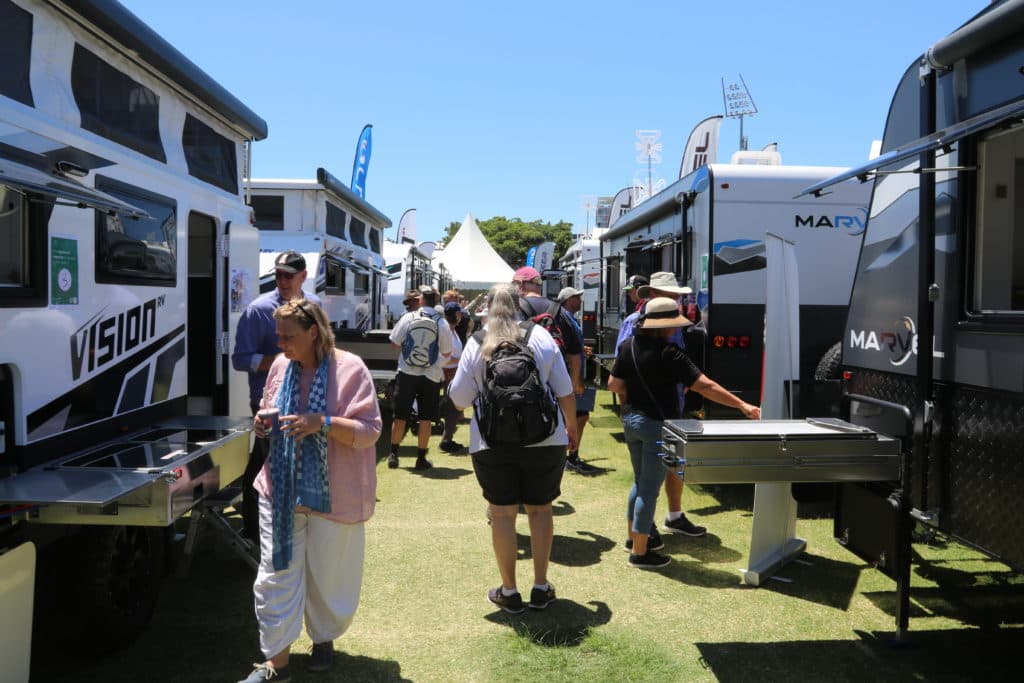
There is a particular moment in buying a new caravan that nobody really prepares you for. You have done the shows, walked through more layouts than you can remember, argued cheerfully about island beds, and finally found the one. And then someone slides a form across a desk and asks for a deposit.
It is a good moment. It should be. But it is also the moment where the relationship between you and the business changes from a conversation into a contract, and the things you assumed were true either get written down or they don't.
This is not a warning. Australian caravan manufacturers and dealers are overwhelmingly small businesses run by people who care a great deal about what they build and sell. Most deposits are taken properly and most builds arrive. The questions below are not about catching anyone out — they are about making sure that six months from now, you and the business remember the same Saturday afternoon the same way.

The short answer
Before you pay a deposit on a new Australian caravan, get four things in writing: exactly what the deposit secures and whether any of it is refundable, the build slot and a delivery window rather than a vague "few months", the full specification including every option and inclusion, and whether the contract lets the business change the price after you sign — and if it does, whether you can walk away without penalty if they do. That last pair is the one that matters most.
What a deposit actually is
A deposit does two jobs, and it helps to know which one yours is doing.
Sometimes it is a holding deposit on a van that already exists — a stock van, a demonstrator, a show van. You are paying to take it off the market for a short period while finance or an inspection is sorted out.
More often, on a new build, it is a commitment payment that buys you a place in a production queue. That is a genuinely different thing. The business will use it to schedule your van, and in many cases to order materials and components that are specific to your choices. Once a chassis has your name on it, unwinding that costs somebody real money.
Neither is wrong. But the amount you should be comfortable paying, and what you should expect if things change, are quite different in each case. So the first question is simply: what is this deposit for?
The ACCC makes a point worth holding onto here: a contract exists whenever a seller makes an offer and a buyer accepts it, and acceptance can happen by signing, by saying yes, or simply through actions such as paying. Handing over a deposit is not a step before the contract. In many cases it is the contract.
Why the wait exists, and why it is not a red flag
If you have been told the van you want is eight months away, it is worth understanding that this is usually a sign of a business doing things properly rather than a business messing you about.
Australian caravans are largely built to order, in batches, by people. The Caravan Industry Association of Australia's State of the Industry 2026 report put local production at 23,963 units in 2025 — down about 4.9% on 2024, but still around 12% above pre-pandemic 2019 levels. Australia's registered fleet grew by about 4% to roughly 937,000 vehicles, of which more than 817,000 are towable and around 119,000 are motorised.
Those are the numbers of an industry that is busy and building, not one that is idling. A queue is what a busy workshop looks like from the outside.
Build slots: the questions worth asking
A build slot is your position in the queue. It is the single most important thing your deposit buys on a new van, and it is the thing most often described in conversation and least often described in writing.
Ask these, and ask for the answers on the contract rather than in an email thread:
"Am I in a specific build slot, or on a general list?" These are different. A slot is a position. A list is an intention.
"What month is my build scheduled to start, and what month is it scheduled to finish?" Two dates, not one.
"What would move my slot, and would you tell me if it moved?" Supply delays happen to everyone. A business that explains its notification process is a business that has thought about it.
"If I change my mind on an option after I've paid, does that move my slot?" Often yes, and that is reasonable — but you want to know before you change your mind about the awning.
Lead times: get a window, not a word
"A few months" is not a lead time. "Around Easter" is not a lead time. A lead time is a range with two ends and a note about what happens if it is missed.
The most useful version sounds like: "Your build is scheduled to start in October and we expect handover between late January and late February. If it looks like slipping past March, we'll tell you by mid-December."
That is not a business over-promising. That is a business that knows its own workshop.
Two practical points:
Ask what the lead time is measured from. From the date you paid? From the date the specification was finalised? From the date the chassis was ordered? These can be weeks apart.
Ask what happens to your other arrangements. People sell their old van, book leave, and occasionally sell a house around a delivery date. If your plans depend on the van arriving, say so out loud and ask for the conservative end of the range in writing.
Price clauses: the part worth reading twice
Some new-build contracts include a term that allows the price to change between signing and delivery — often described as a price variation, escalation, or rise-and-fall clause. They exist for an understandable reason: a business quoting a price eight months ahead is carrying real risk on materials, components and exchange rates.
The question is not whether such a clause exists. It is how it is written.
Here the ACCC's own guidance is unusually clear, and it gives you a test you can apply yourself. Australia's unfair contract terms laws protect consumers in standard form contracts — the pre-written, take-it-or-leave-it kind that most vehicle purchase agreements are. Since 9 November 2023, proposing, using or relying on an unfair term in a standard form contract has been banned outright, with penalties attached. Before that date a court could only declare a term void.
The ACCC illustrates the point with a price-change example that maps onto a caravan contract almost exactly. In its example, one business has a term letting it change the price during the contract, and the customer cannot end the contract even if they disagree with the increase — that term is likely to be unfair. A second business has the same price-change term, but another term lets a customer who does not accept an increase end the contract without penalty — and that, the ACCC says, is likely not unfair, because the exit right balances it.
So the question to ask is not "is there a price clause?" It is:
"If the price goes up before delivery, can I cancel and get my deposit back?"
That single question does more work than any other on this page. A clause that lets the price move and lets you leave without penalty is a fair allocation of risk between two parties. A clause that lets the price move and locks you in regardless is the exact shape the ACCC describes as likely to be unfair.
A few more worth asking while you are there:
"Is there a cap on how much the price can move?"
"What can trigger an increase — and does the same clause work in my favour if costs fall?" The ACCC notes that terms allowing one party but not the other to change the contract are among the examples the law flags.
"Can you show me the clause?" Under the law, a term's transparency matters: whether it is in reasonably plain language, legible, clear, and not hidden. A business that walks you to the clause and reads it with you is telling you something useful about itself.
Two important caveats, because accuracy matters more than a tidy story. First, only a court can decide whether a particular term is actually unfair — nothing here is a ruling on any contract. Second, the unfair contract terms law does not apply to the term that sets the upfront price or to terms defining the main subject matter of the contract. It is aimed at the machinery around the price, not the price itself.
Can you change your mind?
This one surprises people, so it is worth stating plainly.
There is no automatic, general cooling-off period when you buy a caravan in Australia. The ACCC states that consumers have an automatic right to a cooling-off period when buying through telemarketing or door-to-door sales. A purchase made at a dealership, at a caravan show, or in a manufacturer's showroom is not either of those things.
That does not mean you have no rights. A consumer can generally end a contract at no charge if the business said something false or misleading about the goods or the terms, if a service failed a consumer guarantee, or if a cooling-off period is written into the contract itself.
Which leads to the practical version: cooling-off periods on caravan contracts come from the contract. If you want one, ask for one before you sign, and ask for it in writing. Plenty of businesses will agree to a short one. None of them can offer it after the fact.
It is also worth knowing that the ACCC says it is illegal for businesses to force or pressure consumers into entering a contract, and that the terms and conditions of a contract cannot take away the consumer rights that exist automatically under the law.
If the van cannot be delivered
Ask what happens if the build cannot be completed — not because you expect it, but because the answer tells you how the business thinks.
"What happens to my money if the van can't be delivered?"
"Is my deposit held separately, or does it go into general funds?" Practices differ, and the answer is not a judgement on anyone. You are entitled to know.
"Can I pay in stages tied to build milestones?" Some businesses will, some will not. It costs nothing to ask, and it changes your exposure.
If you would like to satisfy yourself about the standing of the business itself, that is a separate exercise with its own free public tools. ASIC's companies register and the Australian Business Register's ABN Lookup are both free, both public, and both take about five minutes.
Eleven questions to take with you
What exactly is this deposit for — holding a specific van, or securing a build slot?
How much of it is refundable, in what circumstances, and by when?
Am I in a specific build slot or on a general list?
What month does my build start, and what month does it finish?
What is the lead time measured from?
If it slips, when and how will you tell me?
Does this contract allow the price to change before delivery?
If it does — can I cancel and get my deposit back without penalty?
Is there a cap on the increase, and can you show me the clause?
Is there a cooling-off period, and can we write it in?
Is every option, inclusion and accessory we discussed listed on the contract?
Print it, screenshot it, or read it once in the car park. You will not need all eleven — you will need the four or five that apply to the van in front of you.
What we are not going to tell you
Some articles will give you a "normal" deposit percentage or a "typical" lead time for an Australian caravan. We are not going to, because we cannot verify either figure, and a made-up benchmark is worse than none. Deposits and lead times vary enormously by manufacturer, by model, by how customised your build is, and by what is happening in the supply chain that month.
What we can tell you is which questions produce an answer you can rely on. Ask them of two or three businesses and you will have your own benchmark within a week — one built from real quotes rather than from someone's guess.
Nothing here is legal advice. If a contract term worries you, the ACCC points consumers to the consumer protection agency in their state or territory, and a solicitor will read a purchase contract for a fraction of what a caravan costs.
Common questions
Is a caravan deposit refundable in Australia?
It depends entirely on the contract you signed. There is no general rule that makes a caravan deposit refundable or non-refundable. Ask before you pay, and get the answer in writing on the contract itself rather than in conversation.
Is a price rise clause in a caravan contract legal?
A price variation clause is not automatically unlawful. Under Australia's unfair contract terms laws, the ACCC's guidance indicates that such a term is much less likely to be unfair where the contract also lets a customer who does not accept the increase end the agreement without penalty. Only a court can decide whether a specific term is unfair.
Do I get a cooling-off period when I buy a caravan?
Not automatically. The ACCC states that automatic cooling-off rights apply to telemarketing and door-to-door sales. A purchase at a dealership or a caravan show is generally neither, so any cooling-off period you get is one written into your contract. Ask for it before you sign.
How long should I expect to wait for a new Australian caravan?
There is no reliable national figure, and we would rather say so than invent one. Ask each business for a start month and a finish month, and compare the answers across two or three quotes.
Should I pay a deposit at a caravan show?
Shows are a legitimate and often very good place to buy — the whole industry turns up and there are real offers on the table. Just treat the paperwork the same way you would on any other day. If a deal is only available for the weekend, ask for the offer in writing and read the price and cancellation terms before you sign, not after.
What if the business goes into administration before my van is built?
This is the question behind most deposit anxiety, and the honest answer is that outcomes depend on the specific circumstances and on where your money sat. What you can do beforehand is check the business's standing yourself on the free public registers — ASIC's companies register will show whether a company is registered, deregistered, or listed as under external administration, and it costs nothing to look.
Before you go looking
If you are still deciding what to buy rather than how to buy it, the first-time buyer's checklist covers the physical walk-around. If you are looking at a used van instead of a new build, a PPSR check does a different and equally important job.
And if the wait on a new build is longer than your plans allow, that is a perfectly good reason to look at what is already sitting on a lot somewhere in Australia.
Browse what's available now. No commission, ever. See caravans for sale on VANTURE, or find a dealer near you.
Thinking of selling? Sell your caravan on VANTURE — free to list, same price whatever it's worth, and no commission ever.
List your caravan free