Anderson Plugs Explained: Do You Need One, What Size, and What It Costs to Fit

If you have just ordered your first caravan, there is a fair chance a salesperson, a forum, or a well-meaning neighbour has already told you that you "need an Anderson plug." You nod along, write it on the list, and quietly wonder what one actually is and whether it is another few hundred dollars you did not budget for.
Here is the honest version, written for the weeks between signing the paperwork and towing your van home — the window where most of these decisions get made in a hurry. No jargon, no upselling, and no pretending the answer is the same for everyone. Because it is not.
What an Anderson plug actually is
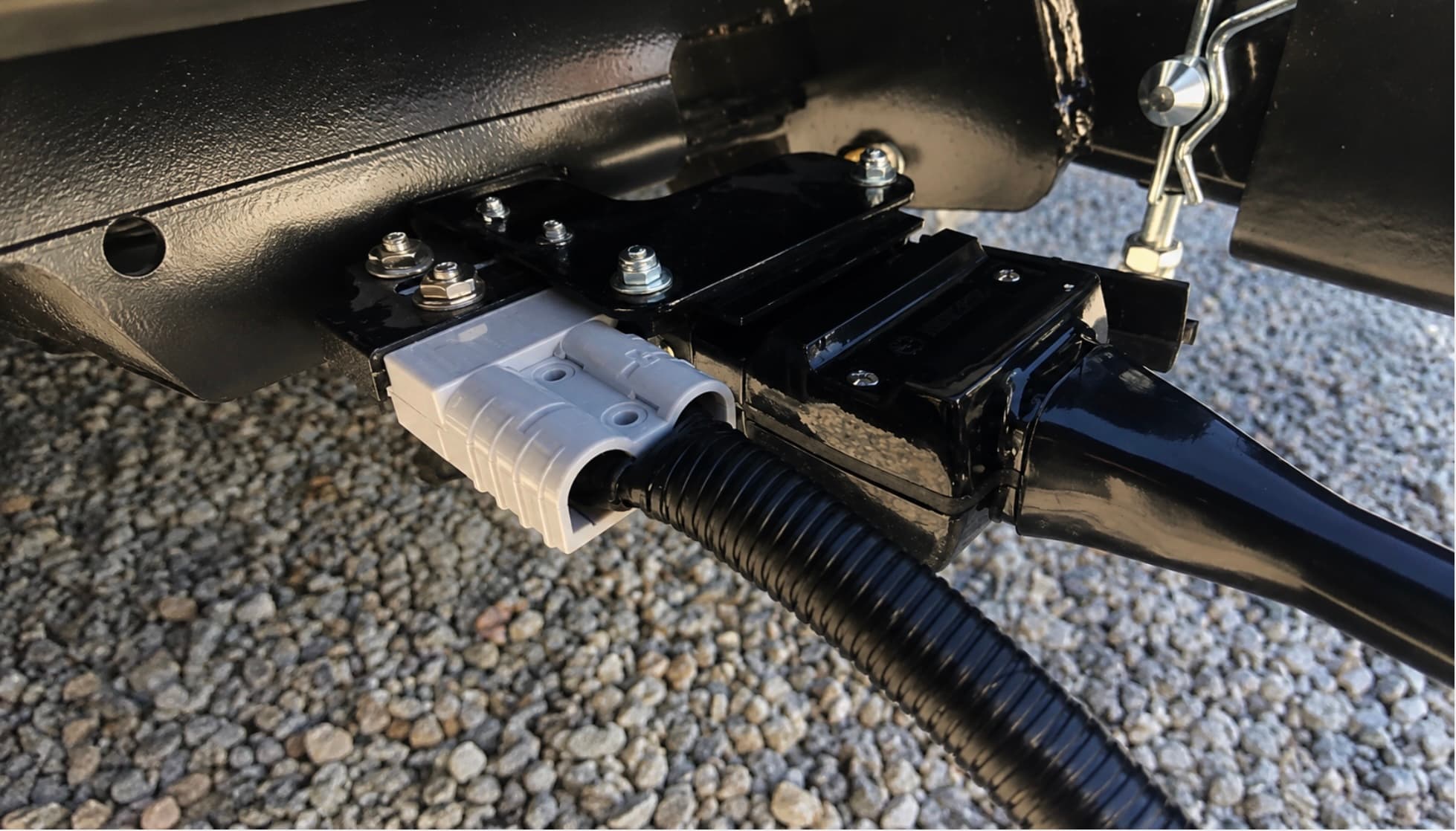
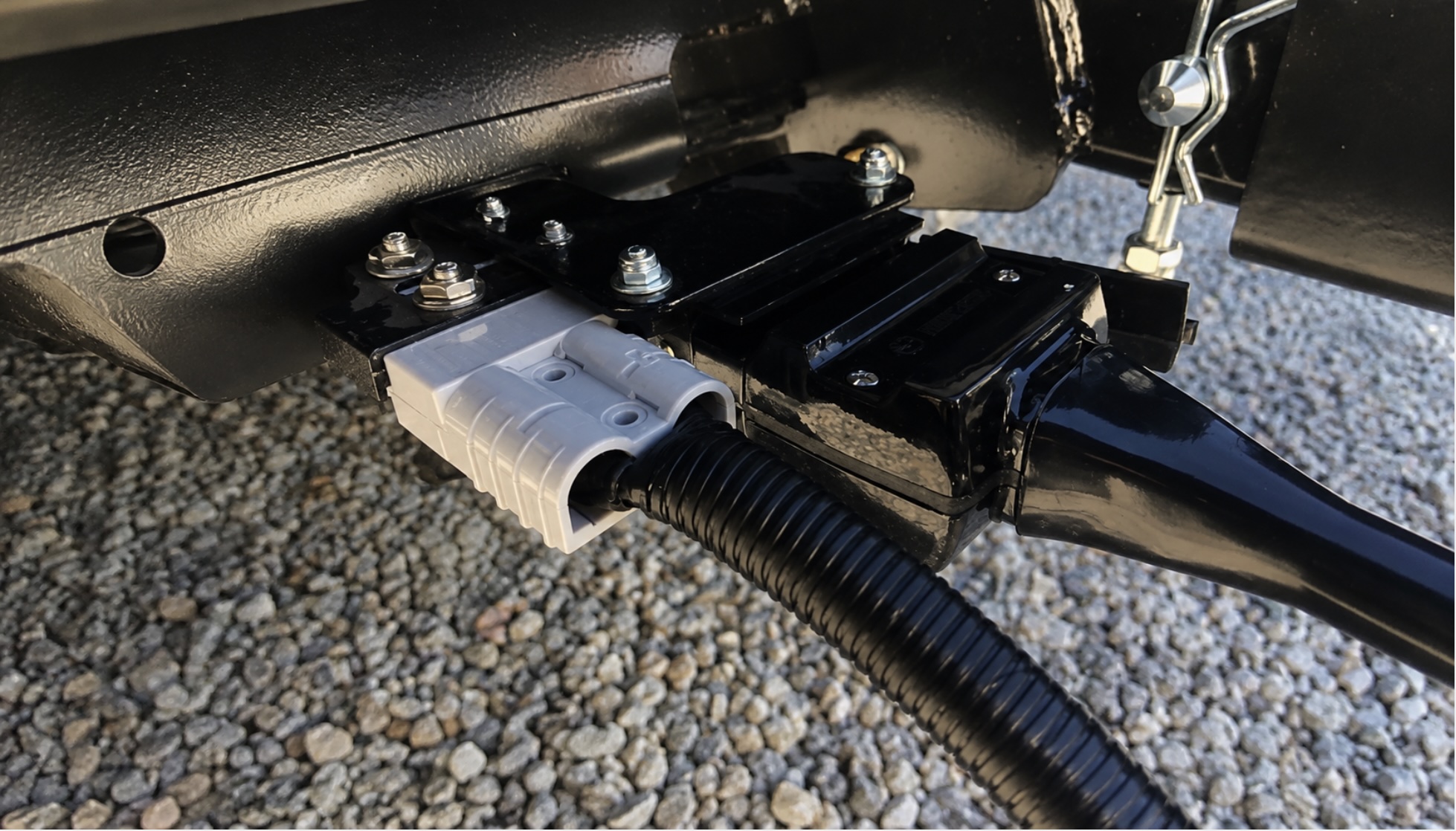
An Anderson plug is a heavy-duty electrical connector. That is the whole story. It is the chunky, usually grey, rectangular plug you have seen bolted to the front of caravans and the towbar of four-wheel drives. The name comes from Anderson Power Products, the American company that designed the original; like "Esky" or "Ute", the brand name has quietly become the word Australians use for the whole category.

What makes it different from the round or flat seven-pin trailer plug you already know is the amount of electrical current it is built to carry. The seven-pin plug handles your trailer lights, brakes and indicators — small, steady loads. An Anderson connector is designed to move a lot more power safely, which is exactly what you need when the job is charging a battery rather than lighting a tail-lamp.
That single difference; current capacity — is the reason the plug exists on caravans at all.
Why caravanners use them
There are two common jobs an Anderson plug does, and it helps to know which one you are actually solving for.
The first is charging your caravan's house battery while you drive. If your van has its own battery (or bank of batteries) running the fridge, lights, water pump and USB points, that battery needs to be refilled. Plenty of people do that with solar, or by plugging into mains power at a caravan park. But when you are on the move between stops, the neatest way to top it up is to draw charge from your tow vehicle's alternator. The seven-pin plug is not rated to carry that charging current; an Anderson plug is. Usually there is a DC-to-DC charger involved as well, which manages the charge properly so it is kind to both batteries — but the Anderson plug is the connection that makes it possible.
The second job is connecting a portable solar panel or solar blanket. When you are parked somewhere without mains power and want to lay a folding solar panel out in the sun, it typically terminates in an Anderson plug that clips straight into a matching socket on your van. Simple, quick, no tools.
If neither of those describes how you plan to travel, you may genuinely not need one yet. Which brings us to the question that matters.
Do you actually need one?
Ask yourself how you intend to camp, at least for the first few trips.
If you will mostly stay at powered sites — caravan parks, showgrounds, powered bays — and plug into 240-volt mains each night, your battery gets charged that way and a portable solar panel is a nice-to-have rather than a must. In that case an Anderson plug is optional, and there is no shame in skipping it until you know you need it.
If you don't have roof mounted solar panels and plan to spend time off the mains — free camps, national parks, station stays, or just long driving days where the fridge has to keep running — then yes, an Anderson plug (paired with a proper DC-to-DC charger, or feeding a solar setup) earns its place. It is the difference between arriving with a full battery and arriving with a warm fridge and a flat one.
Most new buyers land somewhere in the middle and end up fitting one within the first season. That is fine. The useful thing is to decide on purpose, rather than buying it because someone said the word at handover.
Not sure which way you travel yet? That is the most common — and most honest — answer for a first-time owner. You can always add an Anderson plug and charging setup after a trip or two, once you know whether you are a powered-site tourer or an off-grid wanderer. Browse caravan power and electrical specialists on the VANTURE Services directory when you are ready.
Grey, red, blue: what the colours mean
This is where a lot of people get quietly confused, so let us clear it up.
Anderson-style connector housings come in different colours — grey, red, blue, and others. The colour is not decoration. Each colour is mechanically keyed, which is a fancy way of saying a grey plug will only mate with a grey socket, a red with a red, and so on. You physically cannot join two different colours together.
Why would anyone want that? Safety. If a rig has more than one circuit — say a general charging line and a separate solar line, or systems running at different voltages — colour-coding the connectors stops someone from accidentally plugging the wrong two things together. On a caravan, the everyday charging and solar connections are almost always the standard grey connector, which is why grey is the one you see most and the one most accessories are built to match.
So when a shop asks "grey or red?", the safe default for a typical caravan is grey — unless your particular setup has been deliberately wired to use another colour to keep circuits apart. If you are unsure, match whatever is already fitted to your van, and ask the installer why if it is anything other than grey.
What size do you need?
Anderson connectors are rated by the amount of current they can carry, measured in amps. Caravans overwhelmingly use the common grey connector that is rated around 50 amps — enough for battery charging and portable solar for the vast majority of setups. That is almost certainly the one you want.
Larger connectors (rated much higher) exist for heavy-duty jobs like feeding a big inverter or a serious lithium system with high charge rates. Smaller ones exist too. Unless you are building an unusually power-hungry setup, the standard grey 50-amp connector is the right starting point, and an installer will tell you if your specific gear calls for something bigger.
The number that matters more than the plug itself, though, is the one nobody puts on the box: the size of the cable behind it.
Why the fitting matters more than the plug
Here is the part worth slowing down for. The plug is cheap and the plug is not the risk. The wiring is.
To carry charging current safely over the length of a caravan and tow vehicle, the cable has to be thick enough for the current and the distance, and the circuit has to be properly fused. Get the cable too thin or skip the fuse, and you have a connection that can overheat — and high-current DC wiring that overheats is a genuine fire risk, not a theoretical one. This is not a scare tactic; it is the single reason to take the install seriously.
Terminating an Anderson plug onto an existing, correctly-sized cable is a simple crimping job many handy owners do themselves. But running a new heavy-gauge cable the length of your vehicle, choosing the right cable size, adding the correct fusing, and wiring in a DC-to-DC charger is a different matter. For that, an auto electrician or caravan electrical specialist is money well spent. They will size the cable to your run, fuse it correctly, and mount everything so it survives corrugations and years of vibration.
If you take one thing from this article, let it be this: judge the job by the wiring, not the plug. A twenty-dollar connector on undersized, unfused cable is worse than no Anderson plug at all.
Getting it fitted properly is the whole game. Find auto electricians and caravan power specialists near you through the VANTURE Services directory — the people who size the cable, add the fusing, and wire the DC-to-DC charger so it is safe and lasts.
What it costs to fit
We are not going to quote you a single figure, because there genuinely isn't one — and anyone who gives you a firm number without seeing your van is guessing.
The cost depends almost entirely on the scope. Simply fitting a connector to a cable that is already run is at the cheap end. A full setup — new heavy cable run front to back, a DC-to-DC charger, fusing, a solar input socket, and labour — sits much higher, because you are paying for hours of skilled work and quality components, not the plug. The right way to budget is to decide what the job actually includes first (just a plug? or a whole charging system?), then get a couple of quotes from specialists for that specific scope.
What you should not do is choose the cheapest quote that skips the cable-sizing or the fuse. That is the corner that costs you later.
The short version
An Anderson plug is a heavy-duty connector that lets you charge your van's battery while towing, or plug in a portable solar panel. You need one if you plan to camp away from mains power; you can happily wait if you mostly use powered sites. For a normal caravan, the standard grey, roughly 50-amp connector is the right choice. And the plug is the easy part — the cable size, the fusing and the install are what keep it safe, so get those done by someone who knows caravan electrics.
Decide on purpose, buy the right size, and pay for the fitting to be done properly. Do that and you will never think about it again — which is exactly how good caravan gear should feel.
Also in this series
Thinking of selling? Sell your caravan on VANTURE — free to list, same price whatever it's worth, and no commission ever.
List your caravan free