Caravan Must-Haves: What to Buy Before Delivery vs What Can Wait 6 Months

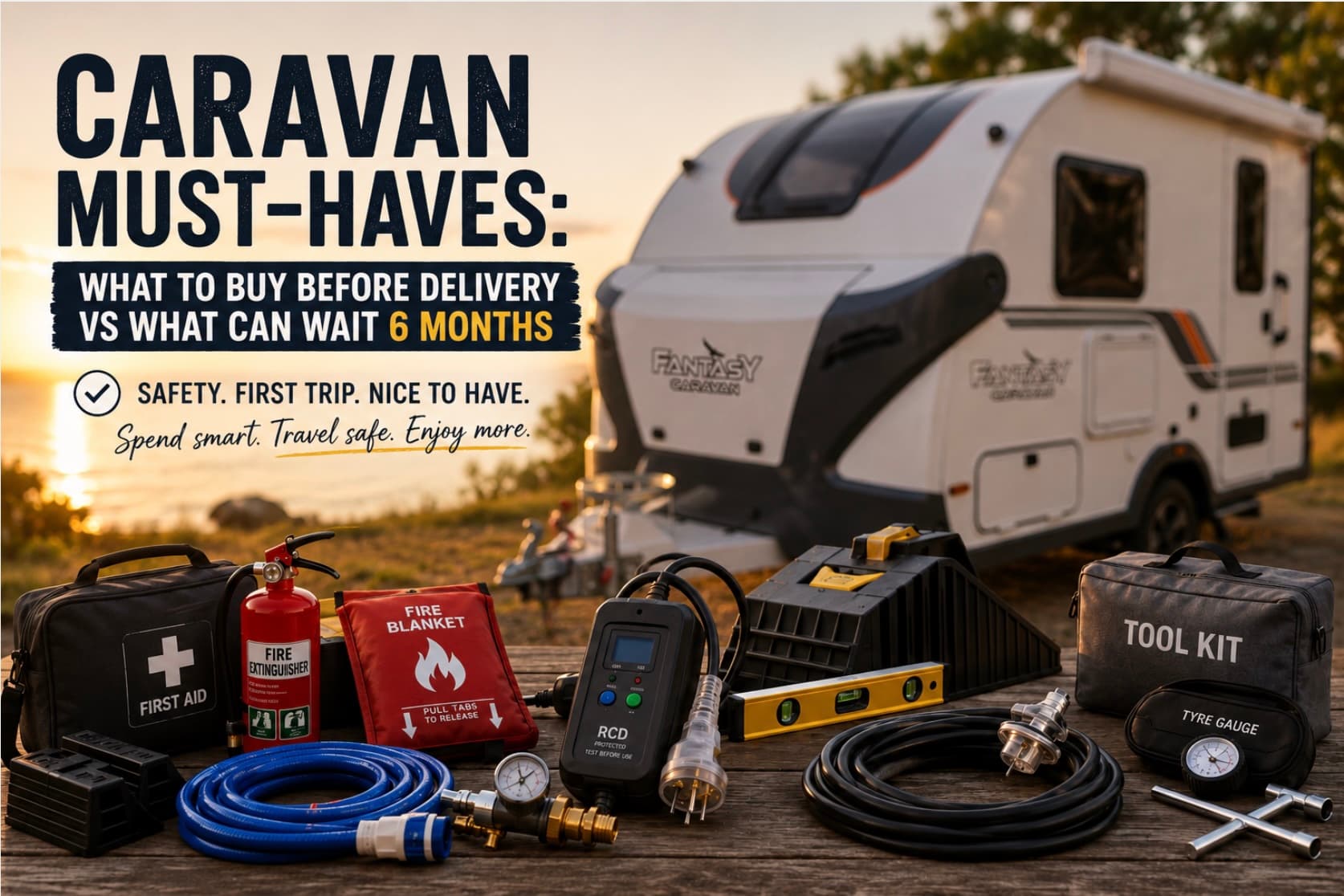
There is a particular kind of excitement that arrives the day you order a caravan and does not leave until the day you tow it home. It is a wonderful feeling. It is also, if we are honest, a slightly dangerous one for your bank balance — because in those weeks of waiting, every accessory shop and online store is very keen to help you spend it.
You do not need most of it. Not yet, anyway.
This is a plain, honest list built for the pre-delivery window: the things genuinely worth buying before you pick up your new van, and the things that can happily wait until you have done a trip or two and learned how you actually travel. Nobody knows that on day one — not you, not the salesperson, not the bloke on the forum. So the smartest money is the money you don't spend until you do.

First, the honest principle
Almost every caravan accessory falls into one of three buckets:
Safety and legal — buy it before you tow. No debate.
First-trip practical — you will want it on your first weekend away, so get it sorted.
Nice-to-have — real, useful, and much smarter to buy after you know your travel style.
The mistake first-timers make is buying bucket three before they have finished buying bucket one. Let us go through them in order.
Buy before you tow: safety and legal
This is the non-negotiable list. Do not leave the dealership without a plan for these.
Towing mirrors. If your caravan is wider than your tow vehicle — and most are — the law requires you to have a clear view down both sides. Fixed or clip-on extension mirrors are not optional; they are a road rule and, more importantly, they are how you avoid a very expensive lane change. Sort these before your first drive.
Fire extinguisher and fire blanket. Many vans come with an extinguisher fitted, but check it is there, check it is in date, and add a fire blanket for the kitchen. A gas cooktop in a small space makes a fire blanket one of the best few dollars you will ever spend.
First aid kit. A proper one, kept somewhere everyone can find it. You are often a long way from a chemist.
Wheel chocks and a jockey wheel that works. Chocks stop the van rolling when you unhitch on anything but dead-flat ground. Confirm the jockey wheel is sound before you rely on it.
A basic tool kit and a tyre pressure gauge. You do not need a workshop — a decent socket set, screwdrivers, pliers, and a reliable gauge cover most roadside moments. Caravan tyres run specific pressures, and checking them is one of the simplest things that prevents a blowout.
None of this is glamorous. All of it matters more than the awning lights.
Weight is a safety item too. Before you load up with gear, know your van's payload — the difference between its empty weight and its legal maximum. It is smaller than most people expect, and it fills up fast. Read Understanding ATM, GTM and Tare Weight before you pack, and weigh the van once it's loaded.
Buy before your first trip: practical essentials
These will not keep you off the road, but you will want them on your first weekend, so get them sorted early rather than discovering the gap at a campsite.
Levelling ramps and a spirit level. A van that is not level makes the fridge work harder and the night's sleep worse. A set of levelling ramps or blocks and a small spirit level fix it in two minutes.
A drinking-water hose (food-grade) and a water pressure regulator. Use a hose that is safe for drinking water — a regular garden hose can taint your tank. A pressure regulator protects your van's plumbing from the surprisingly high mains pressure at some parks.
A 15-amp extension lead. Caravans use a 15-amp plug, not the standard household 10-amp. You need the correct heavy lead to connect at powered sites — an ordinary domestic extension cord will not do and is not safe for the job.
A portable RCD or surge protector. Powered sites vary in quality, and a good electrical safety device (an RCD/EMS unit) sits between the site power and your van to protect both you and your appliances. Worth it from day one.
A spare gas bottle and a gas leak check. Run out of gas mid-roast and you will wish you had the spare. Have the gas system checked if you have any doubt about it — a soapy-water leak test is simple and reassuring.
Basic wheel-changing kit. Know where the spare, jack and brace live, and that they suit the van, before you need them on a roadside.
A grey-water hose and a few housekeeping basics. Many sites ask you to drain your sink and shower water into a proper outlet rather than onto the ground, so a length of grey-water hose keeps you welcome. Add an outdoor mat to keep dirt out of the van, a small dustpan and broom, and a couple of wheel-arch-height chocks, and your first setup will feel a lot less like a scramble. None of it is expensive, and all of it saves a trip to the shops on your first Saturday morning away.
Everything on this list earns its keep on trip one. Buy quality where safety is involved; you will not regret it.
What can honestly wait
Here is the part the accessory catalogues would rather we skipped. Most of the exciting stuff is smarter to buy after a trip or two — because until you have travelled, you are guessing at how you camp, and guesses are expensive.
Big solar and lithium upgrades. Unless you are heading bush from day one, live with the van's factory power setup for a few trips first. You will learn how much power you actually use, and that tells you what — if anything — to upgrade. Buying a big battery-and-solar package before you know your usage is how people end up with the wrong system twice.
Anderson plugs and DC-to-DC charging. Related to the above: if you will mostly use powered sites at first, you can add a charging setup later once you know you are heading off-grid. Decide on purpose rather than at handover.
Annexes, awning walls and matting. Lovely for a long stay, dead weight for a touring trip. See how you travel before you invest in the full outdoor room.
Diesel heaters, second fridges, satellite internet, fancy kitchen gadgets. All genuinely useful for some people. Whether they are useful for you depends on where and how you go — which you will only know after you have been. Let the first few trips write this list for you.
Every gadget "everyone" says you need. The caravan world is full of enthusiastic recommendations. Some will be perfect for you and some will sit in a cupboard. A trip or two is the cheapest way to tell the difference.
The point is not to be a tightwad. It is that the same money spent in six months buys the right gear instead of the guessed gear.
Learn what you need before you buy it. When you're ready to kit out your van, browse accessory and parts specialists on the VANTURE Services directory — and if you're still choosing your van, you can compare what's for sale on VANTURE.
A simple way to think about it
If a new caravan is the biggest purchase, the accessories are the sneaky second one — and they add up faster than the van. So use a simple test on every item in the cart: "Do I need this to tow safely and legally? Do I need it on my first trip? Or am I buying it because I'm excited?"
Buckets one and two: yes, sort them now. Bucket three: write it down, take the trip, and revisit the list when you get home. You will strike half of it off and buy the other half better.
The best-set-up vans on the road did not get that way at handover. They got that way one trip at a time, by owners who learned what they actually needed and then bought exactly that. There is no rush. The road is not going anywhere, and neither is your excitement.
Also in this series
Thinking of selling? Sell your caravan on VANTURE — free to list, same price whatever it's worth, and no commission ever.
List your caravan free