Questions to Ask a Caravan Manufacturer: Frame, Chassis, Warranty and Longevity

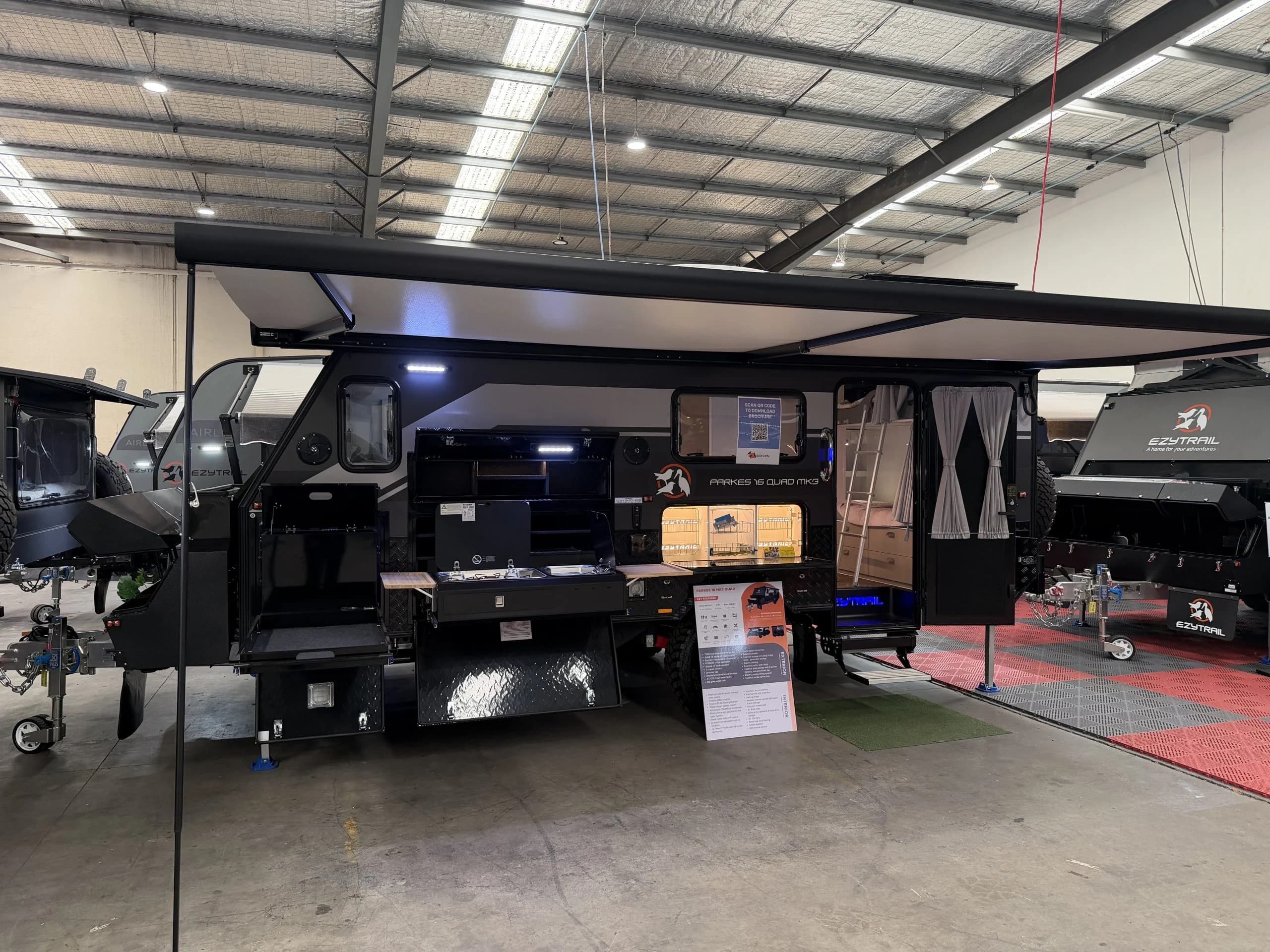
Ask an Australian caravan builder about their chassis and you will usually get more of an answer than you were expecting. That is not a warning either. People who build caravans for a living tend to be proud of how they do it, and the ones doing it well have thought about every join, every bracket and every water path more than you ever will.
Which is why these questions land better than most buyers expect. You are not interrogating anyone. You are giving a builder the chance to talk about the part of the job they actually enjoy.
There is a second reason to ask. A caravan is one of the few things most Australians buy that is genuinely hand-assembled, in small volumes, to a specification you helped choose. That is what makes them good — and it is why the answers vary far more than they would on a mass-produced product.

The short answer
The four questions that tell you the most about an Australian caravan manufacturer are: what the frame and chassis are made of and who makes them, what the compliance paperwork looks like and when you get it, exactly what the warranty document says and what it must contain by law, and how long the business has been trading — which you can check yourself, for free, on ASIC's registers and ABN Lookup in about five minutes.
Frame and chassis: what to ask, and why
You do not need to become a structural engineer. You need to understand what you are buying and be able to compare two vans honestly.
"What is the frame made from, and who builds it?" Timber, aluminium and steel frames all exist in the Australian market, all have long track records, and all have trade-offs. There is no single right answer — there is only the right answer for how and where you travel. What you want is a builder who can explain their choice rather than one who treats the question as an attack.
"Is the chassis built in-house or by a specialist supplier?" Both are completely normal. Many well-regarded Australian manufacturers buy chassis from dedicated chassis builders, which is a specialisation, not a shortcut. Knowing who made yours matters later, when something needs assessing.
"How is the body attached to the chassis, and what happens to that join over corrugations?" This is the question that separates a general answer from a specific one.
"What's behind the walls?" Composite, sandwich panel, framed-and-clad — again, all legitimate, all different. Ask what happens at the joins and what the sealing regime is, because that is where the long-term difference between a dry van and a wet one usually lives.
"How is the plumbing and wiring run, and can it be reached?" Every van needs work eventually. A build where the twelve-volt runs are accessible is a van that stays cheaper to own.
"What are the suspension and brakes, and who services them?" Component brands matter here less than availability. A well-known component with a national service network is worth a lot on a Tuesday afternoon in Longreach. Our guide to suspension, tyres and brakes goes deeper.
"Where is it actually built?" Ask it plainly and without loading it. The honest answer in this industry is often "designed here, assembled here, with a lot of imported components" — true of an enormous amount of Australian manufacturing. If country of origin matters to you, the rules on what a business may claim are more specific than most people realise, and we have covered them in what Australian made actually means on a caravan.
Compliance: the paperwork questions
These are short, factual, and every legitimate builder will answer them immediately.
"When do I get the compliance paperwork, and what will I receive?"
"Will the van be plated with the weights I've been quoted?" Quoted weights and plated weights should be the same number. If they are not, that is a conversation to have before handover, not after.
"Who signed off the gas and electrical work, and will I get those certificates?" Keep them. They matter for insurance, for resale, and for the next person who works on the van.
"If I add solar, a battery or an inverter after delivery, does that affect anything?" Worth knowing before you commit to a plan.
The warranty: what the document must actually contain
This is the section most buyers skip and the one with the most concrete, checkable answers — because Australian law is quite specific about what a written warranty has to include.
A manufacturer's warranty is what the law calls a warranty against defects. According to the ACCC, it is a voluntary extra promise, and once you buy the product it becomes a legal right the business must honour. Crucially, it is in addition to your consumer guarantees and cannot limit or replace them.
The ACCC states that a warranty against defects must be written in language that is easy to read and understand, and must include:
the business's name, address, email address and phone number
what you must do to be entitled to claim
how to make a claim
what the business will do when a claim is made
how long the warranty lasts
who is responsible for any expenses associated with a claim, and how you can claim back expenses you incur
a statement that the warranty's benefits are in addition to your other rights and remedies under the law
the specific mandatory text set out in the legislation
There is also a detail worth knowing that catches people out: the ACCC says the mandatory information must be available with the actual product — it is not enough for a business to point you to a website or a poster in the showroom.
So the practical questions are:
"Can I read the full warranty document before I commit?" Not the summary in the brochure. The document.
"Who pays for what during a warranty claim?" This is the single most expensive line in any caravan warranty and it is the one that varies most. Parts, labour, transport of the van to an authorised repairer, and your own travel are four separate questions. If you live six hours from the nearest authorised repairer, ask specifically how that is handled.
"What voids it?" Warranties can legitimately require you to do things — the ACCC's own example is an annual service. Ask what your obligations are so you can actually meet them.
"Who does the warranty work, and where?" A national network and a single workshop are both workable. They are not the same when you are three states away.
"What's the parts availability like in five years?"
The warranty is not the ceiling
This is the most useful thing on this page, and it is worth repeating because a lot of buyers get it backwards.
Your consumer guarantees under the Australian Consumer Law are automatic, apply on top of any warranty, and continue for a reasonable time depending on the product. The ACCC is explicit that after a warranty against defects expires, the consumer guarantee of acceptable quality usually still applies — which means that if there is a problem, you likely still have a right to a repair, refund or replacement even after the warranty period has ended.
The ACCC also states that businesses must not mislead consumers into thinking their rights are limited to the remedies or timeframes set out in a warranty.
What "a reasonable time" means for a caravan depends on the price you paid, what a buyer could reasonably expect of that van, and the nature of the failure. Nobody can give you a number, and anyone who does is guessing.
On extended warranties, the ACCC's position is short and clear: they are optional, they are usually sold separately, they may or may not give you anything beyond what you already have automatically, and businesses must not pressure you into buying one or mislead you into paying for rights you already hold. If one is offered, the fair question is simply: "what does this give me that the law doesn't already?" A good salesperson will have a straight answer.
Longevity: how to check a business yourself, for free
Nobody enjoys thinking about this part, and it does not need to be dramatic. You are not investigating anyone. You are doing the same due diligence you would do before any large purchase — and the tools are free, public, and take about five minutes.
ASIC publishes a plain guide to exactly this. Its suggested sequence:
1. Check the ABN. Search the business on the Australian Business Register's ABN Lookup, by name, ABN or ACN. ASIC lists the warning signs as: the trading name is not listed, the ABN or ACN you were given does not appear, or the number links to an entity that seems different from the business you are dealing with.
2. Check who owns the business name. ASIC's business names register shows who owns or operates a registered business name. Most of that information is free.
3. If it is a company, check the companies register. ASIC says to check the company is registered and solvent before dealing with it. The register will also show whether a company is under external administration — which, as ASIC puts it, usually means it is insolvent. Warning signs ASIC lists: no results for the ACN, the company listed as deregistered, or the company listed as under external administration.
4. If you want more, buy a company extract. For a fee, this shows current directors and how long they have held the role. ASIC flags frequent director changes as something to note, and also flags the situation where the person you are dealing with appears to run the company but is not listed as a director.
5. Optional extras. ASIC also points to its free company alert service, which emails you when documents are lodged about a company you nominate, and to its registers of people banned or disqualified from managing a company.
ASIC makes one qualification that deserves repeating, because it is the honest bit: being listed on a government register does not guarantee a business is trustworthy. It is one input. ASIC's own suggestions for the rest include checking licences with your state or territory fair trading department, checking membership of an industry association, and — the oldest and still one of the best — asking for referees and talking to people who have dealt with the business.
That last one is worth taking seriously in caravanning specifically. This is a community that talks, and owners' groups will tell you more about how a business behaves when something goes wrong than any register will.
What we are deliberately not doing here
We are not ranking manufacturers, and we are not going to name businesses in a discussion about defects or financial position.
That is a deliberate editorial position, not a dodge. Australian caravan manufacturing employs real people doing careful work in a tough market. A list of "brands to avoid" assembled from forum sentiment would be easy to write, would get clicks, and would be worth nothing to you — because it would tell you about the loudest complaints rather than about the vans.
What is worth something is a method you can apply yourself to any builder, including ones we have never heard of. That is what this page is.
Eighteen questions on one page
The build (7)
What is the frame made from, and who builds it?
Is the chassis built in-house or by a specialist supplier — and who?
How is the body fixed to the chassis?
What is the wall construction, and how are the joins sealed?
Can the plumbing and wiring be accessed for service?
What suspension and brakes are fitted, and where can they be serviced?
Where is the van designed, and where is it assembled?
Compliance (4)
What compliance paperwork do I receive, and when?
Will the plated weights match the weights I have been quoted?
Who signed off the gas and electrical work, and do I get the certificates?
Does adding solar or a battery later affect anything?
Warranty (5)
Can I read the full warranty document before I commit?
Who pays for parts, labour, transport and my travel on a claim?
What are my obligations to keep it valid?
Who does warranty work, and where?
What is parts availability likely to look like in five years?
The business (2)
How long have you been building, and under this entity?
If I have a problem in three years, who do I ring?
Common questions
How do I check if a caravan manufacturer is still trading in Australia?
Search the business on ABN Lookup, then — if it is a company — search ASIC's companies register, which shows whether a company is registered, deregistered, or under external administration. Both searches are free. ASIC notes that appearing on a register does not by itself prove a business is trustworthy.
Is a longer caravan warranty better?
Not necessarily. The length of a warranty tells you less than what it covers and who pays for what. A shorter warranty that covers transport of the van to a repairer can be worth more than a longer one that does not. And under the Australian Consumer Law, your consumer guarantees continue for a reasonable time regardless of the warranty period.
Do my rights end when the caravan warranty expires?
No. The ACCC states that after a warranty against defects expires, the consumer guarantee of acceptable quality usually still applies, so you may still have a right to a repair, refund or replacement. Businesses must not mislead you into thinking your rights are limited to the warranty period.
Should I buy an extended warranty on a caravan?
That is your call, but ask one question first: what does it give you that the law does not already? Extended warranties are optional, and the ACCC says businesses must not pressure you into buying one or mislead you into paying for rights you already have automatically.
Is a timber-framed caravan worse than an aluminium one?
No, and anyone who tells you otherwise is simplifying. All the common framing materials in the Australian market have long track records and different trade-offs in weight, repairability and behaviour on rough roads. Ask the builder to explain their choice for the way you intend to travel.
What is the single most useful build question?
"How is the body fixed to the chassis, and what happens to that join on corrugations?" It is specific enough that a vague answer tells you something, and it goes straight to the structure that matters most on Australian roads.
Where to next
If you are comparing what different Australian builders offer, start with the makes directory and see what is actually on the market. If you are still narrowing down the type of van, the first-time buyer's checklist covers the physical walk-around. And when something needs attention later, the caravan repairs directory lists workshops around the country.
Nothing here is legal advice. If you have a dispute with a manufacturer, the ACCC directs consumers to the consumer protection agency in their state or territory.
Have a look at what's out there. Free to list, no commission, ever. Browse caravans on VANTURE or explore Australian caravan makes.
Thinking of selling? Sell your caravan on VANTURE — free to list, same price whatever it's worth, and no commission ever.
List your caravan free