What to Look For When Buying a Used Pop Top: The 41-Point Inspection

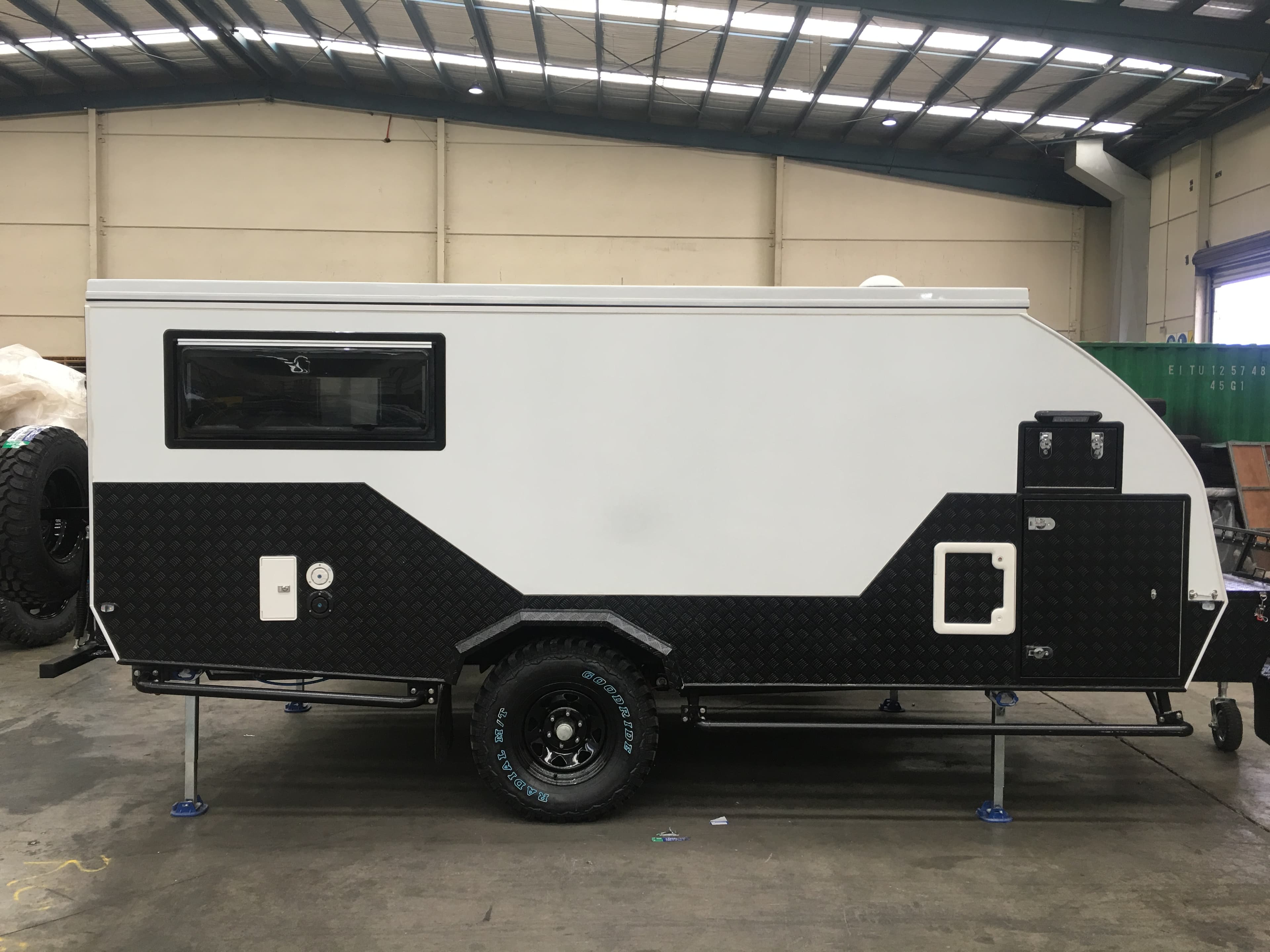
Pop tops have one of the most loyal followings in Australian caravanning, and for good reason. That lowering roof means less height to tow, less wind to push against, and — for a lot of owners — the difference between a van that fits in the garage and one that lives at a storage yard. On the used market they're often the smart money: well-built, well-loved vans that have already taken their depreciation hit.
But a used pop top asks for a different inspection than a full-height van. The roof is the whole point of the design — and it's also where the wear happens. The lifting mechanism, the canvas or vinyl skirt, and the seal that closes it all up for travel are components a full-height van simply doesn't have, and none of them appear on a generic caravan checklist.
That's what this guide is for. Our First-Time Caravan Buyer's Checklist covers the full inspection that applies to any van — floor, chassis, bearings, gas, electrical, PPSR. This is the pop-top layer that sits on top of it. Run both and you've done a more thorough job than most paid inspections.

A note before we start: none of this is about catching a seller out. Most pop-top owners look after their vans carefully — that's rather the point of the breed. The inspection is about understanding exactly what you're buying, so the price reflects the condition and there are no surprises on your first trip.
First, understand what you're inspecting
A pop-top roof is raised and lowered on a lifting system — typically scissor-action arms, spring assistance or gas struts, depending on the maker and era. When raised, the gap between roof and body is enclosed by a skirt of canvas or vinyl, usually with zippered mesh windows. When lowered, the roof compresses onto a rubber seal and is held down for travel by over-centre clamps or latches.
Three systems, three sets of things that wear: the mechanism, the skirt, and the seal. Everything below follows that logic.
A. The roof and lifting mechanism — inspect it raised (1–8)
1. Have the seller raise the roof first — then do it yourself. Watching shows you the technique the van expects. Doing it yourself tells you what the mechanism actually feels like: it should be a smooth, manageable lift, not a wrestle.
2. Watch for even rise. The roof should come up square, all four corners together. A corner that lags or binds points to a worn or bent arm on that side.
3. Inspect the lifting arms and hardware. Look at the scissor arms, springs or struts for rust, bent sections, cracked welds or obvious repairs. Surface corrosion is common on older vans; deformed metal is not.
4. Check that the roof holds its height firmly. Gas struts and springs lose strength with age. A roof that drifts down, or needs propping, means the assist components are due for replacement — a knowable, negotiable cost, but you want to know it now.
5. Examine the mounting points. Where the mechanism bolts to the body and the roof, look for hairline cracks, elongated screw holes, pulled fasteners or doubled-up repairs. This is where lifting stress concentrates.
6. Get eyes on the roof surface. Bring a small step ladder. Look for hail damage, cracked or lifting sealant around vents and any roof-mounted equipment, and ponding marks where water has sat.
7. Ask about anything added to the roof. Air conditioners and solar panels are common and often perfectly fine — but a pop-top roof and its mechanism are engineered for a certain weight. Ask what was added, when, and whether the springs or struts were upgraded to suit.
8. Check the ceiling from inside. Water stains, sagging panels or soft spots in the ceiling lining are the roof telling you its history.
B. The canvas or vinyl skirt (9–16)
9. Inspect every panel of the skirt in daylight. Better still, step inside with the doors shut and the lights off — pinholes and thin patches show up as points of light.
10. Use your nose for mould. Musty smell, black or grey spotting on the fabric — mould in canvas is hard to fully remove and usually means the van was packed away damp at some point.
11. Check the stitching. UV eats thread before it eats fabric. Run your eye along every seam and tug gently — stitching that pulls apart means the skirt is nearing the end of its life even if the material looks good.
12. Run every zipper. Window flaps and vents should zip freely, with no missing teeth or separated tracks.
13. Look at the clear vinyl windows. Clouding, yellowing and cracking are age. They can be replaced — factor it in.
14. Check the insect mesh. Small tears become big ones. Mesh is repairable, but it's a job.
15. Inspect the attachment points. Wherever the skirt fixes to the roof and the body — tracks, velcro, buttons — check nothing is torn away or pulling loose.
16. Ask whether the skirt has ever been replaced. A professionally re-skinned pop top is a genuine plus — it's the single biggest wear item renewed. Ask who did the work.
C. Lowered for travel (17–22)
17. Lower the roof and check it sits square. An even gap all the way around. A roof that sits high on one corner isn't sealing on that corner.
18. Check every clamp and latch. All present, aligned with their catches, and closing with a firm over-centre snap. Loose or misaligned latches let the roof work against the seal on corrugations.
19. Inspect the roof seal. The rubber should compress evenly and spring back. Perished, cracked or flattened seal sections are an entry point for water and dust.
20. Watch the canvas as it folds. The skirt should tuck in cleanly without catching between roof and body. Canvas that pinches on closing wears through at the fold — check those fold lines for chafe.
21. Check nothing fouls the closed roof. Aerials, vent covers, cables — everything should clear or fold away.
22. Push up gently on each corner of the closed roof. A little give is normal; obvious movement means worn latches or seal, and a roof that will move in transit.
D. Water — where pop tops leak (23–28)
23. Check the top of the walls and cupboards, just below the roof line. This is the classic pop-top leak path: water past a tired seal runs down inside the wall lining. Stains and bubbling here matter.
24. Check around every roof penetration. Vents, air conditioner surrounds, solar cable entries — inside and out. Sealant has a working life, and penetrations are where it fails first.
25. Press the roof edges. Softness in the timber around the roof perimeter means water has been getting in for a while.
26. Smell the van when it's first opened. A van that's been shut up should smell stale at worst — not damp.
27. Open the overhead cupboards and look up. The seal line runs right above them; they catch the evidence.
28. Ask when the roof was last resealed. Resealing is normal maintenance on any van, pop tops included. A seller with a date and a receipt is telling you something good.
E. Body, chassis and running gear — the quick pass (29–34)
These apply to every van, so we'll keep them brief here — the full buyer's checklist walks each one in detail.
29. Walk the floor — press into corners and around the bathroom for soft spots.
30. Get under the van — surface rust on chassis rails is manageable; through-rust on structural members is not.
31. Check tyre condition and date codes. Pop tops often sit for long stretches between trips — tyres age out before they wear out. Read the sidewall date code and ask your tyre fitter's advice.
32. Rock each wheel at 9 and 3 o'clock for bearing play.
33. Inspect the coupling and A-frame for play, cracking or repair welds.
34. Function-test the systems — 12V, 240V, gas ignition, water pump — and sight the gas compliance plate.
F. Paperwork (35–38)
35. Read the compliance plate. ATM, GTM and tare should match the listing. If anything substantial has been added since manufacture, the real-world weights have changed too.
36. Run a PPSR check. Two dollars at ppsr.gov.au with the VIN or chassis number tells you whether the van carries registered finance or has been reported stolen or written off. There is no version of this purchase where skipping it makes sense.
37. Ask for the service history. Bearings, brakes, reseals — receipts are the biography of a well-kept van.
38. Check registration status and what a transfer requires in your state.
G. Three questions only a pop-top seller can answer (39–41)
39. "How often was the roof raised, and has the mechanism ever been repaired?" Regular use is actually good — mechanisms that never move seize; seals that never decompress flatten.
40. "Has the canvas ever been repaired or replaced, and by whom?" You're listening for a straightforward answer, whatever it is.
41. "Has the van ever had water inside — and what was done about it?" An honest yes with a proper repair story is worth more than a vague no.
Reading the results: negotiate or walk away
Most of what this inspection finds is negotiation material, not a reason to leave. Tired struts, ageing canvas, perished seals, cloudy vinyl — these are known, priceable jobs, and a fair seller will meet you on them.
The walk-away findings are the structural ones: soft floors and roof edges, mould through the canvas, cracked mechanism mountings, through-rust in the chassis, or a story about water that keeps changing. And as with any used van, an independent pre-purchase inspection is cheap insurance on a significant purchase — you'll find inspection services on VANTURE, along with repairers if the van you love needs a little work to be right.
Ready to find your pop top? Browse used pop tops for sale on VANTURE — or see every pop top listed across Australia. Every listing shows the specs that matter, and you can enquire directly with the seller.
Also in this series
Thinking of selling? Sell your caravan on VANTURE — free to list, same price whatever it's worth, and no commission ever.
List your caravan free