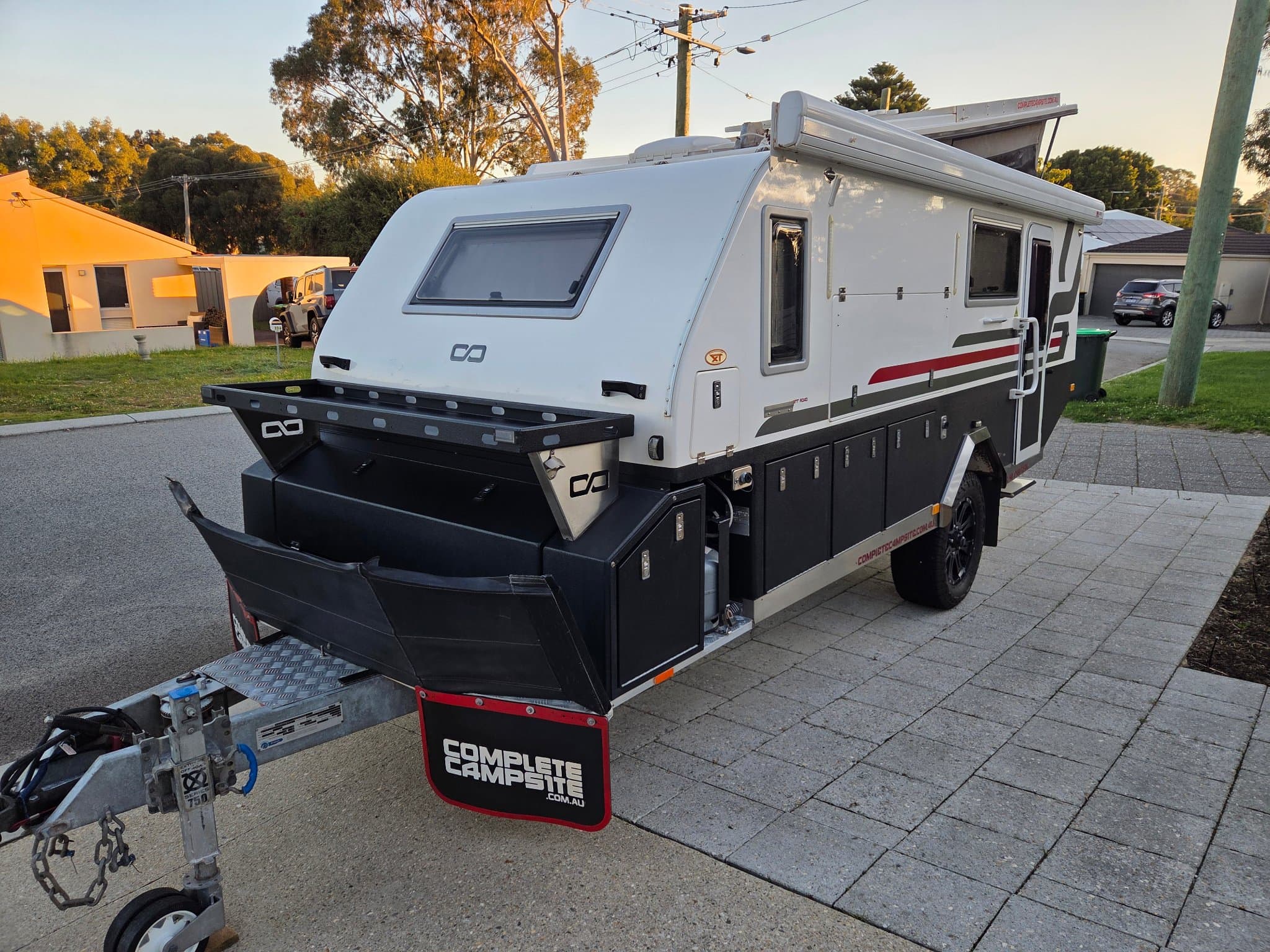
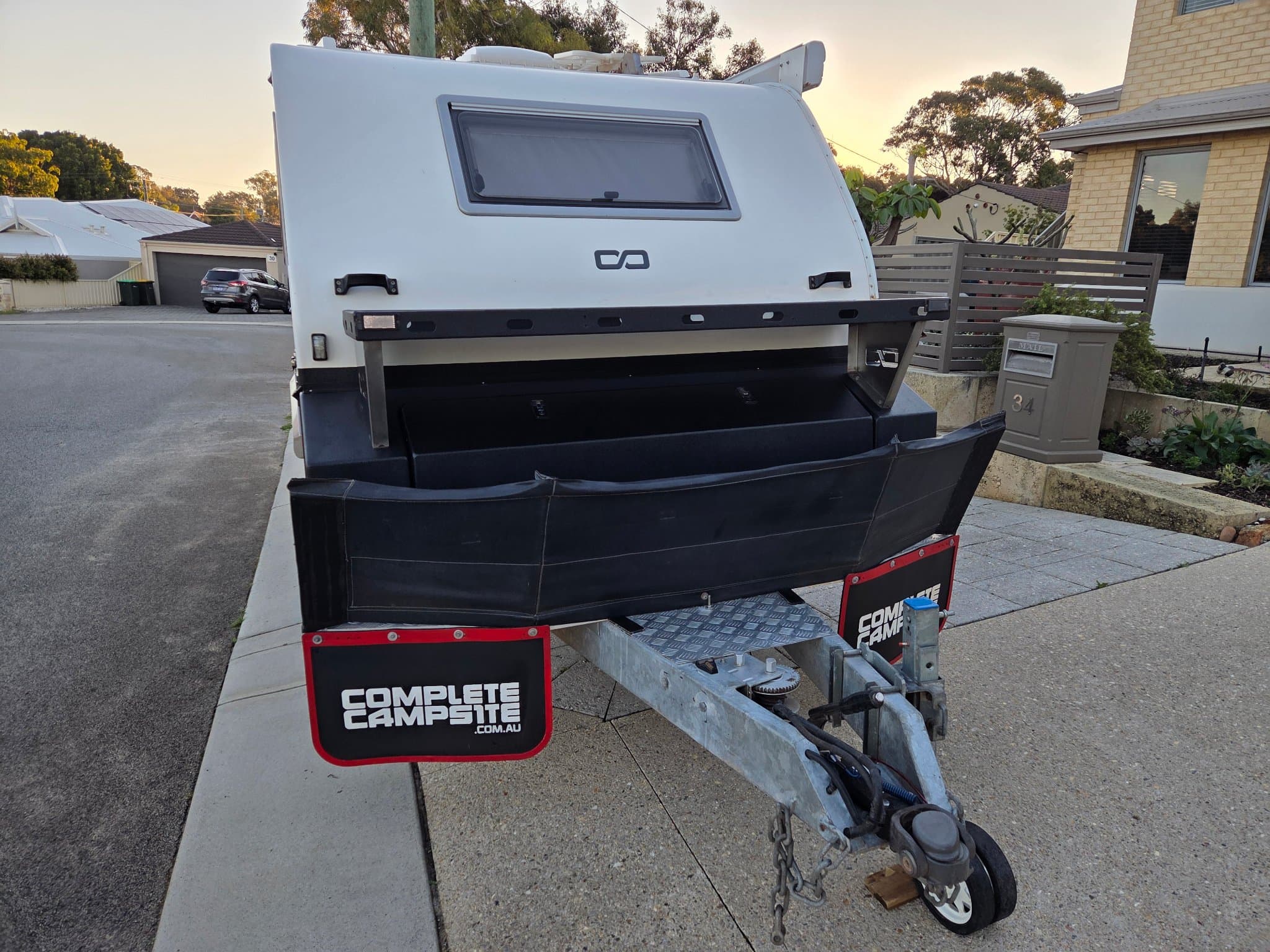
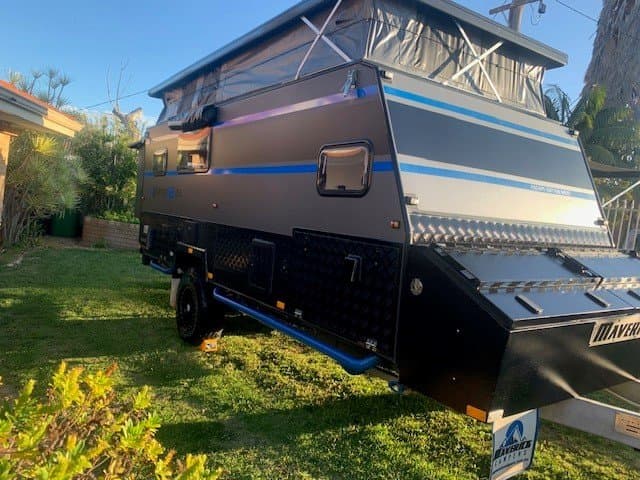
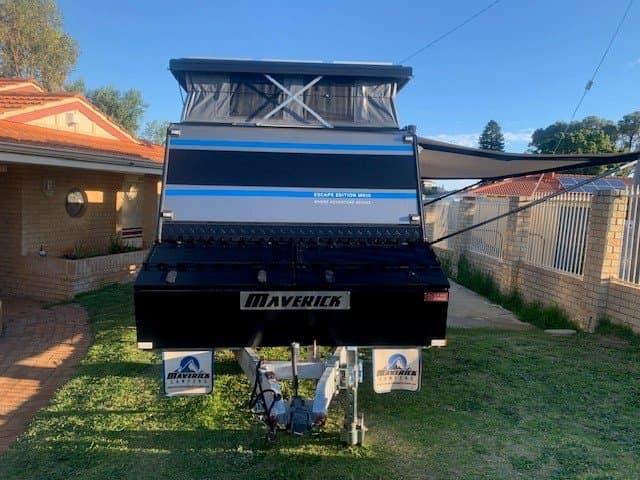
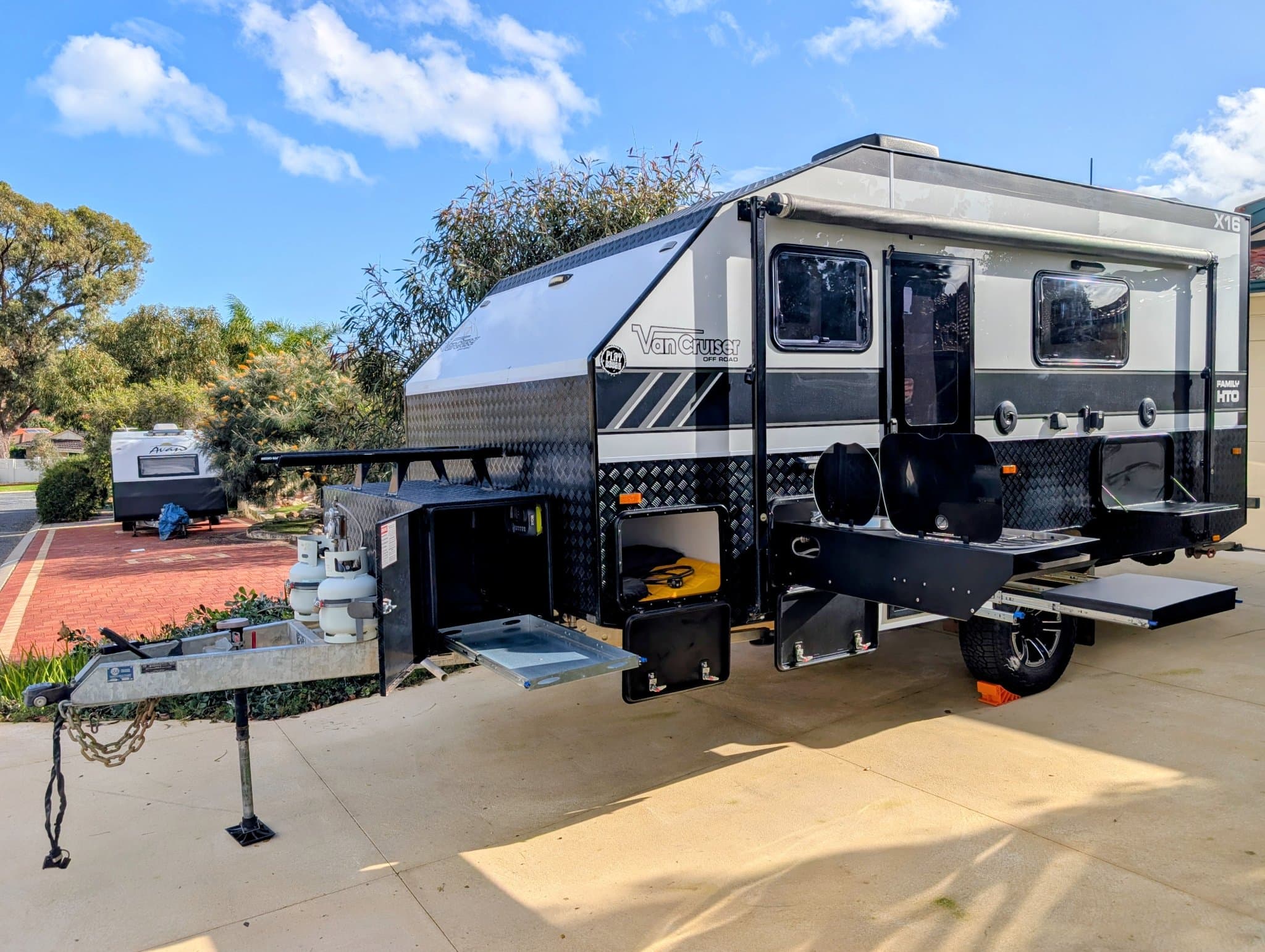
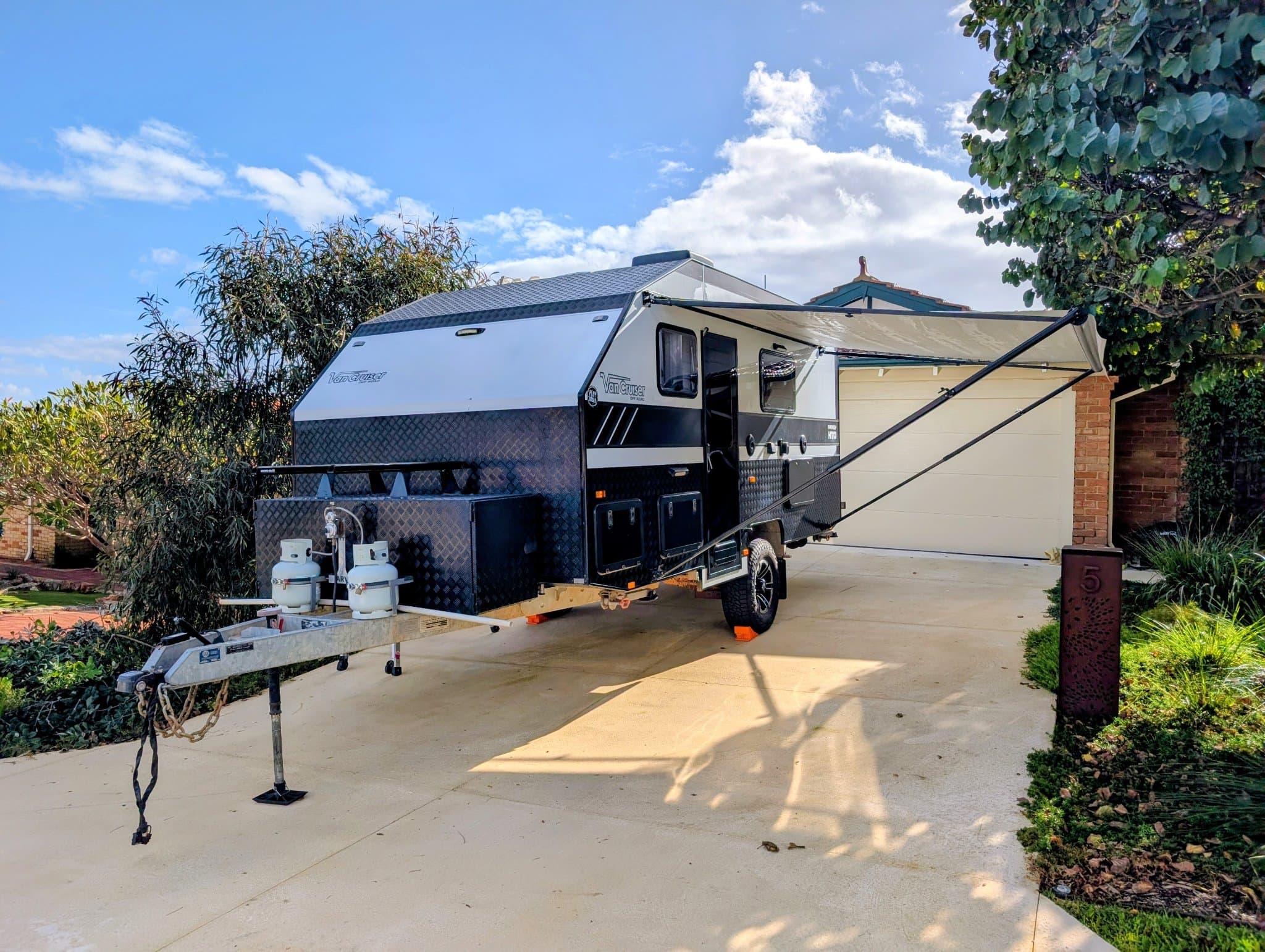
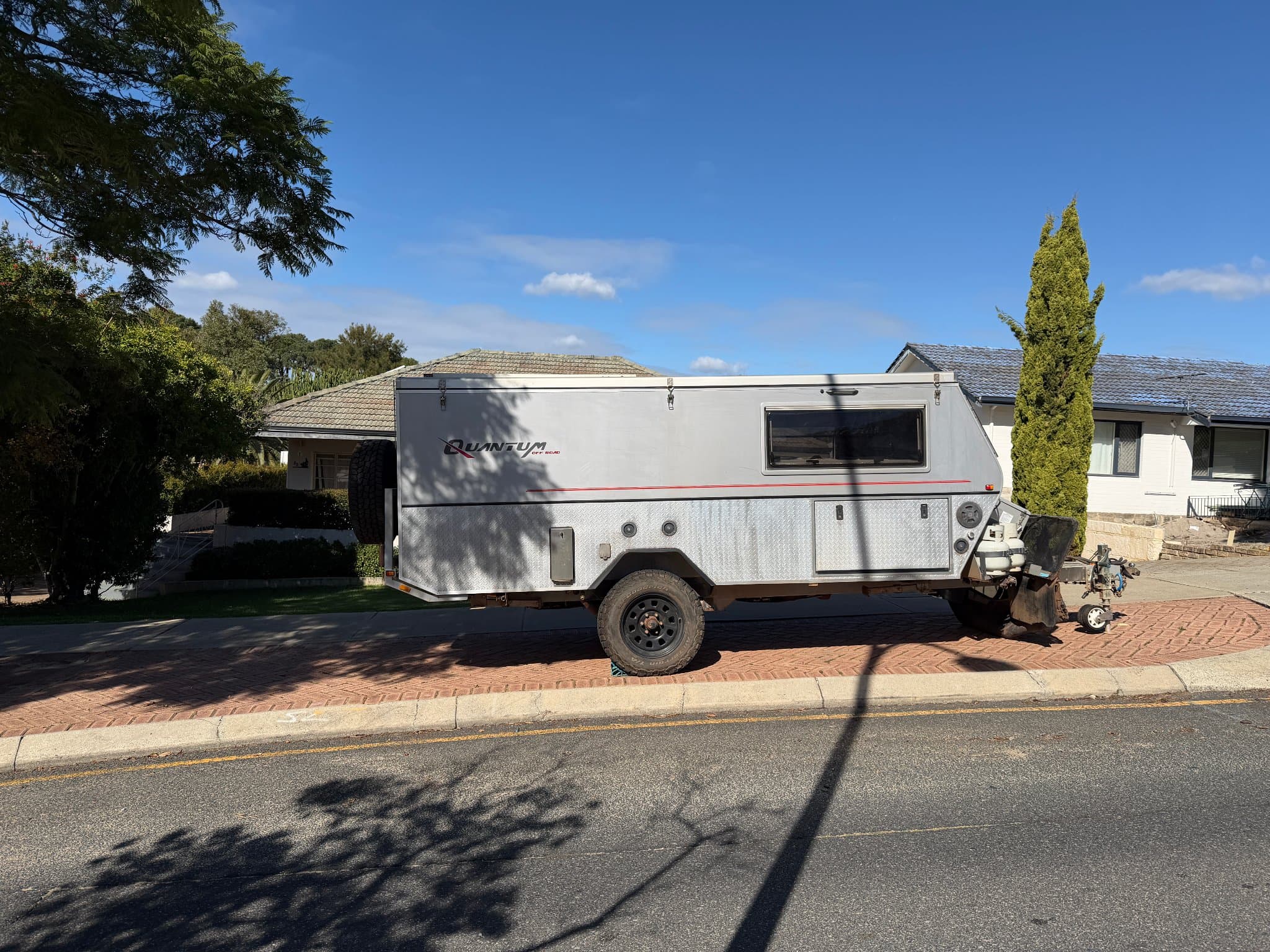
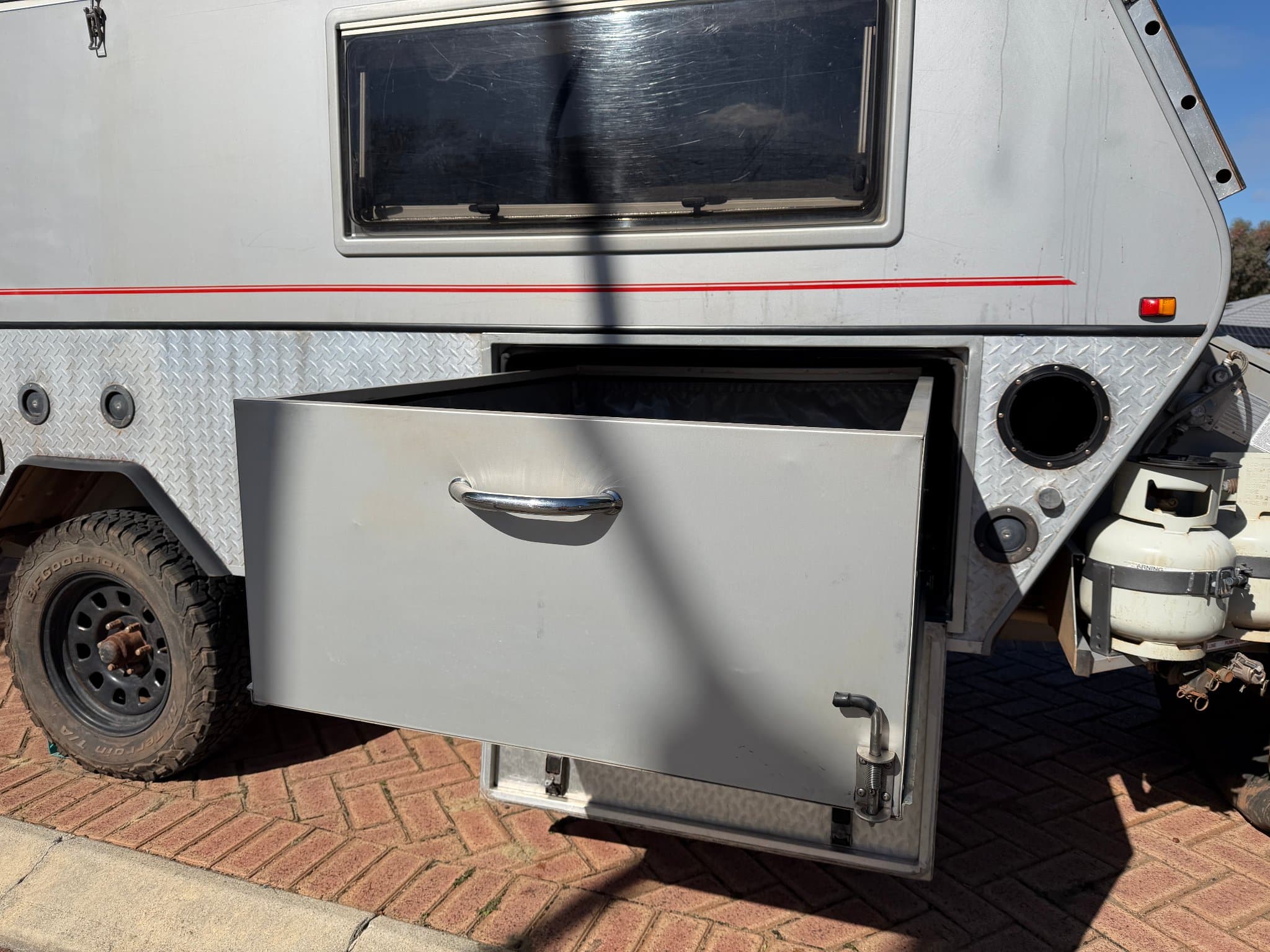
Compare 1 off-road caravans for sale in Bunbury. Filter by make, year, weight class and specs from private sellers and verified dealers — and get pre-approved finance from 6.99% p.a. on every listing.
Be the first to know when an off-road caravan is listed
We'll email you the moment a matching off-road caravan goes live on VANTURE. Free, no account needed, unsubscribe any time.
From VANTURE
Within 100km of Bunbury
Nearby off-road caravans from across the Bunbury region.
Off-road caravans demand robust engineering. Prioritise reinforced chassis and independent suspension built for corrugations and uneven ground. Ground clearance above 280mm protects water tanks and undercarriage when crossing rough terrain. Look for alloy or composite exterior cladding — fibreglass and canvas are prone to UV damage and condensation in remote heat. Check for skid plates under tanks and water lines. On-board water capacity of 80–150 litres supports multi-week touring; battery systems with 200W+ solar capability and dual batteries (or large lithium) enable genuine off-grid independence. Inspect the coupling — a modern, heavy-duty drawbar rated for your tow vehicle's capacity is essential.
What you'll pay for an off-road caravan
Price reflects age, build quality, off-grid kit, and suspension type. Newer models with dual solar panels, large lithium batteries, and reinforced suspension command higher premiums. Used units with good chassis condition but older battery and water systems sit lower. Variations in construction material (aluminium frame vs. full composite), interior fitout (bunks vs. convertible), and track record also influence value. Set an alert to monitor pricing trends as more inventory arrives.
Tow vehicle and weight considerations
Off-road caravans are typically heavier than conventional tourers because of reinforced chassis and suspension. Check the ATM (Aggregate Towing Mass) plate on any unit before committing — it must sit comfortably within your tow vehicle's capacity, ideally leaving 10–15 per cent headroom for payload. A dual-cab HiLux, Ford Ranger, or Isuzu D-Max in good condition typically manages 2500–3500kg ATM depending on year and turbo spec. Lighter compact off-road models suit smaller SUVs (GVM under 3500kg); premium touring rigs need substantial dual-cab or cab-chassis vehicles. Have your mechanic inspect tow-point condition and chassis alignment — off-road damage is often hidden.
Build construction and materials for remote touring
Off-road caravans use three main construction approaches: all-aluminium frames with composite panels (lightweight, corrosion-resistant), traditional timber-frame with canvas or fibreglass (heavier, prone to condensation but proven), and hybrid steel-frame with alloy cladding (robust for rough tracks but more rust risk in coastal regions). Inspect panel fasteners for corrosion, seals around windows and roof vents for damp ingress, and undercarriage for impact damage or welding repairs. Canvas requires annual sealing; fibreglass needs UV protection. Aluminium-framed models demand careful inspection of join integrity — white oxidation at seams signals moisture entry. Any crack or soft spot in the body indicates water damage; walk away from severely compromised units.
Off-grid capability for extended outback trips
Off-road caravans built for remote touring must carry sufficient water, battery, and charging capacity. Fresh water of 80–150 litres supports 1–2 weeks if you're mindful of showers; greywater tanks allow you to recycle washing water. Battery systems range from 100Ah AGM lead-acid (entry level, limited amp-hours) to 200Ah+ lithium (premium, fast recharge, longer cycling life). Solar panels 200–400W on the roof plus a 100A MPPT controller allow you to recharge during the day without running the engine. Gas (LP) hot-water and cooktop systems reduce 12V draw. Test all systems in person before purchase — a theoretical 14-day capacity may shrink dramatically if solar output underperforms or battery capacity is exaggerated.
Choosing between couples and family off-road layouts
Off-road caravans come in single-bunk (couples/solo), convertible-bed (flexible), and multi-bunk (family or group touring) formats. Couples models prioritise payload and off-grid range by shedding excess weight; family layouts trade weight for flexibility and comfort on extended trips with children. Solo travellers often favour compact models with robust chassis but minimal interior space. Consider your typical travel group size and whether you'll camp stationary (larger freshwater and battery systems matter more) or move frequently (lighter ATM aids rough tracks). Many dual-bunk family models suit outback touring if the owner is willing to accept tighter interior space and heavier fuel consumption.
Frequently asked questions about off-road caravans
How much does an off-road caravan cost in Australia?
Price variation reflects construction quality, suspension robustness, off-grid kit, and age. A newer model with reinforced chassis, dual solar, large lithium battery, and full-stainless interior sits at the top end; older rigs with simpler battery systems and canvas body occupy the entry. No confirmed sold history yet, so set an alert to track actual transaction prices as the market develops.
What's the typical weight (ATM) of an off-road caravan?
Off-road caravans are typically heavier than standard tourers because of reinforced chassis, independent suspension, and underbody protection. ATM varies by model, but expect compact off-road rigs to sit around 1800–2400kg, mid-size models 2400–3200kg, and premium touring caravans above 3200kg. Check the compliance plate and have your mechanic verify tow-point and chassis condition before purchase. Your tow vehicle must handle the ATM with at least 15 per cent headroom — marginal towing puts strain on transmission, brakes, and suspension.
What should I look for in an off-road caravan for remote outback touring?
For remote outback touring, look for models with reinforced chassis and independent suspension rated for corrugations and rough track surfaces, ground clearance above 280mm, alloy or composite body panels resistant to heat and UV damage, dual-battery systems (200Ah+ lithium or 400Ah+ AGM), 200W+ integrated solar, freshwater capacity of 100–150 litres, and skid plates protecting tanks and undercarriage. Inspect the coupling and drawbar for wear, and confirm the ATM matches your tow vehicle. Filter the listings by off-road capability and water/battery capacity to find models matching these criteria.
How long does an off-road caravan last?
Well-maintained off-road caravans typically remain road-worthy for 15–20 years of regular Australian touring. Durability depends on construction quality, annual servicing (chassis alignment, bearing packing, seal replacement), and exposure to harsh conditions. Coastal caravans corrode faster; inland units handle heat and dust better. Canvas bodies require re-sealing every 2–3 years; composite and aluminium last longer if protected from UV. Check service history and condition of suspension, brakes, and coupling — these are wear items that shorten lifespan if neglected.
Are off-road caravans still made in Australia?
Several Australian builders manufacture or heavily customise off-road caravans in-country, often starting with imported chassis or shells. Many premium models are imported as near-complete units from European or American manufacturers and finished locally with Australian-spec upgrades (suspension tuning, solar kits, water systems). Chinese-built base models are imported and retro-fitted with locally-sourced components. All approaches are valid — the key is verifying the final assembly quality and warranty support. Ask dealers about after-sales service, spare-parts availability, and repair turnaround times, regardless of build origin.
What's the difference between an off-road caravan and a standard (on-road) caravan?
Off-road caravans feature reinforced chassis, independent or coil suspension, and elevated ground clearance (280mm+) to handle corrugations, rough tracks, and river crossings. Standard tourers use lighter frames, lower suspension (often single torsion-bar), and modest clearance — they're optimised for sealed roads and established campgrounds. Off-road models carry heavier ATM due to underbody protection, skid plates, and robust cladding. Standard caravans prioritise interior space and comfort. Off-road rigs trade interior volume for ruggedness and self-sufficiency. Choose off-road if you plan remote touring; choose standard if you're staying on sealed roads and established parks.
Can I tow an off-road caravan with a regular SUV or sedan?
Only if the SUV or sedan's tow capacity exceeds the caravan's ATM and you leave at least 15 per cent headroom. Most compact SUVs (GVM under 3500kg) can tow 1800–2400kg; larger dual-cab utes manage 3000–3500kg+. Check your vehicle's specification sheet for tow capacity and compare it to the caravan's compliance plate. A HiLux or Ranger typically suits mid-size off-road rigs; smaller SUVs (Subaru Outback, Mazda CX-5) struggle with premium models. Have a mechanic inspect your vehicle's tow-point, brakes, and suspension before committing — off-road caravans demand a sound tow vehicle.
How off-road capable is a typical off-road caravan?
Off-road caravans are designed for rough tracks and remote camping, not extreme rock-crawling. Independent suspension and 280mm+ ground clearance handle corrugations, creek crossings, and uneven ground at moderate speeds. Reinforced coupling and skid plates protect tanks during shallow ford crossings. However, articulation (flex) is limited compared to off-road vehicles — steep descents, sharp rock ledges, and high-speed corrugation runs risk suspension damage. Most outback touring follows established tracks (Gibb River Road, Tanami Track, Oodnadatta Track) rather than unmapped terrain. Before purchasing, ask the owner about any suspension damage or repairs — this signals track usage and build robustness.
What's the cheapest off-road caravan for sale on VANTURE?
Browse all 0 current listings and set a free alert for new entries below your budget. Prices adjust weekly as new stock arrives and older listings sell — alerts ensure you don't miss a match while researching.
Compare competitive rates from 30+ lenders. Pre-approval in minutes with no impact on your credit score. Tailored for caravans, campervans and motorhomes.