The Case Against the Hybrid Caravan — and Where It Falls Down

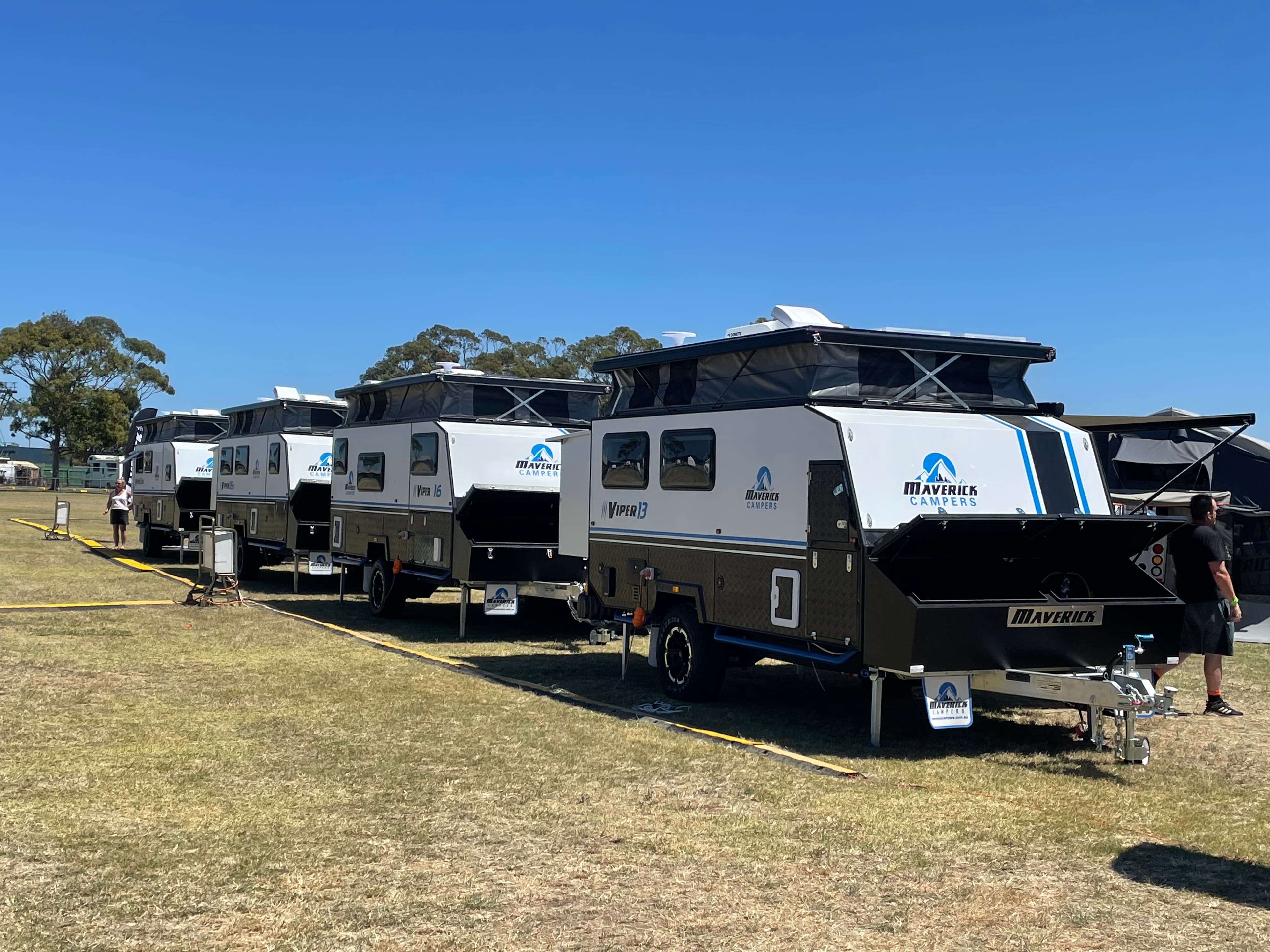
There is a very good article to be written about why hybrid caravans have taken off in Australia, and plenty of people have written it. The pitch is genuinely attractive: the toughness and go-anywhere attitude of a camper trailer, with something much closer to the comfort of a full caravan. For a certain kind of traveller, that is exactly the right van, and the people building them have solved some real engineering problems to get there.
This article deliberately argues the other side.
Not because hybrids are a bad product — they aren't — but because the enthusiastic case is everywhere and the sceptical one is hard to find. If you are about to spend a large amount of money, you deserve to have read both. So here is the case against, made as strongly as it can honestly be made, followed by the situations where it falls apart.

This article assumes you've already narrowed your shortlist to a hybrid and want to hear the argument against before you commit.
First, what we're actually talking about
There is no single agreed definition of a hybrid. Broadly, it's a van with a hard-sided body and one or more soft or fold-out sections — most often the bed — sitting on a chassis and suspension built with rough roads in mind.
That vagueness matters, because it means two vans wearing the same word can be very different objects. One might be a lightly toughened camper with a hard shell. Another might be a serious remote-travel machine. The word tells you very little on its own, which is the first thing worth knowing before you start comparing.
So when you read what follows, hold it loosely. The case against hybrids is really a case against a set of expectations that the category tends to attract, and any individual van may answer it perfectly well.
Claim one: "It'll go anywhere"
This is the promise that sells hybrids, and it is often true of the van. The question is whether it's true of the trip.
Most Australians who buy a capable van do not spend most of their nights in places that require one. They do a couple of genuinely remote trips, love them, talk about them for years — and then spend a great many other nights in caravan parks, showgrounds, free camps off a reasonable gravel road, and friends' driveways. There is nothing wrong with that. It's a lovely way to travel. But you can pay a significant premium for capability that gets used on a small fraction of your nights, and then live with the trade-offs that capability costs you on all the others.
The honest question isn't "can this van get there?" It's "how many nights a year will I actually need it to?" If the answer is most of them, the case against collapses immediately — see the last section. If the answer is a fortnight, it's worth sitting with.
Claim two: "It sets up in minutes"
Hybrids are usually quicker to set up than a camper trailer. Compared with a full caravan, though, the comparison is less flattering than the marketing suggests.
A full-height van, at its simplest, is: park, level, plug in, open the door. A hybrid generally has something to raise, unfold, unclip or extend before you can go to bed. Once you're practised it may only be a few minutes, and a few minutes is nothing when you're staying a week.
It is not nothing when you are doing a long run and stopping one night at a time, in the dark, in the rain, tired, three nights in a row. That's when a setup ritual stops being a small task and starts shaping how you feel about the van — and it's a scenario people rarely imagine on the dealership floor, because on the dealership floor it's dry and it's two in the afternoon and someone is showing you how easy it is.
Ask to do the setup yourself, unassisted, before you buy. Then imagine doing it wet.
Claim three: "Best of both worlds"
This is the one worth thinking hardest about, because "best of both" and "compromise between both" describe the same object from different angles.
What a hybrid usually gives up, relative to a full caravan of similar length, is interior living space — and specifically the ability to be comfortable inside for an extended period. The fold-out or pop-up section that keeps weight and height down is often the bed, which means the bed may not be available as a place to sit during the day without setting up, and the remaining hard-sided space has to do all the other jobs.
For a lot of travelling, that's irrelevant. You're outside. The awning is out, the chairs are there, the van is where you sleep and make coffee.
The test is bad weather. Three consecutive wet days in a caravan park, both of you inside, is the scenario that reveals whether a layout works. Full-height vans with a permanent bed and a separate seating area handle it comfortably. Hybrids vary enormously — some are excellent, some become quite small quite quickly. That's not a flaw so much as a design priority, but it's the priority you're buying into.
It's also worth being clear-eyed about the soft sections themselves. Canvas and fabric are proven, repairable materials that have kept Australians camping for a very long time — but they need drying, they need care, they don't love being packed away wet, and they will need attention over a life that a moulded fibreglass wall won't. That's a maintenance commitment, not a defect.
Claim four: "They hold their value"
Here we have to be straight with you: we can't tell you whether that's true, and neither can anyone else who isn't showing you their working.
VANTURE has sold listing data, but not yet at anything like the depth required to publish a resale figure for a whole format. We are not going to invent one. You'll see confident percentages quoted about hybrid resale around the internet; ask yourself where the underlying data came from, over what period, across how many vans, and whether it was Australian.
What you can do is check it yourself, which takes about twenty minutes and is more reliable than any number we could give you:
Search current listings for the make and model you're considering, across several model years, and note the asking prices.
Do the same for one or two full caravans of comparable size and age from established makers.
Look at how many of each are listed, and how long they appear to have been listed.
That won't give you a depreciation curve. It will tell you whether there's a healthy second-hand market for the thing you're about to buy — which is the question underneath the question. A format with plenty of buyers is easier to leave than one with very few.
Have a look at what's actually listed. Browse current hybrid listings on VANTURE and compare them against full caravans in the same size range. Browse hybrids · Browse camper trailers · Browse off-road caravans
The weight problem nobody mentions until later
A hybrid is often chosen because it's lighter than the full caravan it replaces, which is a sound reason. The catch is what happens next.
Light vans have smaller payload allowances than heavy ones, and the traveller who wants a hybrid is very often the traveller who wants extra batteries, more solar, extra water, a second spare, recovery gear and a full toolkit. Every one of those is weight, and it comes out of the same allowance as your clothes, food and awning mat.
We're not going to quote you a payload figure for hybrids as a class, because there isn't an honest one — the range across the category is enormous. What we will say is that the number on the compliance plate is the only one that counts, that the plate was stamped before anyone added anything to the van, and that a weighbridge is the only thing that will tell you the truth about where you actually sit.
If you want to work through how that interacts with your car, our complete guide to GVM, GCM and ATM covers it properly, and the free tow compatibility tool will do the matching for you.
Where the case against falls down
Everything above is the strongest honest argument we can make. Here is where it stops working — and for a lot of people, one of these is decisive.
Your tow vehicle settles it. If your car can legally and comfortably tow a hybrid but not the equivalent full caravan, the argument is over. A van you can tow safely beats a van you'd rather have. This is the most common reason people end up in a hybrid, and it is a completely sound one.
You genuinely travel remote, often. If a meaningful share of your nights are somewhere a conventional van shouldn't go, you're buying capability you'll use. The premium is doing its job.
Where the van lives at home matters. Height and length decide whether a van fits under a carport, through a side gate, or into a storage unit at a sane price. If a hybrid is the only thing that fits, that's a real constraint, not a compromise.
You actually prefer being outside. Some people are genuinely happier with a smaller inside and a bigger outside, and organise their travel around good weather and good locations. If that's you, the wet-weather test we made so much of simply matters less.
The three questions that settle it
Forget formats for a moment and answer these honestly.
Out of your next thirty nights away, how many are somewhere a conventional caravan couldn't reasonably go? If it's a handful, look hard at a full van before committing to a hybrid.
Can your current car tow the full caravan you'd otherwise buy, legally and comfortably, with everything loaded? If not, the hybrid case just got much stronger, and no amount of preference changes that.
Where will you be on the third wet day? If the honest answer is "inside, going quietly mad", prioritise interior space. If it's "under the awning with a book, perfectly happy", you're a hybrid buyer.
The point
The case against the hybrid isn't that they're poorly made. Plenty are beautifully made, by Australian businesses who have thought very hard about how people actually travel here, and there are owners who wouldn't have anything else.
The case against is narrower than that, and it's about you rather than the van: a hybrid asks you to give up interior living space and accept a setup routine, in exchange for capability and weight savings. That is a genuinely good trade for some people and a poor one for others, and the marketing around the category tends to present it as no trade at all.
Know which one you are before you sign. If you work through the three questions and land on a hybrid anyway, buy it with confidence — you'll have bought it for reasons rather than for the pitch, and that's the whole point of reading the argument against.
Not sure the van you're looking at can be towed by the car you own? VANTURE's free tow compatibility tool matches your vehicle against real listings. Try the tow compatibility tool · Browse all listings
Also in this series
Thinking of selling? Sell your caravan on VANTURE — free to list, same price whatever it's worth, and no commission ever.
List your caravan free