Caravan Handover Day: The 60-Point Checklist to Run Before You Sign

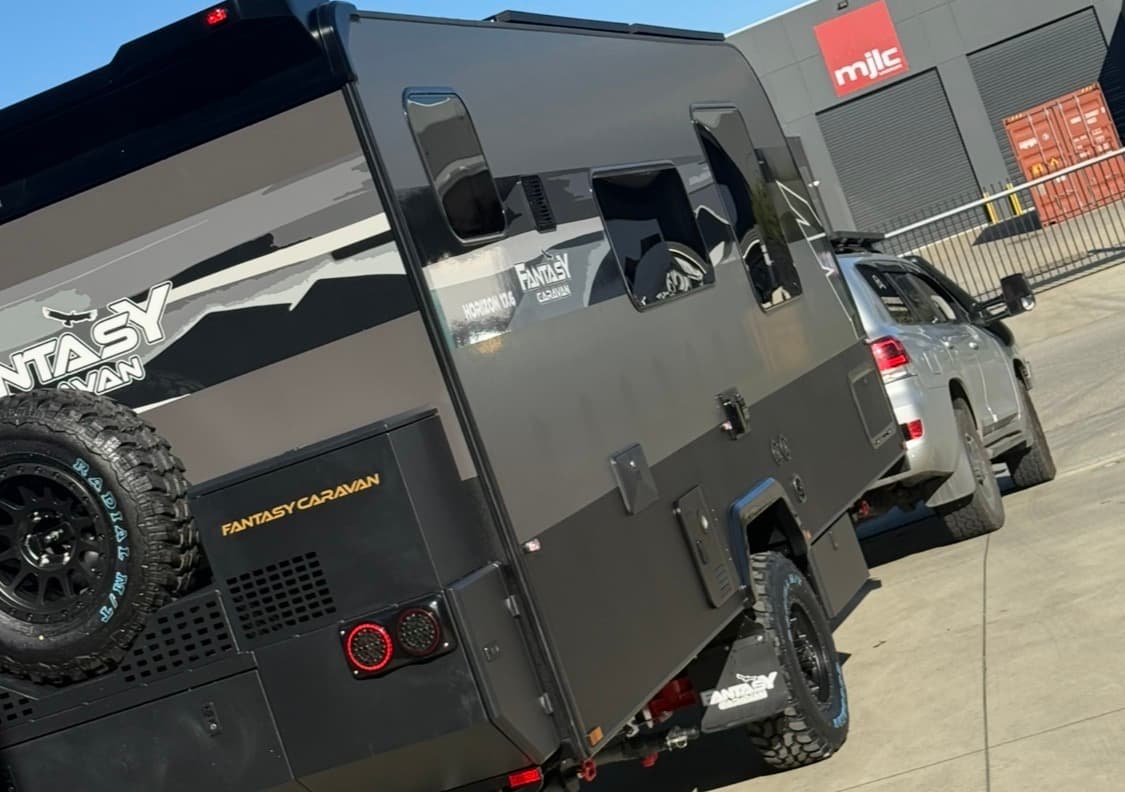
Handover day is the best day of the whole process, and it is also the shortest window you will ever have where everybody involved is standing in the same place wanting the same outcome.
It is worth slowing down for. A dealer or manufacturer wants you to leave happy, a van that comes back in three weeks with a leaking tap costs them a workshop slot and costs you a weekend. Everyone in the yard wants the same thing you do: a van you understand and are comfortable towing away.
So book a morning, not a half hour. Bring reading glasses, a torch, a phone with charge in it for photographs, and someone else to be a second set of ears. Then work through the list below.

The paperwork is part of the product
The easiest thing to leave behind on handover day is not a fitting. It is a piece of paper.
The gas certificate
Queensland's Petroleum and Gas Inspectorate publishes a guideline for gas safety and compliance in caravans, camper trailers and recreational vehicles, and it sets out that state's position plainly.
For a new van: "New caravans, camper trailers and recreational vehicles offered for sale must have a gas compliance certificate issued for the gas system installation. The buyer must receive a copy of the certificate before they take possession, normally as part of the vehicle documentation pack."
For a used one, the requirement is tighter than many buyers expect: "The new owner of a used or second-hand caravan must be provided with a gas compliance certificate for the gas system prior to taking ownership. The certificate must be less than three months old."
Certificates issued by licensed installers in other states are accepted for both purposes. That is Queensland's rule and we are quoting it as Queensland's — arrangements differ between states, and if you are buying elsewhere, ask the seller which certificate applies where you are and check with your own state's gas regulator. But the principle travels well: the gas system in a caravan is certified work, and you should leave with a copy of the certificate rather than a promise to email it.
The same guideline adds a second entitlement, again in Queensland. If anyone working on or inspecting the gas system finds a non-compliance or a safety concern, they must document it on a gas system defect notice — and "a copy of this notice must be given to the owner of the gas system."
And a third, which is the difference between a van that is easy to own and one that is not: "Owners and potential owners should ensure they receive a copy of all gas appliance and equipment installation, service and user manuals as part of the vehicle document package." Every manual — the fridge, the cooktop, the hot water service, the heater. Two years from now, on a Sunday, in a park with no reception, that folder is worth a great deal.
The electrical side
The 240V installation has its own certification, and who can issue it varies by state. It is a subject in its own right, and we have covered it properly in what's legal, what's not, and who can sign it off. Ask for the paperwork on the day and put it in the same folder as the gas certificate.
What the standard asks of the builder
Queensland's guideline describes AS/NZS 5601.2 as the nationally recognised standard for gas systems in caravans, and the NSW Building Commission's advisory note for gasfitters requires gas installations in recreational vehicles in that state to comply with its 2020 edition.
It is a detailed document. The NSW note works through requirements down to the level of maintaining a minimum 25 mm separation between a gas pipe clipped to the chassis and an electrical service running alongside it, and a fridge sitting in a sealed recess so combustion products cannot get into the living space. That is the level of care behind the certificate you are being handed, and why gas work in a van is licensed work.
You can check one more thing yourself, and it takes a minute. Every approved gas appliance carries a label with an approval certificate number, and Queensland's guideline points to the Gas Technical Regulators Committee equipment database where the number can be looked up. The same labels carry conditions of use — outdoor use only, not suitable for use in a caravan or boat, use in well ventilated area only. Worth a glance, particularly on a barbecue supplied as an optional extra.
Booking a gas or electrical check before you collect? VANTURE lists 130+ verified gas and LP gas specialists across Australia — browse caravan gas specialists by state — and 291 solar and auto-electrical providers on the caravan electrical directory.
The plate is the figure for your van
Somewhere on the front wall or drawbar is a compliance plate with the ATM, GTM and Tare mass on it. Those figures describe that specific van. A brochure figure describes a model.
Photograph the plate before you do anything else, then compare it to the specification you agreed to buy. If the Tare has moved because accessories were fitted after the plate was made — a second battery, a bigger toolbox, a solar array — the payload you were counting on has moved with it, and that conversation is far easier to have in the yard than at a weighbridge in three months.
If those terms are not second nature yet, our guide to ATM, GTM and Tare weight is the short version and the complete GVM, GCM and ATM guide is the long one.
Your rights do not switch off when you sign
This is the part that takes the pressure off the whole day.
Under the Australian Consumer Law, consumer guarantees attach automatically to what you buy. The ACCC's own wording is that these basic rights "can't be taken away by anything a business says or does", and the page gives its own examples of what that covers: displaying a 'no refunds' sign, saying a business isn't responsible for problems with a product, or suggesting you must sign an extended warranty to keep your rights after a certain date.
Several of the guarantees suit a caravan handover unusually well. The ACCC lists them as:
Acceptable quality — safe, durable, free from defects, acceptable appearance and finish, and it does everything similar products are commonly used for.
Fit for a particular purpose — if you told the business what you wanted it for and bought on their advice, it has to do that.
Matches description — any description, written or spoken, must be accurate.
Matches sample or demonstration model — made for caravanning. The ACCC's own example is a courier who test-rides a motorcycle, orders the same, and receives one with a smaller engine. The same logic reads across to a layout, an inclusion or a fit-out spec bought off a show floor.
Extra promises — anything the business or manufacturer promised about quality, condition or performance, spoken or written. The ACCC describes these as express warranties.
Repairs and spare parts — the manufacturer or importer must provide spare parts and repair facilities for a reasonable time after purchase, unless you were told at the time of purchase that they would not be available after a certain point. Worth asking, and worth noting the answer.
One point that catches people out: the ACCC's page lists the "$100,000 including GST" figure under the heading Business use, as one of the ways a business purchase can still be covered. Separately, the page states that products normally bought for personal or household use are covered by consumer guarantees. If your circumstances are unusual — bought through a business, used commercially, imported directly — your state or territory consumer affairs office is the right place to check rather than a blog.
None of which makes handover day adversarial. It means the opposite. You do not have to spot everything on the day for it to be fixable. You are there to see the van work, understand it, and write down anything that is not right yet.
The 60-point handover checklist
Print it, or work down it on your phone. Tick, note, photograph.
Paperwork (1–10)
Gas compliance certificate for the van's gas system — in Queensland, handed to you before you take possession; elsewhere, ask what applies in your state.
Gas system defect notice, if one was raised — in Queensland a copy must be given to the owner.
Installation, service and user manuals for every gas appliance (Queensland's guideline says to make sure you get them).
Electrical certification for the 240V installation, per your state's requirements.
The written manufacturer's warranty document, as a physical document you leave with.
Clarity on who pays for parts, labour, transporting the van and your own travel under that warranty.
Owner's manual for the van, plus manuals for fridge, hot water, air conditioner, awning, batteries and inverter.
First service interval and due date, in writing.
Registration papers, with the plate matching the van in front of you.
Contract, invoice and receipt, with the final figure matching what you agreed.
The plate and the numbers (11–18)
Locate the compliance plate and photograph it.
ATM matches the specification you bought.
GTM noted — this is the figure your braking requirements are based on.
Tare noted.
Payload calculated (ATM minus Tare), and you have asked whether accessories fitted after the plate was made are included in the Tare.
VIN or chassis number matches the contract and the registration papers.
Build date checked.
Ask whether the van has been weighed as delivered — and if not, plan a weighbridge visit.
Gas (19–26)
Approval label and certificate number visible on every gas appliance (checkable on the GTRC database).
Any "outdoor use only" or similar conditions on the labels noted, especially on a supplied barbecue.
Bayonet or quick-connect point sits outside where an annex would enclose it — Queensland's design guidance for builders, and a sensible thing to look at.
Gas cylinders correctly restrained in their location (if supplied).
Cylinder locker vents clear and unobstructed.
Cooktop, grill and oven lit in front of you, every burner.
Hot water service and any gas heater lit in front of you.
Fridge demonstrated running on gas as well as on power.
Electrical and 12V (27–34)
240V work certified per your state's requirements, with the paperwork in hand.
Every power point tested with something plugged into it.
Safety switch tripped and reset in front of you.
Battery type, capacity and isolator location shown to you.
Solar controller showing charge in daylight.
12V lights, water pump and fans all run with the van unplugged from mains.
Anderson plug or DC-DC charging arrangement explained, including how it is switched.
Breakaway unit battery checked and its charging method explained.
Water and plumbing (35–41)
Fresh water tanks filled and the gauge reading correctly.
Every tap run hot and cold, with a torch under the sink and vanity looking for drips.
Shower run, drain checked, floor waste clear.
Toilet flushed, cassette slid out and reseated cleanly.
Grey water outlet and valve operated.
Water pump switch and filter locations shown to you.
Mains water inlet and pressure regulator identified.
Inside the van (42–48)
Every door, drawer and overhead locker opened and closed.
Every catch holds when the van is rocked.
Ceiling and wall joints looked along in daylight for waves, gaps or sealant runs.
Bed lifts, holds on its struts and lowers smoothly.
Air conditioner and any diesel or gas heater run long enough to prove they work.
Flyscreens, blinds and winders operated on every window.
Table, seat bases and any slide-out or expanding section operated.
Outside and running gear (49–56)
Every external seal walked — windows, hatches, service doors, awning rail.
Roof inspected from a ladder if it can be done safely, including hatch seals.
Date codes read on all tyres including the spare, and pressures checked.
Wheel nuts confirmed torqued, and the figure written down for you.
Jockey wheel, corner stabilisers and handbrake all wind and hold.
Coupling, safety chains and shackles fitted, and their ratings pointed out to you.
Every external light tested with the van hitched — brake, indicators, tail, number plate, reverse.
Awning rolled out and back in, arms locking properly.
Before you drive out the gate (57–60)
Brakes proven with one or two stops from low speed on their property (Western Australia's own pre-trip advice).
Hitched up in the driver's seat, you can see down both sides of the van — Transport for NSW's test in that state is that if you cannot, extended mirrors are required.
Anything outstanding written on the handover document, with a date against it.
You know who to ring, and when, if something goes wrong in the first week.
After the handover
Two things are worth doing in the first fortnight, while everything is fresh and the relationship is warm.
Weigh it. The plate tells you what the van is allowed to be. A weighbridge tells you what it actually is, loaded the way you actually pack. Our inspections and weighing directory lists 182 verified providers nationally (VIC 53 · NSW 28 · WA 28 · SA 24 · TAS 16 · QLD 13 · NT 11 · ACT 9).
Do a short shakedown trip. One or two nights, close to home, using everything. Faults that show up on a shakedown get fixed under a warm warranty and a friendly phone call. Faults that show up well into a long trip get fixed at whatever workshop has a slot.
Then go. The paperwork is in a folder, the systems have all been lit, run and filled once in front of you, and the person who handed you the keys knows you have found your way around it. That is what an unhurried handover buys you.
Also in this series
First-Time Caravan Buyer's Checklist: 27 Things to Do Before You Sign
Caravan Electrical Safety in Australia: What's Legal, What's Not, and Who Can Sign It Off
Caravan Must-Haves: What to Buy Before Delivery vs What Can Wait 6 Months
Lithium and Solar for Australian Caravans: What You Actually Need to Stay Off-Grid
PPSR Checks for Caravans: The $2 Search That Stops You Buying Someone Else's Debt
Still choosing? Browse caravans for sale, used caravans, pop-tops, off-road caravans and motorhomes on VANTURE, or see caravan and motorhome dealers near you.
Thinking of selling? Sell your caravan on VANTURE — free to list, same price whatever it's worth, and no commission ever.
List your caravan free