27 Questions to Ask a Caravan Dealer — and What a Good Answer Sounds Like

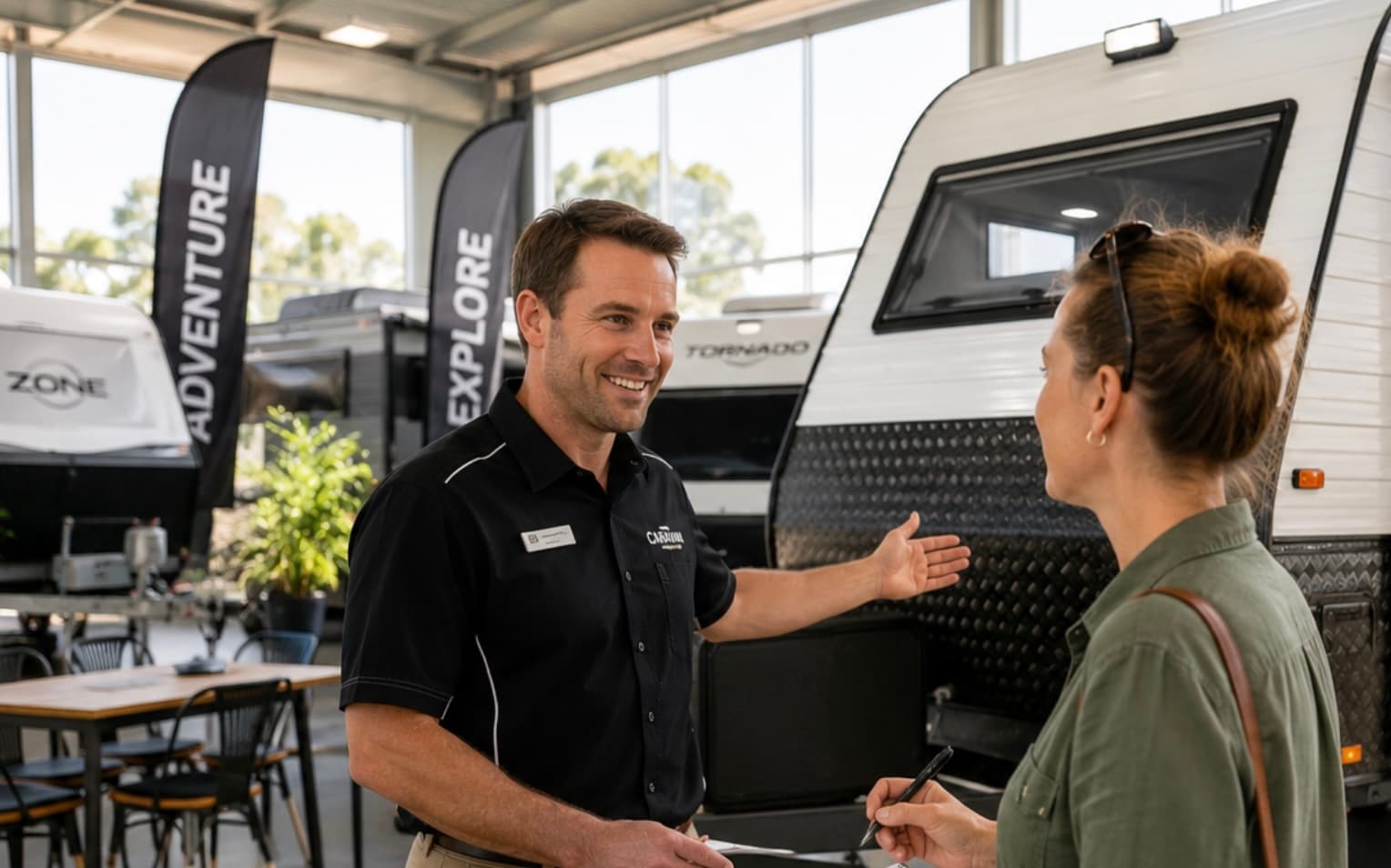
Walking into a caravan dealership with a list of questions can feel a bit like turning up to a job interview with a clipboard. It isn't. Good dealers like an organised buyer — a buyer who knows what they're asking is a buyer who's serious, who won't be disappointed in six months, and who won't be back with a complaint that a five-minute conversation would have prevented.
Most Australian caravan dealers are small businesses. One to three people on the floor, a yard to keep full, a service department to run and a market that's been anything but easy. They spend their days answering the same questions from people who are about to spend more money than they have on anything except a house. The ones who are good at it are very good at it.
So the point of this list isn't to catch anyone out. It's to make sure you leave the yard with the information you need, and to make sure the things you assumed were true actually are. Twenty-seven questions, grouped by what they're for, with a note on what a solid answer sounds like.

Print it, screenshot it, or just read it once before you go. You won't ask all 27 of any one dealer — you'll ask the eight or ten that matter for the van in front of you.
Before you go: the one thing that changes your rights
This is worth knowing before question one, because it shapes everything else.
When you buy from a business, you automatically get consumer guarantees under the Australian Consumer Law. The ACCC is clear that these are automatic, that they apply on top of any warranty, and that a business can't take them away — not with a "no refunds" sign, not by saying problems are the manufacturer's department, and not by suggesting you need to buy an extended warranty to keep them. Buying second-hand doesn't remove them either; age and price are simply part of what "acceptable quality" means for that particular van.
Buy privately, and most of that falls away. The ACCC states that most consumer guarantees don't apply to one-off sales between two people who aren't running a business — only title, undisturbed possession and no hidden debts survive.
That difference is one of the real reasons to buy from a dealer, and it's why several of the questions below are worth asking out loud even when you're fairly sure of the answer. Saying what you need the van to do, in front of the person selling it, is not a formality — it's the thing that engages the "fit for a particular purpose" guarantee.
Group 1 — About this particular van (5 questions)
1. "What's the history of this van — who owned it, and how was it used?"
A good answer sounds like: specifics. Grey nomads, two laps, garaged in Bendigo. Or honestly, "we took it on trade, here's what we know and here's what we don't." Vagueness isn't sinister; it's often just true. Ask what they'd say to a friend.
2. "Is this a new van, a demonstrator, or used — and what's the difference in what I get?"
Demonstrators and show vans sit in a category of their own: near-new condition, sometimes hundreds of kilometres, occasionally a different warranty start date. Worth pinning down.
3. "Has it had any repairs, insurance work or water damage, and is there paperwork?"
A good answer sounds like: an invoice. Vans that have been looked after come with receipts, and a dealer producing them is a dealer who kept them.
4. "If I'm buying off a display model or a sample — will the van I take delivery of be identical?"
This one has legal weight. The ACL includes a guarantee that goods match the sample or demonstration model they were sold from. If your van will differ in any way, that's the moment to have it written down.
5. "What's included at this price, and what's an extra?"
Batteries, solar, awning, spare wheel, gas bottles, hitch. Get it in writing on the contract rather than in the conversation. This isn't distrust — it's how two people avoid remembering a Saturday afternoon differently.
Group 2 — Weights and towing (4 questions)
This is where the most expensive misunderstandings in Australian caravanning live.
6. "What's the actual TARE and ATM weight of this van — not the brochure figure?"
Brochure ATM, TARE and the compliance plate on the van in front of you can differ once options are fitted. The plate is the number that counts.
7. "What's the ATM, the TARE and the tow ball mass?"
Have them read the compliance plate with you. If you're unsure what those terms mean, our GVM, GCM and ATM guide explains them properly.
8. "So what payload do I actually have left once it's fitted the way I'd take it?"
Payload is what's left after the van itself. Water, batteries, an awning, a bike rack and a full boot eat into it faster than most first-time buyers expect.
9. "I tow with a [your vehicle], and we're planning [your kind of trip]. Is this van suitable?"
Ask this one out loud, and ask it early. When you tell a business what you need a product for and buy on their advice, the ACL's "fit for a particular purpose" guarantee applies. Say the car. Say the trip. Then check it yourself anyway with the free tow compatibility tool — a good dealer will be pleased you did.
Group 3 — Compliance and paperwork (4 questions)
10. "Can I see the compliance plate, and does it match the advertisement?"
Five seconds, and it catches more errors than anything else on this list.
11. "Is the gas certificate current, and will there be one at handover?"
12. "Who did the electrical work, and is it certified?"
Particularly important on any van with an aftermarket lithium or solar system. Our caravan electrical safety guide covers who's legally allowed to sign off what.
13. "Is the manufacturer RVMAP accredited, and what does that cover?"
Worth understanding rather than just ticking. The Caravan Industry Association of Australia — the peak national body, representing over 5,000 industry businesses — describes the RVMAP badge as the business's commitment to consistently supply product that adheres to the relevant Australian Design Rules and federal compliance regulations, checked by regular inspection of product and paperwork. There are three badges: Australian, International (for imported vans) and Camper. Read what that covers: it's a compliance commitment, regularly audited. It's a different question from how nicely a van is finished, and the badge doesn't claim to answer that one. Both questions are worth asking — just don't collapse them into each other.
Group 4 — Warranty, guarantees and what happens if something goes wrong (6 questions)
14. "What warranty comes with this van, what does it cover, and when does it start?"
Start date matters on demonstrators and stock that's been in the yard a while.
15. "Is the warranty transferable if I sell it?"
It affects resale, and buyers ask.
16. "Who do I call when something goes wrong — you, or the manufacturer?"
A good answer sounds like: "Call us first." Under the ACL, the business that sold you the van can't simply redirect you to the manufacturer. The one documented exception is where the problem is that spare parts or repair facilities aren't available a reasonable time after purchase.
17. "Will spare parts and repairs be available for this van in a few years?"
There's a consumer guarantee that a manufacturer or importer provides spare parts and repair facilities for a reasonable time after purchase — unless you're told at the time of purchase that they won't be. So this is a question with a real answer, and it matters most on imported and low-volume vans.
18. "If it needs warranty work while we're on the road in another state, what happens?"
This is the question most people wish they'd asked. A dealer with a national service arrangement or a repairer network will tell you gladly.
19. "Is the extended warranty you're offering giving me anything I don't already have?"
Ask it plainly and without heat. Consumer guarantees are automatic and free, and the ACCC says it's unlawful for a business to suggest you need an extended warranty to preserve them. A paid warranty can still be worth buying — but only for what it adds on top. A good salesperson can tell you exactly what that is.
Group 5 — Delivery, handover and the first year (4 questions)
20. "What's the realistic delivery date, and what happens if it moves?"
If you're ordering rather than buying off the lot, get the answer in writing. (The contract detail behind build slots and lead times deserves its own conversation — ask for the terms and read them.)
21. "What does your pre-delivery inspection cover?"
Every dealer does one. What's in it varies, and knowing helps you use handover day well.
22. "How long is handover, and can we do it with everything connected?"
Ask for an unhurried handover with water and power on, and every appliance run in front of you. Reputable dealers already work this way, and they'd rather show you now than take a phone call from a rest area later. Allow a couple of hours and bring a notebook.
23. "What servicing does it need, when, and does anything void the warranty?"
Bearings, brakes, seals, roof sealant. Sealant maintenance in particular is the difference between a dry van and an expensive one.
Group 6 — About the business (4 questions)
24. "How long have you been here, and do you have your own service department?"
A dealer who fixes what they sell has skin in the game after the sale. It's one of the best signals available to you.
25. "Can I speak to a couple of customers who bought this model from you?"
A good answer sounds like: "Sure." Dealers with happy customers are usually delighted to be asked, and a five-minute call with an owner of the same van tells you things no brochure will.
26. "What's the trade-in, and what would it need to be worth as a private sale?"
Two different numbers, and both are legitimate. Trade-in buys convenience; private sale buys the difference. Our guide on how to sell your caravan in Australia shows what the private path involves so you can compare like with like.
27. "If I want to arrange my own finance and insurance, is that a problem?"
A good answer sounds like: "Not at all." Dealer finance is a genuine convenience and is often competitive, but you should be free to compare. Arrange your comparison before you're sitting in the office deciding — you can look at finance options on VANTURE independently.
The two questions behind all 27
Strip the list back and there are really only two:
Does the van do what I need it to do? That's weights, layout, payload, build and where you're planning to take it.
Will this business be there afterwards? That's warranty, service, spare parts, and whether the people in front of you fix what they sell.
Everything else is detail. And detail is genuinely easier to get from a dealer than almost anywhere else in this market — because it's their job, they've answered it a thousand times, and unlike a private seller, they're on the hook under the ACL for what they tell you.
One last thing worth saying plainly: none of this replaces looking at the van properly. The 27-point first-time buyer's checklist covers the physical walk-through, and on a used van a PPSR search is a couple of dollars well spent regardless of who you're buying from.
Ready to start the conversation? Browse caravans for sale on VANTURE, find dealers near you, and if you want to read up on a brand before you walk in, our make and model pages are the place to start.
Going to see a dealer this weekend? Browse caravans for sale on VANTURE first, then find caravan dealers near you — walk in knowing the van, the weights and your rights.
Thinking of selling? Sell your caravan on VANTURE — free to list, same price whatever it's worth, and no commission ever.
List your caravan free